
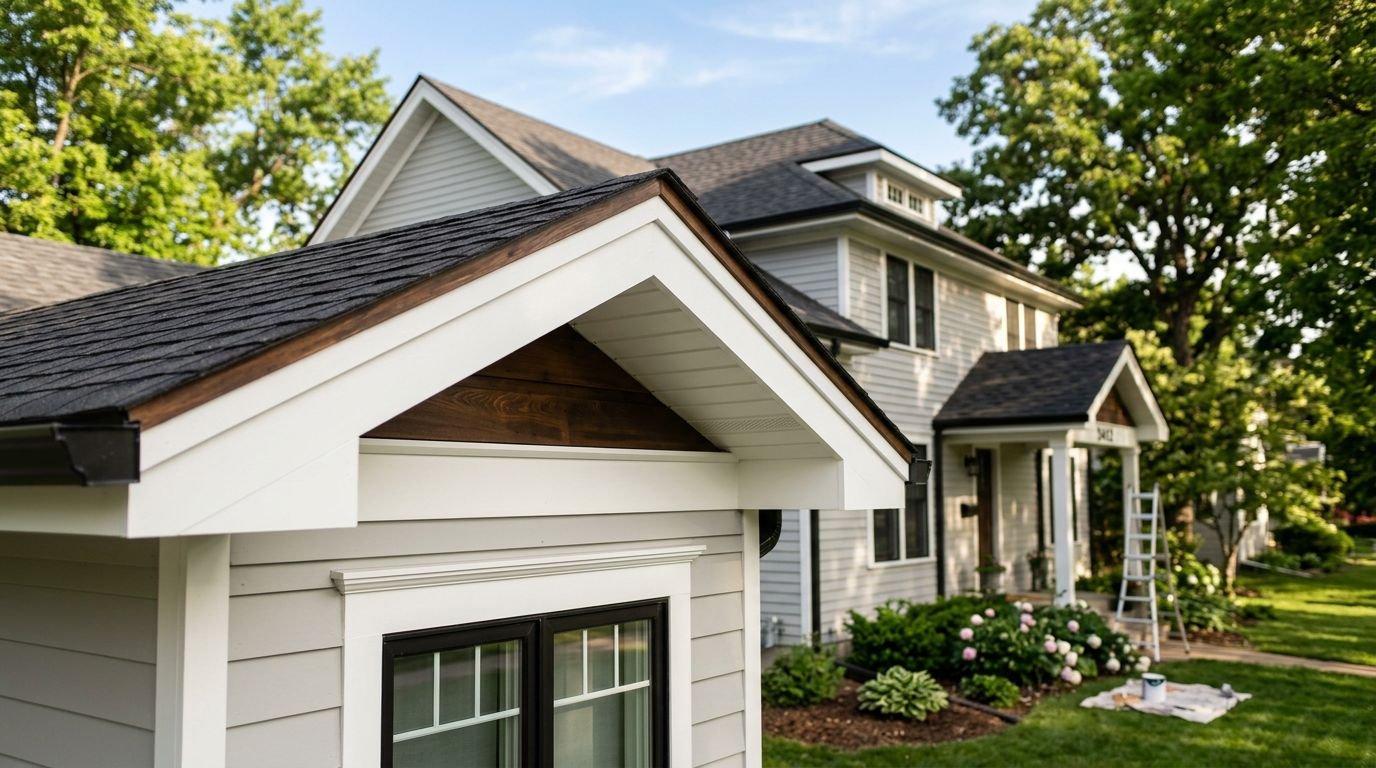
Your siding gets the attention, but your trim and fascia do the quiet work. They’re the “picture frame” around your home, and they also help keep water out at the roof edge. When paint fails, wood soaks up moisture, then Minneapolis freeze-thaw cycles can turn small cracks into bigger repairs fast.
So what’s a realistic exterior trim fascia painting cost in Minneapolis in 2026? The honest answer is, it depends on access, prep, and how much wood needs help. Still, you can budget with confidence once you know what drives price and what a thorough bid should include.
2026 Minneapolis pricing ranges for trim and fascia painting
Most Twin Cities crews don’t price fascia and trim like a simple “per wall” job. Instead, they look at linear footage, height, ladder setup, masking time, and surface condition. Older homes in Minneapolis, St. Paul, and first-ring suburbs (Richfield, Golden Valley, Edina) often need more prep because past paint layers and small gaps add time.
Here are planning ranges many homeowners use when talking with a Painting Service in Minneapolis. Treat these as budgeting numbers, not a quote.
A quick budgeting snapshot helps you compare bids apples to apples:
| Project scope (trim + fascia) | Typical 2026 planning range | What that usually includes |
|---|---|---|
| Small, single-story sections (garage, small eaves) | $700 to $1,600 | Scrape, sand, spot-prime, caulk, 1 to 2 topcoats |
| Average one-story home trim and fascia | $1,500 to $3,200 | More ladder moves, heavier masking, full edge work |
| Two-story home, lots of corners and rake boards | $2,800 to $5,800 | Higher access time, more safety setup, longer dry windows |
| Same scopes with moderate wood repair | Add $400 to $2,500+ | Epoxy, patching, small board replacement, extra prime |
The takeaway: height and prep move the price more than paint color does. A simple ranch in Bloomington can cost less than a smaller but taller home in Northeast Minneapolis with steep rooflines and tight access.
If two bids are far apart, ask what prep steps change. Prep is where long-lasting jobs are won or lost.
What makes exterior trim and fascia costs jump in Minnesota
Trim and fascia look like “small parts” of the exterior, yet they can be the most time-heavy areas to paint. Each edge, seam, and nail line needs attention. In Minnesota, that detail matters more because moisture finds weak spots quickly.
The biggest price drivers Minneapolis homeowners should watch
Surface condition and peeling paint: Homes near lakes or with lots of shade in Minnetonka or Plymouth often hold moisture longer. That can mean more scraping, sanding, and priming.
Rot, soft wood, and open joints: Fascia boards take runoff stress. If water has been sneaking behind gutters, painters may need to repair wood before painting.
Home height and roofline complexity: Two-story areas add setup time and safety planning. Rake boards, dormers, and tight corners slow production.
Access and landscaping: Dense shrubs, decks, or sloped yards can limit ladder placement. That time shows up in the labor line.
Caulking and sealing needs: Caulk isn’t optional on trim work. In our humidity swings, unsealed joints open and close all season.
Product choices and sheen: Higher-end exterior trim paints can cost more, but they often hold gloss and resist cracking longer.
One more local detail: Minneapolis weather doesn’t forgive rushed coats. If a contractor tries to squeeze work into a cold snap or paints right before rain, the finish can fail early. A good Residential painting service in minneapolis will talk about temperature limits, dry times, and how they’ll protect uncured paint.
Timing, prep standards, and how to get a longer-lasting result
If you want trim and fascia to look sharp for years, timing and prep matter as much as the brushwork. In the Twin Cities, late spring through early fall is usually the sweet spot, because overnight temps stay steadier. Early fall can also be great, as long as nights don’t dip too low and dew doesn’t linger.
A solid bid should spell out the steps, not just the color. Look for details like:
- Scraping and sanding methods, plus how dust and chips get contained
- Spot-priming (or full priming) on bare wood
- Caulking plan for joints, corner boards, and small gaps
- Protection of shingles, brick, windows, and landscaping
- Clear coat counts (one coat rarely holds up on trim that’s been peeling)
Also, consider bundling projects. If you’re already scheduling exterior work, you might line up indoor updates at the same time. For example, many homeowners book trim and fascia first, then plan interiors once windows can stay closed for curing and cleanup. If you’re comparing interior painters minneapolis, it helps to review what a full prep-and-paint process looks like on the inside too: https://housepaintingminneapolis.com/interior-house-painting-service/
Before you finalize your schedule, here are three internal link anchor text ideas that fit most residential painting sites and help homeowners find related services:
- exterior house painting
- interior house painting
- wood/trim repair & painting
A strong workmanship warranty also belongs in the conversation. Ask what’s covered (peeling, blistering, adhesion failure) and what maintenance is expected (keeping gutters working, controlling sprinklers, and fixing leaks fast).
Conclusion
Trim and fascia painting isn’t just a cosmetic upgrade, it’s protection at the most weather-exposed edges of your home. In Minneapolis in 2026, your exterior trim fascia painting cost will swing based on height, prep, and repair needs. Focus on clear prep steps, realistic weather timing, and a warranty you understand. If your fascia shows soft spots or chronic peeling, fixing the cause now usually costs less than chasing paint failure later.
LocalBusiness schema enhancement suggestion: add (or update) LocalBusiness markup on your contact or service pages with consistent NAP, serviceArea covering Minneapolis and nearby suburbs, geo coordinates, openingHours, priceRange, and hasOfferCatalog for residential services. This helps local search confidence without changing your site design.
FAQ Schema (JSON-LD)
{ “@context”:”https://schema.org“, “@type”:”FAQPage”, “mainEntity”:[ { “@type”:”Question”, “name”:”How is trim and fascia painting priced in Minneapolis?”, “acceptedAnswer”:{ “@type”:”Answer”, “text”:”Most contractors price it as a fixed project quote based on linear footage, home height, access, prep time, and any needed wood repair. Because trim has lots of edges and masking, labor usually drives the total more than the paint itself.” } }, { “@type”:”Question”, “name”:”What’s a realistic 2026 budget range for exterior trim and fascia painting?”, “acceptedAnswer”:{ “@type”:”Answer”, “text”:”Many Minneapolis-area homeowners plan around $1,500 to $3,200 for an average one-story scope, and $2,800 to $5,800 for taller or more complex two-story homes. Wood repairs can add several hundred to a few thousand dollars depending on how widespread the damage is.” } }, { “@type”:”Question”, “name”:”When is the best time to paint fascia and trim in Minnesota?”, “acceptedAnswer”:{ “@type”:”Answer”, “text”:”Late spring through early fall is usually best because overnight temperatures are steadier and rain risk is easier to manage. A reputable painter will schedule around forecasted lows, dew, and cure times so the finish bonds well.” } }, { “@type”:”Question”, “name”:”How can I tell if fascia needs repair before painting?”, “acceptedAnswer”:{ “@type”:”Answer”, “text”:”Common signs include soft or spongy wood, bubbling paint near gutters, dark staining, recurring peeling in the same spot, and gaps at joints. A good bid should call out repair areas and explain the plan before topcoats go on.” } } ] }