
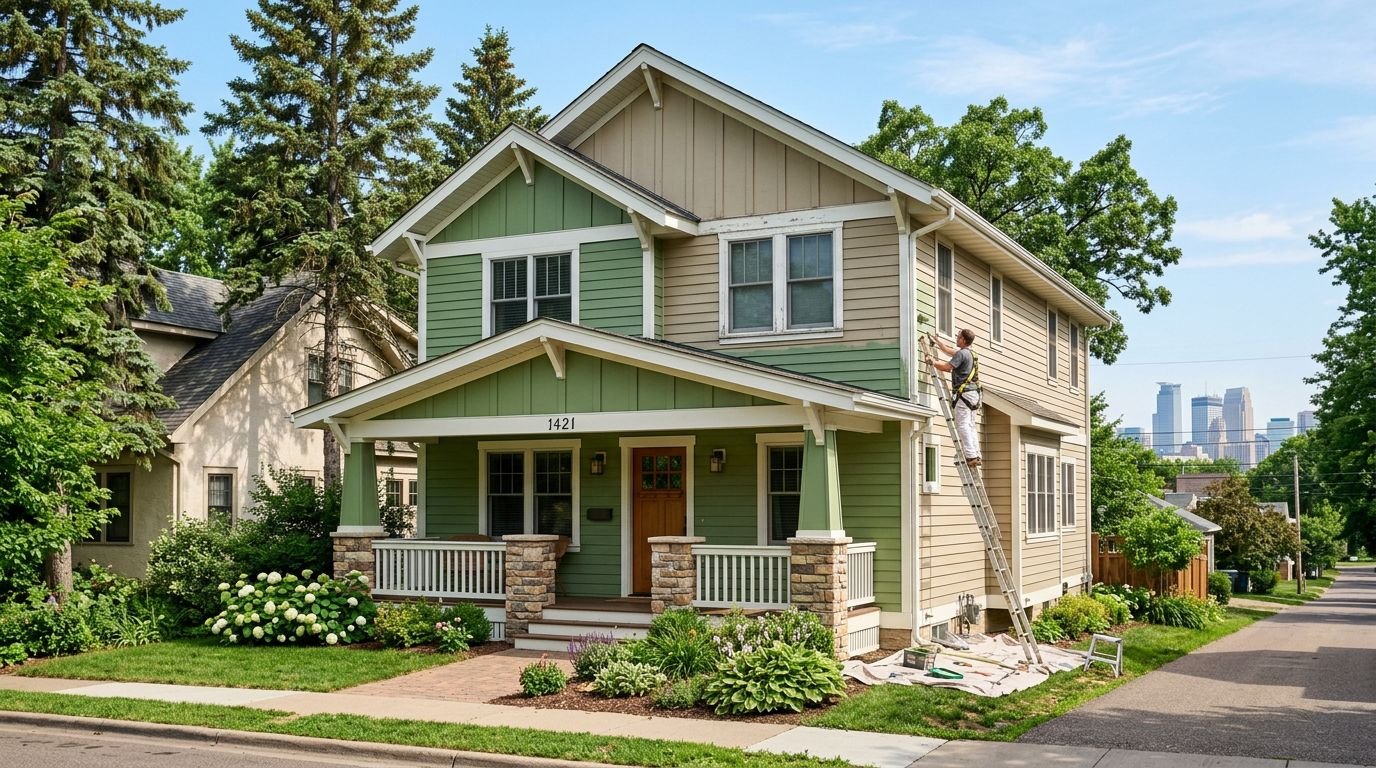
A new exterior color can make your house look fresh, newer, and more valuable. It can also cost more than a standard repaint, especially in Minneapolis, St. Paul, and the surrounding Twin Cities suburbs.
The exterior painting cost in Minneapolis rises when a color change needs extra prep, stain-blocking primer, more coats, or detailed trim work. Before you compare bids, it helps to know where the money goes and why Minnesota weather changes the equation.
What homeowners are paying for exterior color changes in 2026
If you’re changing your home’s exterior color in 2026, the price usually starts above a same-color repaint. A basic repaint may cover well in two coats. A full color shift often needs more labor before the first finish coat goes on.
As a market check, Angi’s 2026 Minneapolis exterior painting data puts average local exterior painting around $2,988, with many jobs falling between $1,815 and $4,455. That range is helpful, but it often reflects simpler jobs. When homeowners change from dark to light, light to dark, or dated multi-color schemes to a cleaner palette, the total usually climbs.
National cost guides tell a similar story. A 2026 exterior paint cost guide places many projects around $1.50 to $4.50 per square foot, and labor takes the largest share. In Minneapolis, labor matters even more because prep work has to stand up to snow, rain, humidity, and freeze-thaw stress.
Here is a practical way to view 2026 color-change pricing for Twin Cities homes.
| Home and scope | Typical 2026 price |
|---|---|
| Small one-story home, minor color shift, good siding condition | $3,000 to $5,000 |
| Mid-size two-story home, new body color and trim color | $5,000 to $8,500 |
| Large home, dark-to-light change, primer, repairs, and detailed trim | $8,000 to $14,000+ |
Those numbers fit many homes in Minneapolis, Bloomington, Edina, Maple Grove, Plymouth, and Woodbury. Older homes in Minneapolis and St. Paul can run higher because wood trim, peeling paint, and repair needs add time fast.
In most color-change projects, the extra cost comes from prep and coverage, not from the paint chip itself.
Why changing exterior paint colors costs more
A true color change asks more from the crew and the coating system. If the old paint is strong red, blue, forest green, or deep brown, the new finish may need a bonding or stain-blocking primer before the topcoat. Without that step, the old shade can bleed through and dull the final color.
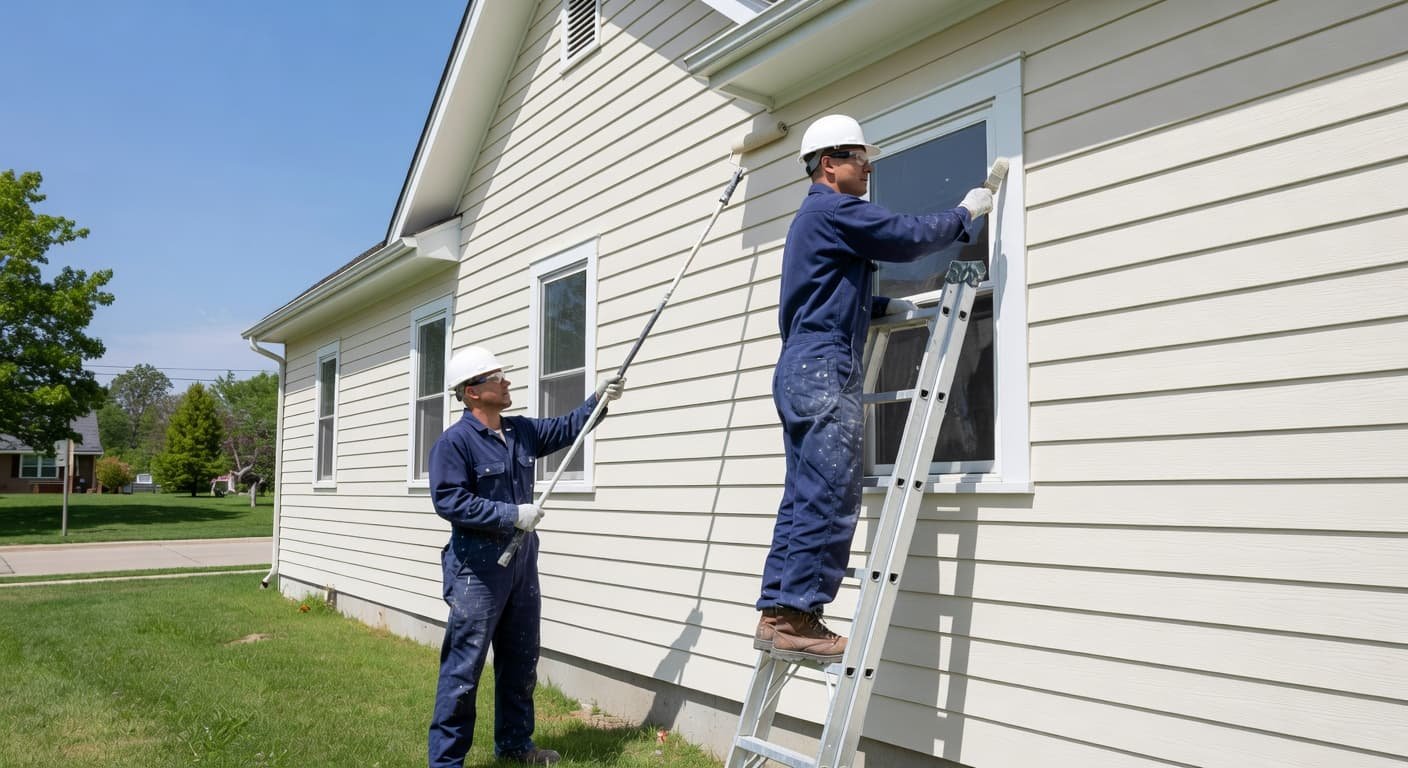
Surface condition also changes the price. Chalky siding, cracked caulk, bare wood, nail pops, loose boards, and peeling trim all need attention before paint goes on. A cheap bid may skip part of that work. The problem shows up later, often after one hard winter.
Homes with more detail cost more as well. Think dormers, shutters, porch ceilings, garage doors, fascia, and window trim. A simple rambler in Minnetonka is easier to repaint than a tall St. Paul home with ornate trim and multiple ladder setups.
If you want a number that means something, ask for an on-site estimate. A fast phone quote can’t see failing caulk, sun-baked south walls, or moisture damage near trim joints. If you’re also updating the inside, pairing the project with professional interior house painting can help you choose a color scheme that feels consistent room to room.
Many homeowners also search for “interior painters minneapolis” when they want the outside and inside to feel connected. That makes sense, but the exterior needs a different product plan because Minnesota weather is much harder on paint than everyday interior wear.
Minnesota weather changes paint costs and paint life
Twin Cities weather is rough on exterior coatings. Long winters, summer humidity, strong UV exposure, rain, hail, and big temperature swings all wear paint down faster. In real-world conditions, exterior paint in Minnesota often lasts about 5 to 10 years, depending on the siding, the product, the prep, and how much sun and moisture the house gets.
Cold weather affects both timing and adhesion. If paint goes on when surfaces are too cold, it may not cure well. Later, you can see peeling, early cracking, and weak bond lines around joints. Moisture is another problem. Humid air, overnight dew, and damp siding can trap water under the film, which leads to blistering and early failure.
That is why the best exterior painting window in Minneapolis is usually late spring through early fall. Crews still have to watch daily forecasts, surface temperature, and dry time. A good contractor won’t rush to paint before rain or when nighttime temperatures are too low for the product.
UV exposure matters, too. South- and west-facing walls in Eden Prairie, Plymouth, and Woodbury often fade faster. Dark colors can look sharp, but they absorb more heat. On some substrates, that can increase movement and stress the coating sooner.
For larger homes, Digital Estimating’s 2026 exterior cost guide shows how quickly price rises with size, height, and siding complexity. In Minnesota, that cost only makes sense when the prep is done right. A professionally prepared and professionally applied finish usually lasts longer and looks better year after year.
What to look for in a residential painting estimate
Painting Service in Minneapolis searches often start with the bottom-line number. The smarter move is to compare the scope line by line.
If you’ve typed “Residential painting service in minneapolis” into Google, you’re probably seeing big price swings. That happens because some estimates include full washing, scraping, sanding, caulking, spot-priming, and two finish coats, while others don’t.
A solid residential quote should spell out:
- Which areas get washed, scraped, sanded, repaired, and caulked
- Whether the color change needs full primer or spot primer
- The paint line being used and how many coats are included
- What happens if hidden wood rot or failed caulk shows up
- The workmanship warranty and what it covers
Warranty value matters more in Minnesota than many homeowners expect. If a job fails after the first freeze-thaw cycle, you want a company that will come back and make it right. That is one reason professional work often beats DIY even when the first price looks higher.
DIY exterior color changes can go wrong in a hurry. Coverage may look uneven, lap marks can show in direct sun, and missed prep can lead to peeling within a season or two. A pro crew also works faster and safer on ladders, around landscaping, and on steep or tall elevations.
The best value comes from prep, product choice, and workmanship
Changing your home’s exterior color is worth it when the finish lasts and the color looks right from every angle. The lowest price rarely delivers that result, especially on older Minneapolis and St. Paul homes with real prep needs.
A strong estimate should tell you exactly what happens before paint goes on, what products are used, and what warranty backs the work. If you’re planning a new exterior look in Minneapolis, Edina, Maple Grove, or nearby suburbs, request a written estimate that lists prep, primer, repairs, coat count, and warranty so you can compare real value, not guesswork.
FAQ
How much extra does it cost to change exterior paint color?
Most homeowners pay more than they would for a same-color repaint. The added cost often comes from extra prep, full primer, and additional coats, which can add several hundred to several thousand dollars depending on the house.
Is it more expensive to go from dark paint to light paint?
Yes. Dark-to-light changes usually cost more because they often need better hiding, more primer, and more finish coverage. That is common on trim, shutters, and older wood siding.
When is the best time to paint a house exterior in Minneapolis?
Late spring through early fall is usually best. Painters need dry surfaces, stable temperatures, and enough daylight for washing, prep, and full cure time.
How long should exterior paint last in Minnesota?
A well-prepped professional job often lasts 5 to 10 years in Minnesota. Sun exposure, siding type, moisture, and maintenance can push that lifespan up or down.
Why do two bids for the same house differ so much?
The scope is usually different. One contractor may include washing, scraping, sanding, caulking, primer, and repairs, while another may price only basic paint application.
What other service pages are useful when planning a whole-home refresh?
Helpful anchor texts include exterior house painting, interior house painting, and residential painting estimates. Those pages make it easier to compare scope when you’re planning work inside and outside the home.
Ready to move past rough guesses? Request a detailed exterior estimate that breaks out prep, products, repairs, timeline, and warranty before you choose a painter.
This FAQ markup pairs well with LocalBusiness schema that reinforces service area, phone, and estimate request details.