
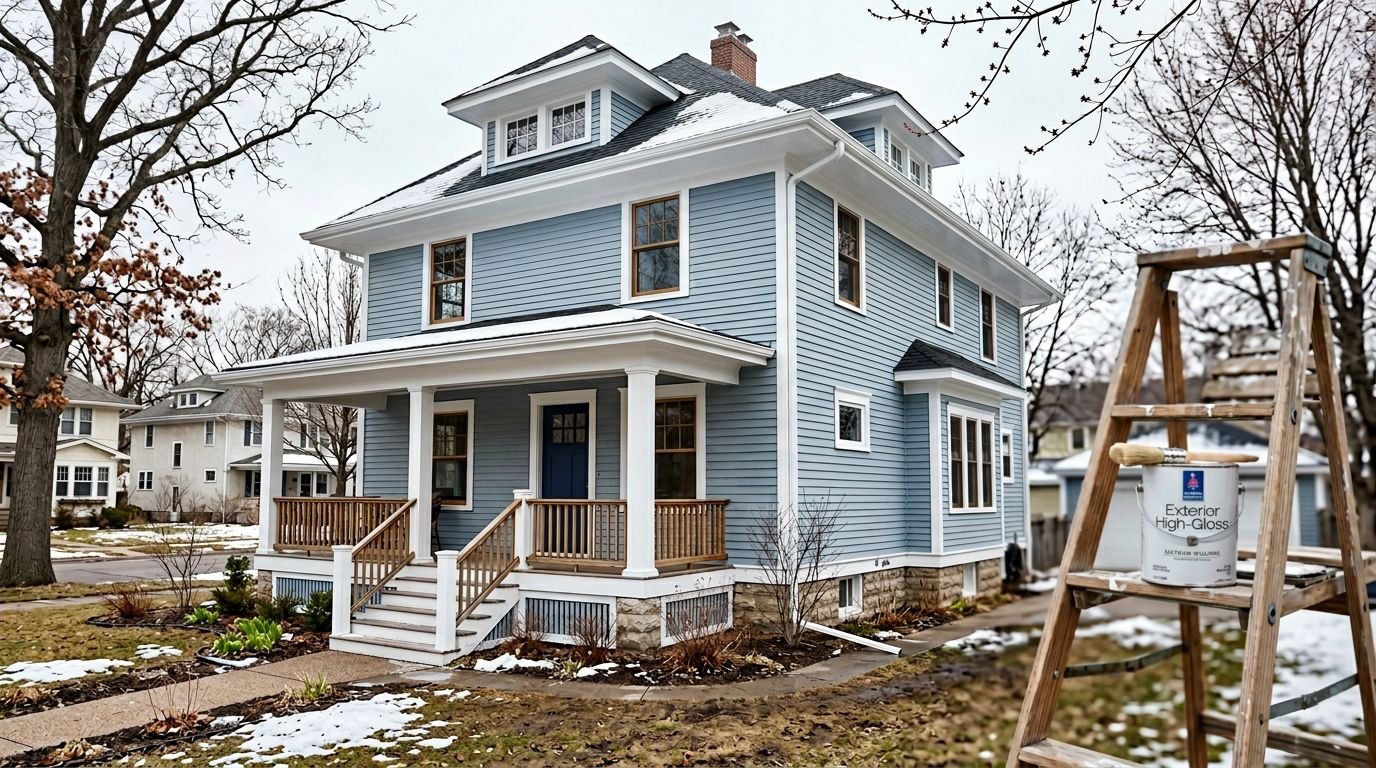
Fresh exterior trim does more than “clean up the edges.” It protects the most vulnerable wood and joints on your home, especially in Minneapolis where sun, snow, and freeze-thaw cycles punish paint.
The bottom line is this: exterior trim painting cost in 2026 depends less on the color and more on prep, access, and condition. A simple one-story ranch in Bloomington won’t price out like a tall two-story in Plymouth with ornate fascia and peeling paint.
Below is a clear way to think about pricing, what drives it up or down, and how to avoid paying twice.
What counts as “exterior trim” and why it’s pricey in Minnesota
Exterior trim is the home’s picture frame. When it fails, the whole place looks tired, even if the siding is fine. In the Twin Cities, trim also takes a beating because water loves edges, seams, and end grain.
Most residential trim painting includes items like:
- Fascia and soffits: The boards along the roofline, often exposed to ice dams and meltwater.
- Window and door trim: High-visibility areas that show brush marks and peeling fast.
- Rake boards and corner boards: Tall runs that need ladders or staging.
- Porch posts, rails, and columns: Lots of surfaces and angles, plus hand contact.
Minnesota weather changes the workload. Spring rain can swell wood fibers, then a dry stretch shrinks them back. That movement cracks caulk lines, so a painter often has to re-caulk before priming. Add sun on south-facing elevations in Edina or Eagan and you get faster fading and more brittle paint films.
Older homes in Minneapolis and St. Paul also bring extra steps. If your house was built before 1978, lead-safe practices may apply when scraping and sanding. That can add time, setup, and cleanup, even for “just trim.”
If your quote seems low, check what prep is included. Trim failures usually start with skipped scraping, poor priming, or cheap caulk.
2026 exterior trim painting cost ranges in Minneapolis (realistic ballparks)
Most homeowners want a simple number, but trim is measured in obstacles. Height, detail, and paint condition matter as much as linear footage.
Here are practical 2026 ballparks many Twin Cities homeowners see when hiring a pro for trim only (not full siding). Use these ranges to sanity-check bids, not to replace an on-site estimate.
| Project scenario (trim only) | Typical home types | Common 2026 price range (Minneapolis area) |
|---|---|---|
| Small trim refresh | One-story, minimal peeling, easy access | $800 to $2,000 |
| Average trim repaint | 1.5 to 2-story, mixed condition, several windows | $1,800 to $4,500 |
| Large or detailed trim work | 2-story+, ornate trim, heavy scraping, tricky access | $4,500 to $9,000+ |
In many cases, the jump comes from labor, not materials. Paint and primer matter, but they’re rarely the biggest line item. A pro might spend a full day just on setup, masking, ladder moves, and prep before “pretty work” even starts.
Also, trim pricing can blend with related items. For example, repainting entry doors, garage service doors, or porch rails often gets bundled into the same visit because it shares setup time.
When you compare bids, look for apples-to-apples scope. One contractor may include caulking and spot-priming bare wood, while another assumes you’ll handle it or skips it entirely.
What drives your trim painting quote up (or down) in the Twin Cities
A good estimate is more like a home inspection than a paint calculator. The painter is pricing risk, time, and access.
Condition and prep needs are usually the biggest swing factor. Peeling paint, chalky surfaces, soft wood, and failed caulk lines all require hands-on work. That work is slow, and it’s where durability is won.
Height and access also change everything. A simple corner board becomes a different job when it’s three stories up in a tight Minneapolis lot. Dormers, steep grades, and landscaping can limit ladder placement. In Minnetonka or Maple Grove, wide lots can make access easier, but tall gables still take time.
Trim material matters more than people expect. Smooth wood, rough wood, composite, and metal each need different prep and primers. Glossy factory finishes can reject paint if the surface isn’t scuff-sanded. Meanwhile, bare wood needs the right primer or tannin stains can bleed through.
Color and finish choices can affect labor. Dark colors show lap marks more easily in strong sun. High-gloss trim highlights imperfections, so painters spend more time sanding and smoothing.
If you’re collecting bids, ask a few direct questions:
- What prep is included (scrape, sand, caulk, spot-prime)?
- Which products will be used for primer and topcoat?
- How many coats are included on bare wood or color changes?
A reputable Residential painting service in minneapolis should answer clearly and put it in writing. That’s how you know the quote is built for results, not speed.
DIY vs hiring a pro: where the real cost shows up
DIY trim painting can look simple from the driveway. Up close, it’s a ladder job with sharp edges, sticky caulk, and a lot of patience. One slipped step can turn “saving money” into an urgent care visit.
There’s also the durability risk. Minneapolis winters punish weak prep. If paint peels next season, you pay twice, once in materials and weekends, then again to fix it correctly.
Pros reduce that risk with routine habits: controlled scraping, careful feather-sanding, proper dry times, and clean cut lines. Many also provide written workmanship warranties (terms vary), which is worth asking about before you sign.
If you’re already talking with a Painting Service in Minneapolis about exterior work, mention any interior plans too. Some homeowners schedule interiors after exterior season, and experienced interior painters minneapolis crews can often keep your project moving when weather slows outdoor work.
FAQs about exterior trim painting cost in Minneapolis
How much does exterior trim painting cost in Minneapolis in 2026?
Most trim-only projects land between $800 and $4,500, with detailed or high-access homes reaching $9,000+. The final price depends on prep, height, and how much trim you have.
Is it cheaper to paint trim during the off-season?
Sometimes, yes, but weather controls the schedule. Cold temps and moisture can prevent proper curing, so many pros limit exterior work until conditions stabilize.
Does exterior trim always need primer?
Bare wood and repaired areas usually need primer for adhesion and stain blocking. If existing paint is sound, a full prime coat may not be required.
How long should exterior trim paint last in Minnesota?
Longevity depends on prep and exposure. South and west sides often fail sooner because UV and heat stress the paint film.
What’s typically not included in a trim painting quote?
Wood rot repair, major carpentry, and extensive lead paint abatement often sit outside a basic painting scope. Always confirm what “prep” means in writing.
Should I repaint trim or replace it?
If the trim is solid, repainting with proper prep is usually the best value. If boards are soft, split, or repeatedly peeling, selective replacement can save money long-term.
Conclusion: plan for prep, then price
In 2026, the smartest way to control exterior trim painting cost in Minneapolis is to plan for prep and access, not just gallons of paint. Solid prep and the right products help trim survive Minnesota weather year after year. When you compare estimates, prioritize clear scope, clean workmanship, and written expectations. A sharp trim line is nice, but a finish that stays put is the real win.
If you want to strengthen your site’s visibility for local searches, consider adding a LocalBusiness schema entry with service area details for Minneapolis and nearby suburbs.
FAQ Schema Markup (JSON-LD)
{ “@context”:”https://schema.org“, “@type”:”FAQPage”, “mainEntity”:[ {“@type”:”Question”,”name”:”How much does exterior trim painting cost in Minneapolis in 2026?”,”acceptedAnswer”:{“@type”:”Answer”,”text”:”Most trim-only projects cost about $800 to $4,500, with complex homes higher due to prep and access.”}}, {“@type”:”Question”,”name”:”Is it cheaper to paint trim during the off-season?”,”acceptedAnswer”:{“@type”:”Answer”,”text”:”It can be, but exterior painting depends on temperature and moisture for proper curing.”}}, {“@type”:”Question”,”name”:”Does exterior trim always need primer?”,”acceptedAnswer”:{“@type”:”Answer”,”text”:”Bare wood and repairs typically need primer, while sound existing paint may only need spot-priming.”}}, {“@type”:”Question”,”name”:”How long should exterior trim paint last in Minnesota?”,”acceptedAnswer”:{“@type”:”Answer”,”text”:”It varies by prep and sun exposure, with south and west sides often wearing faster.”}}, {“@type”:”Question”,”name”:”What’s typically not included in a trim painting quote?”,”acceptedAnswer”:{“@type”:”Answer”,”text”:”Major wood rot repair, carpentry, and extensive lead-related work may be excluded from basic trim painting.”}}, {“@type”:”Question”,”name”:”Should I repaint trim or replace it?”,”acceptedAnswer”:{“@type”:”Answer”,”text”:”Repaint if trim is solid, replace selectively if boards are soft, split, or repeatedly failing.”}} ] }