
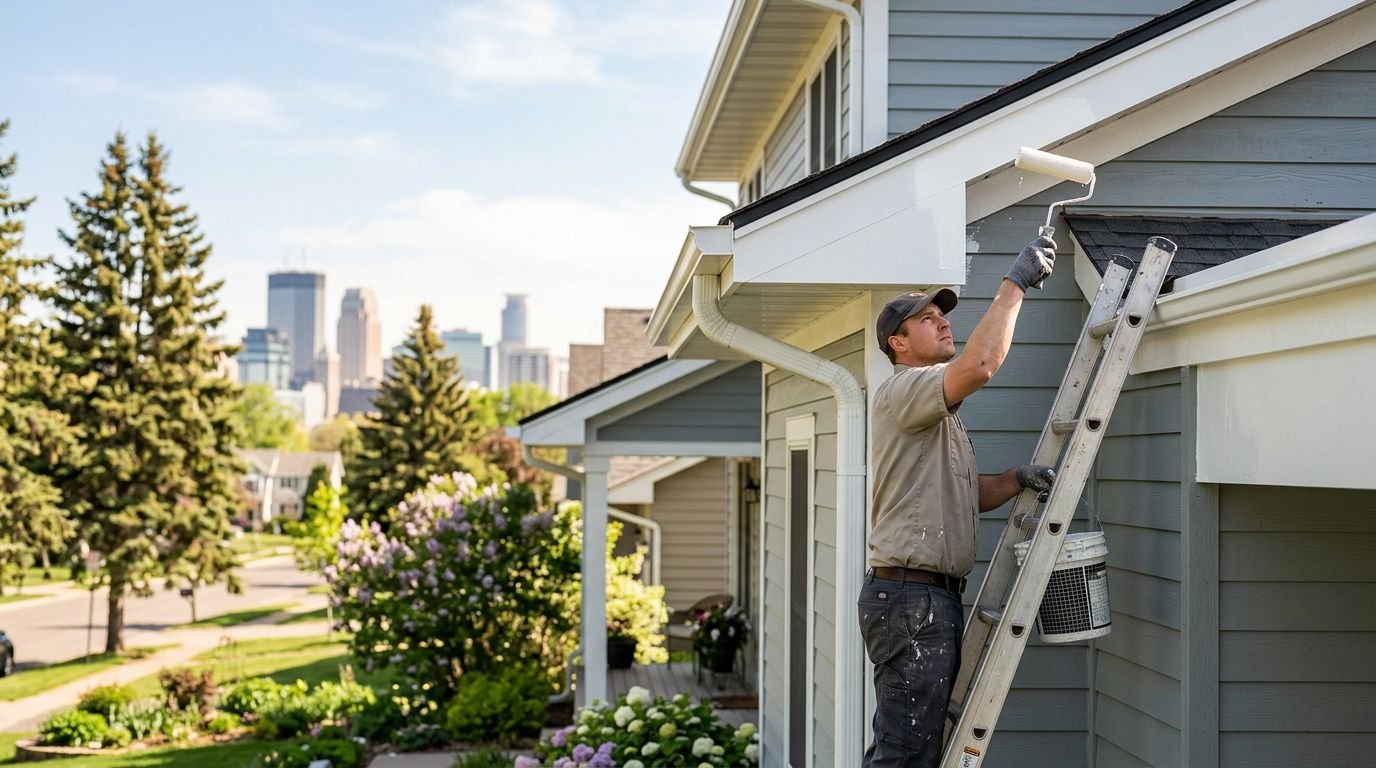
When planning your home improvement budget, understanding the cost to paint soffits is essential for a successful exterior refresh. While these areas look small from the curb, the final price can swing quickly once you factor in ladders, intensive surface preparation, and the unpredictability of Minnesota weather. For most Twin Cities homeowners, the total project cost in 2026 typically lands somewhere between a modest touch-up bill and a comprehensive exterior trim package that includes the soffit and fascia.
If you own a home in Minneapolis, Saint Paul, Bloomington, Eden Prairie, Plymouth, Maple Grove, Minnetonka, or a nearby suburb, the final investment depends less on total square footage alone and more on roof height, the current condition of the wood, and overall site access. A clear estimate for your soffit and fascia project should always be based on local conditions rather than a generic national average to ensure you are prepared for the real project costs.
Key Takeaways
- Pricing Drivers: For Minneapolis homes, the final cost of a soffit painting project is driven less by square footage and more by roof height, accessibility, and the intensity of surface preparation required.
- Typical Investment: Most Twin Cities homeowners should budget between $900 and $4,000+, with costs varying based on home size and whether you bundle the work with fascia or gutter maintenance.
- The Importance of Prep: Professional results hinge on thorough cleaning, scraping, and priming; failing to address peeling paint or wood rot leads to early project failure in Minnesota’s harsh climate.
- Bundling Benefits: Combining your soffit painting with other exterior trim or house painting services is generally more cost-effective as it allows contractors to distribute setup and labor costs more efficiently.
Typical soffit painting costs in Minneapolis
When calculating the budget for painting eaves, most Twin Cities homeowners find their project falls into a predictable range. The lower end of the cost spectrum typically applies to a one-story house with straightforward access and minimal surface preparation. The upper end accounts for two-story homes, peeling paint, wide overhangs, or vented sections that require more time to finish correctly. Think of this guide as a manual cost calculator to help you estimate your specific project requirements.
Here is a practical 2026 pricing snapshot for the Minneapolis area:
| Home type or scope | Typical 2026 range | What usually drives it |
|---|---|---|
| Small one-story, soffits only | $900 to $1,600 | Easy ladder access, limited prep |
| Average two-story, soffits only | $1,400 to $2,400 | More setup time, higher labor cost |
| Large or complex two-story home | $2,400 to $4,000+ | Heavy scraping, repairs, hard access |
| Soffit and fascia, gutters, downspouts | $2,500 to $3,500 | Better bundled labor efficiency |
Professional painters often determine these rates by measuring the total linear foot count of the eaves. In some cases, they may also estimate based on the square foot of the surrounding trim surfaces. While the materials are straightforward, the labor cost remains the most significant variable in your final quote.
When you request a bid for your soffit and fascia, remember that bundled services often provide the best value. For broader context, Angi’s 2026 data on exterior paint projects shows how labor, prep, and access often push pricing more than the cost of the paint alone.
On Minneapolis homes, height and prep usually change the price more than the paint can itself.
So, why do these prices vary so much from one home to the next? The answer is usually found in the total linear foot of the roofline and the complexity of the trim work sitting right above your head.
What changes the cost on Twin Cities homes
The primary driver is height. Painting a one-story rambler in Maple Grove is simpler than tackling a tall two-story home in Minnetonka with deep overhangs above landscaping. When dealing with extreme heights, contractors may require specialized scaffolding to access the soffit and fascia safely, which increases labor time. More height simply means more setup and slower production for the entire soffit and fascia project.
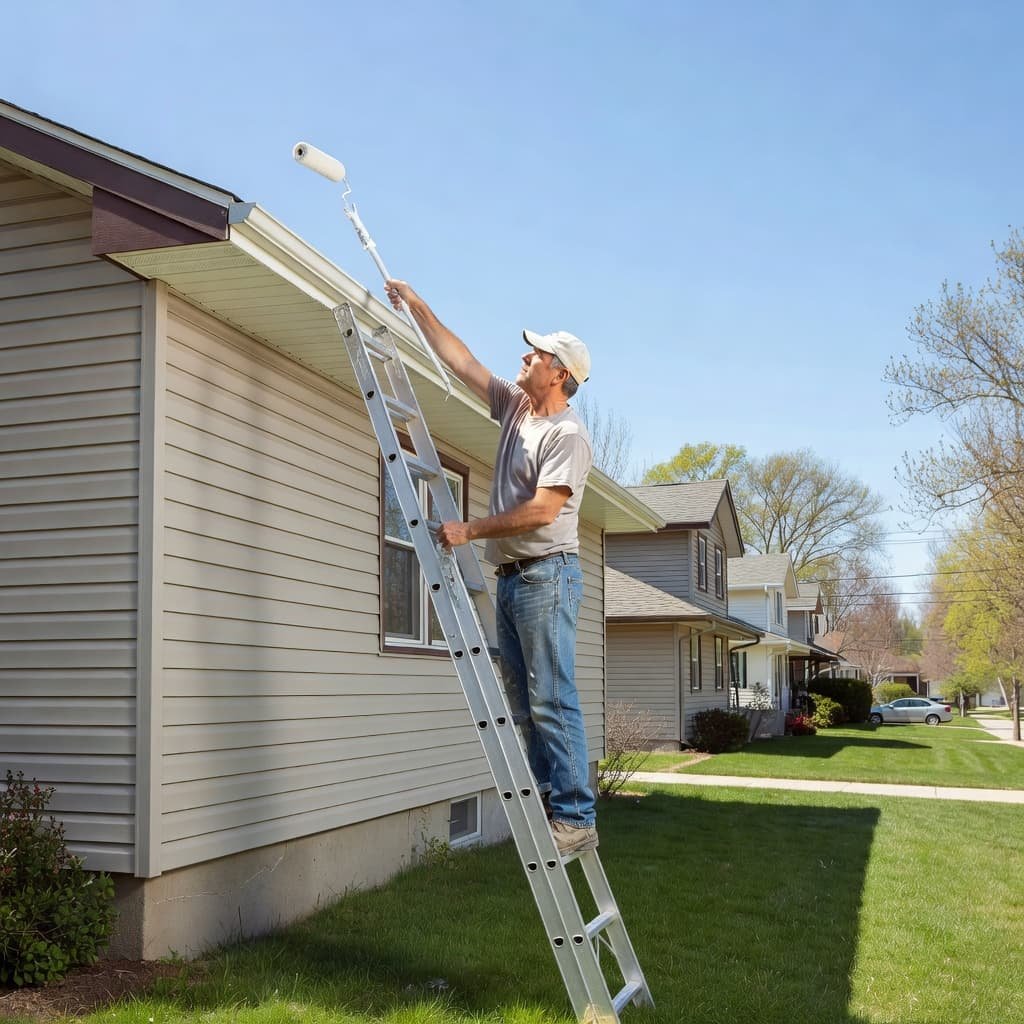
The condition of boards matters just as much as the height. When surfaces show signs of peeling paint, staining, or cracking at the joints, painters must perform extensive prep work to ensure long-term durability. This process typically involves power washing to remove debris, followed by sanding to smooth the surface, caulking to seal gaps, and applying a high-quality primer to prevent bleed-through. If you own an older home in the Twin Cities, professionals will also conduct lead paint testing before starting any prep work to ensure safety.
Material also plays a role in your final quote. Wood requires more maintenance than aluminum, specifically because you must address any wood rot or decay before painting. If the fascia boards are compromised, the scope of the project expands to include minor carpentry repairs. Additionally, painting vented soffits requires a steady hand to keep coverage even without clogging the ventilation slots.
Minnesota weather adds another layer of complexity. Freeze-thaw cycles often open gaps in exterior trim, while summer humidity can influence dry times. Factors like spring pollen, pop-up rain, and cool fall nights can disrupt scheduling, which is why late spring through early fall is the best window for exterior work in Minneapolis and Saint Paul.
Bundling services can lower the per-part cost for your project. If your soffits are painted alongside your fascia boards, window trim, or the rest of the exterior, the crew can spread setup and mobilization costs across a larger job. This is almost always a better value than hiring painters to return for a small, isolated soffit project later in the season.
DIY or professional soffit painting?
Soffit painting looks simple until you spend hours on a ladder with your arms overhead. The work is slow, detail-heavy, and difficult to perform safely on a tall home. For that reason, many homeowners decide that hiring a contractor is worth the extra expense. While material costs for paint and supplies are relatively low, the labor investment for overhead work is significant.
A professional crew usually delivers a finish that lasts longer because the prep work is superior. Clean surfaces, firm caulk lines, the right primer, and correct dry times all matter in Minnesota weather. A rushed DIY job can peel early, especially after a wet summer followed by a hard winter. Using high-quality latex paint is the industry standard for these surfaces, as it provides the necessary flexibility to withstand temperature fluctuations.
When searching for exterior painters, avoid general listings that may prioritize interior projects. Searches for interior painters in Minneapolis can muddy the picture, because soffit work requires specific height safety, specialized ladder equipment, and weather judgment. In the same way, general painting services often highlight companies that handle many job types, rather than crews that specialize in high exterior trim.
If you are sorting through results for exterior painters, ask how often that company specifically handles soffits, fascia, and other overhead details. Professional experience always shows up in the estimate, the depth of the prep plan, and the total project cost. By hiring a contractor with a proven track record, you ensure the longevity of your investment.
If a full home refresh is also on your list, start with professional interior house painting. Many homeowners also compare pages labeled as expert interior wall painters or Minneapolis interior home painting services when planning the budget for the whole house.
How to compare soffit painting estimates without missing the real cost
Two quotes can look similar and still cover very different work. One may include washing, scraping, caulking, primer, and two coats of paint. Another may include paint application only. That difference is where cheap quotes often stop looking cheap. It is important to weigh the total project cost against the potential replacement cost of these materials, as professional painting is almost always more affordable than installing new soffits.
Always ask for a written scope. It should spell out prep, repairs, the number of coats, the specific paint line, cleanup, and whether the soffit and fascia are included in the price. If your home has peeling paint, stained surfaces, or wood soft spots, make sure the estimate explicitly states how those areas will be handled. Furthermore, look for labor cost transparency so you can see exactly where your money is going.
Timing also affects pricing and scheduling. In Minneapolis, the busiest exterior painting period runs through the summer months. If you wait until the calendar is packed, you may have fewer options. On the other hand, early booking can help you lock in a better time slot before weather delays stack up.
It also helps to sanity-check what you are seeing. Recent homeowner discussions about exterior paint quotes show how much access, scope, and contractor quality can shift pricing, even on homes of similar size.
A good estimate should leave you with fewer questions, not more. If the scope feels thin, the final bill often will not.
Final thoughts
For Twin Cities homes, the total cost to paint soffits usually comes down to accessibility, surface preparation, and whether you choose to bundle the work with other exterior maintenance, such as updating your soffit and fascia. A clean, durable finish often requires a higher upfront investment than a quick coat, but it provides superior protection against harsh Minnesota winters.
If your soffits are currently peeling, stained, or simply overdue for a refresh, it is wise to request an estimate before the prime exterior painting season fills up. A short site visit from a professional can determine if you need a simple paint job or if the project requires extensive repairs, caulking, and priming to ensure a long lasting result.
FAQ
How much does it cost to paint soffits on a two-story house in Minneapolis?
Most two-story homes in the Twin Cities fall between $1,400 and $2,400 for soffits only. Professionals often calculate these quotes based on the total linear foot measurement of the roofline. The price climbs when the house is taller, the paint is failing, or access is tight around decks, garages, or landscaping.
Is it cheaper to paint soffits with fascia and gutters at the same time?
Yes, it usually is. Bundling soffits with fascia, gutters, and downspouts often lowers setup and labor costs per part, which is why combined packages can offer better value than separate trips.
What time of year is best for soffit painting in Minnesota?
Late spring through early fall is usually best. Painters want dry surfaces, steady temperatures, and enough daylight for prep and finish coats, which can be harder to get during cold snaps or wet stretches.
How long should soffit paint last in Minneapolis?
A well-prepped professional job often lasts 7 to 10 years, sometimes longer on protected areas. South- and west-facing sides may wear faster because they take more sun, rain, and temperature swings.
Can aluminum or vented soffits be painted?
Yes, in many cases they can. The painter needs to clean them well, use the right bonding primer when needed, and keep vent openings clear so airflow still works as intended.
Does soffit painting usually include repairs?
Not always. Some estimates cover minor caulking and spot prep, but it is important to clarify if material costs for carpentry repairs or rotten wood replacement are included. Specifically, if your fascia boards have sustained structural damage, these should be addressed before any painting begins. Always ask what specific repair work is covered before the job starts.
If you want a firm number for your home in Minneapolis or the nearby suburbs, request an estimate now. A local walkthrough is the fastest way to price the job correctly.
FAQ Schema Markup
{“@context”:”https://schema.org”,”@type”:”FAQPage”,”mainEntity”:[{“@type”:”Question”,”name”:”How much does it cost to paint soffits on a two-story house in Minneapolis?”,”acceptedAnswer”:{“@type”:”Answer”,”text”:”Most two-story Twin Cities homes fall between $1,400 and $2,400 for soffits only, depending on height, prep, and access.”}},{“@type”:”Question”,”name”:”Is it cheaper to paint soffits with fascia and gutters at the same time?”,”acceptedAnswer”:{“@type”:”Answer”,”text”:”Yes. Bundling soffits with fascia, gutters, and downspouts usually lowers setup and labor costs per part.”}},{“@type”:”Question”,”name”:”What time of year is best for soffit painting in Minnesota?”,”acceptedAnswer”:{“@type”:”Answer”,”text”:”Late spring through early fall is usually best because surfaces stay drier and temperatures are more stable.”}},{“@type”:”Question”,”name”:”How long should soffit paint last in Minneapolis?”,”acceptedAnswer”:{“@type”:”Answer”,”text”:”A well-prepped professional soffit paint job often lasts 7 to 10 years, depending on exposure and upkeep.”}},{“@type”:”Question”,”name”:”Can aluminum or vented soffits be painted?”,”acceptedAnswer”:{“@type”:”Answer”,”text”:”Yes, in many cases they can, with proper cleaning, the right primer, and care around vent openings.”}}]}
LocalBusiness schema enhancement: add service area, phone, hours, and review data for Minneapolis and nearby Twin Cities suburbs.