
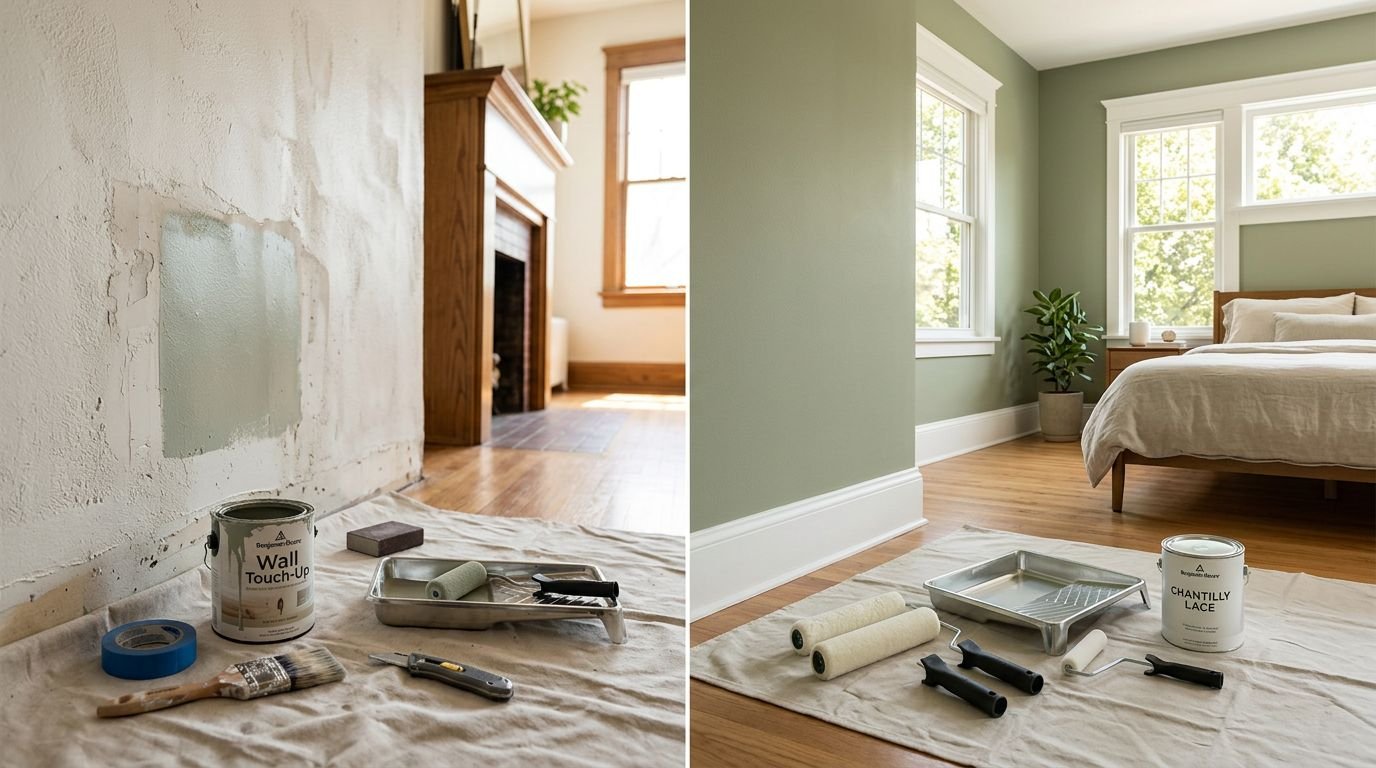
Addressing minor scratches and scuffs, water stains, or peeling patches can be necessary when you want to maintain your home’s curb appeal, as these imperfections often make a whole room feel unfinished. Yet, Minneapolis paint touch-ups do not always save money, especially when matching original paint requires several professional visits and meticulous surface preparation.
The lowest quote is not always the lowest total cost. A well-planned repaint can deliver a cleaner finish, longer service life, and fewer repeat repairs for your home.
Key Takeaways
- Touch-ups work best when you have matching paint, a small isolated defect, and sound surrounding surfaces.
- Aged paint, weather damage on faded siding, and sheen differences can make a small repair stand out.
- Repeated travel, setup, masking, and cleanup can raise the cost of several minor service calls.
- Minneapolis weather can turn exterior paint damage on your siding and trim into a larger surface prep issue.
- Repainting one wall, one room, or opting for a full repaint of your home exterior can be the better long-term value.
Why a Small Touch-Up Can Carry a Big Price
A painter does not simply open a can and cover a blemish. When it comes to interior painting, even a small repair often requires protecting floors, moving furniture, filling damage, sanding, priming, painting, and cleaning up.
That work takes less paint than a full room, but it still requires skilled labor and a service visit. Professional painters must load materials, drive to your Minneapolis home, set up safely, and return if the first color match needs adjustment.
Repeated mobilization becomes expensive when homeowners schedule several isolated touch-ups. One visit to repair a stairwell nick, another for a bedroom wall, and a third for peeling trim painting can cost more than grouping the work into a planned repaint.
Small repairs are economical when they disappear. When scratches and scuffs remain visible, the money spent on patching often becomes money spent twice.
Interior painting also exposes flaws under normal light. A repaired spot near a window, lamp, or ceiling fixture may look different at certain angles, even when the color appears close in the paint tray.
Color Matching Is Harder Than It Looks
The paint code printed on the lid of your original paint can serves as a starting point, not a guarantee. While modern color-matching technology helps professionals create accurate formulas, it cannot account for the way sunlight, indoor lighting, cooking residue, cleaning, and ordinary aging alter the appearance of walls over time.
Even paint mixed from the exact same formula can look different if the original wall has faded or yellowed. Flat paint offers more forgiveness, while eggshell, satin, semi-gloss, and gloss finishes reveal lap marks and patched areas more easily.
Paint Age and Sheen Create Visible Patches
Interior paint changes significantly after years on the wall. A fresh sample may match in the center of a wall but appear cleaner or darker when placed beside aged paint.
Sheen creates another common problem. If a hallway has eggshell paint and the repair uses satin, the patch may flash under overhead lighting. The color can be correct, but the finish will still look wrong. A professional may need to feather paint beyond the damaged spot or repaint the full wall from corner to corner to achieve seamless blending. This extra coverage often provides the only reliable way to create one consistent visual plane.
For water stains, the repair process must also include proper priming. Skipping this step can allow discoloration to bleed through fresh paint, which leads to another visit and more expense.
Why Exterior Color Matches Often Fail
On a Minneapolis exterior, sunlight and weather take an even bigger toll. South-facing siding and trim often fade faster than shaded areas, while porch railings and window trim collect moisture and grime.
A paint store can scan a sample, but it cannot restore the original color of every weathered board. The repaired section may still appear newer than the surrounding siding, making the fix obvious.
This is especially noticeable on broad areas of lap siding, garage doors, and fascia. Repainting an entire elevation, rather than a few isolated boards, may produce a better match and a more uniform protective coat.
Surface Preparation Can Outweigh the Painting
Surface preparation is the foundation of any successful paint job, as paint only adheres to a clean, dry, and stable surface. If the underlying wall or siding is compromised, the actual act of painting often becomes the shortest part of the project.
Professional drywall repair is frequently required, involving patching, sanding, spot priming, and texture matching before a drop of paint is applied. On textured walls, a smooth patch can be just as noticeable as the original damage.
Exterior repairs require even more scrutiny. A thorough paint chip repair process is necessary to ensure longevity. Loose paint must be removed, exposed wood needs specialized priming, and failed caulk around trim or windows often requires a full replacement. Applying new paint over unstable, peeling layers only hides the underlying problem for a short time.
The EPA’s renovation, repair, and painting guidance matters for homes built before 1978. Disturbing old painted surfaces can create lead-dust risks, so homeowners should discuss proper containment and safe work practices before sanding or scraping.
The Prep Work That Changes the Estimate
The following conditions often shift a project from simple touch-up territory to full repainting:
- Peeling paint or the need for paint chip repair extends beyond one small section of siding and trim.
- Drywall repair is required for repeated cracks, loose tape, or previous patches that show through the finish.
- Caulk has split along several window frames, fascia boards, or corner joints.
- Mildew, chalking, or dirt affects more than a small, cleanable spot.
- Multiple walls need separate repairs but share the same color and finish.
A painting service in Minneapolis can inspect these conditions before recommending a narrow repair. A clear assessment prevents a homeowner from paying for a patch that fails after the next season.
Minneapolis Weather Changes Exterior Touch-Up Decisions
Consistent seasonal maintenance is the best way to monitor how local conditions affect your home. Cold winters, humid summers, and frequent freeze-thaw cycles put steady stress on exterior coatings, often leading to visible weather damage. When water enters tiny cracks, freezes, and expands, it can lift paint from wood trim or siding.
Humidity also plays a major role in exterior house painting. Paint requires a dry surface and specific environmental conditions to bond correctly. When paint is applied to damp wood or during a poor drying window, it loses its vital moisture protection and adhesion early.
The National Weather Service winter safety resources illustrate the harsh winter conditions Twin Cities homes face each year. These temperature swings explain why spring inspections often reveal blistering paint, failed caulk, and soft wood in vulnerable areas. Homeowners in Edina, St. Louis Park, Maple Grove, and Roseville often see the same pattern. A small peeled area on a window sill often signals that moisture has already bypassed the paint film, making it more than a simple cosmetic flaw.
Seasonal Timing Affects Cost and Quality
Exterior touch-ups make the most sense when the damaged area is truly isolated and the surrounding coating remains secure. A dry, mild stretch of weather gives the repair enough time to cure properly.
However, waiting too long can raise your overall costs. If water reaches bare wood, painters may need to perform extensive scraping, spot priming, and filling before they can repaint larger areas to ensure a consistent finish.
A planned exterior repaint also allows the crew to address preparation across the entire home at once. This professional approach improves the longevity of your exterior house painting project because the entire coating system receives consistent surface prep, primer, and finish coverage. By addressing weather damage early with proactive seasonal maintenance, you ensure better moisture protection for your home throughout the year.
When Repainting a Wall or Room Is the Better Buy
A full repaint does not mean every project must become a whole-house job. Often, repainting one wall or one room is the sensible middle ground.
If a touch-up falls on an open wall with no natural break, painting the entire wall usually looks better. Corners, doors, and trim lines create visual stopping points, so they help hide the transition. Think of this like auto body refinishing. Just as a mechanic cannot simply buff out a deep dent without potentially needing to repaint the entire panel to match the surrounding area, walls require a consistent application to achieve a factory-quality finish. When you choose to repaint rather than patch, you ensure the sheen and color remain uniform, which is vital for preserving your home’s long-term resale value.
This comparison can help frame the choice:
| Situation | Touch-Up Often Makes Sense | Repainting Often Makes Sense |
|---|---|---|
| Interior scuff | You have fresh matching paint and flat finish | The wall is faded or the sheen is difficult to match |
| Water damage | The source is fixed and stain is isolated | Stains, repairs, or color variation cover a wide area |
| Exterior peeling | One small, stable area needs repair | Peeling, cracking, or bare wood appears in several places |
| Multiple defects | All repairs fit one service visit | Separate calls would be needed across rooms or elevations |
The practical takeaway is simple: the visible finish matters as much as the square footage. Repainting a larger continuous area can cost less than repeated attempts to make several small spots disappear.
For an interior project, professional interior house painting services can include wall repair, careful masking, and full-wall coverage where a touch-up would remain visible. By utilizing expert interior painting, you give the room a consistent color and sheen instead of a patchwork appearance.
DIY Touch-Ups Can Turn Into Repeat Repairs
DIY touch-ups can work for a tiny mark or a simple paint chip repair when the original paint is fresh, labeled, and stored correctly. Even then, the homeowner still needs the right sheen, a clean surface, and a method that blends the repair beyond the damaged spot.
Problems start when paint is rolled only over the patch. The repaired area can show a hard edge, a different roller texture, or a noticeable sheen change after drying.
Exterior work has higher stakes. Inadequate scraping, skipped primer, or painting on damp material can lead to peeling long before the rest of the exterior needs paint.
Professional workmanship also has value when warranty coverage matters. A qualified painter can identify whether the issue is normal wear, moisture intrusion, failed caulk, substrate damage, or a previous coating failure.
If several repairs have accumulated, it is time to contact professional painters for a free estimate before buying more sample jars and making another weekend repair attempt. A local Minneapolis painting team can compare the cost of targeted repairs with repainting the areas that need a uniform finish, helping you decide if Minneapolis paint touch-ups are truly the most cost-effective solution for your home.
Frequently Asked Questions
Why does a small paint touch-up sometimes cost as much as painting a full room?
Professional painting involves significant labor beyond the actual application of paint, including setup, site protection, and cleanup. Whether a painter is covering one small spot or an entire wall, they must still account for the cost of travel, equipment mobilization, and surface preparation, which often makes small, isolated repairs inefficient.
Can I just use the leftover paint from when my home was originally painted?
While original paint is a good starting point, paint stored for years often loses its original color consistency due to fading and surface oxidation on your walls. Even with an exact color match, differences in sheen, application methods, or the age of the surrounding paint often make the repair look like a visible patch rather than a seamless blend.
When is it better to repaint an entire wall instead of just touching up a scuff?
If you have a damaged area that is centrally located on a wall with no natural breaks, such as corners or door frames, a patch will likely remain visible due to variations in texture and sheen. Painting the entire wall from corner to corner ensures a consistent finish that hides the repair and eliminates the risk of an uneven or “flashed” appearance.
Why do exterior paint repairs fail more quickly than interior ones?
Minneapolis weather, including extreme temperature swings and humidity, significantly impacts exterior paint adhesion. If a small repair is performed without addressing underlying moisture, failed caulk, or surface decay, the new paint will likely peel or blister, ultimately requiring more extensive repairs later.
Choose the Repair That Will Still Look Good Next Season
Minneapolis paint touch-ups are a smart way to save money when the damage is localized, the color match is reliable, and the surrounding paint is still in good condition. However, if you are dealing with significant fading, inconsistent sheen, or repeated surface failures, a full repaint often provides better long-term value.
Opting for a full repaint not only protects your home but also restores your property’s curb appeal by eliminating the visual evidence of old patches. We recommend requesting a detailed estimate that breaks down the costs of targeted repairs versus a full-wall or exterior refresh. By comparing these options, you can choose the solution that provides lasting protection and ensures your home looks great well into next season.