
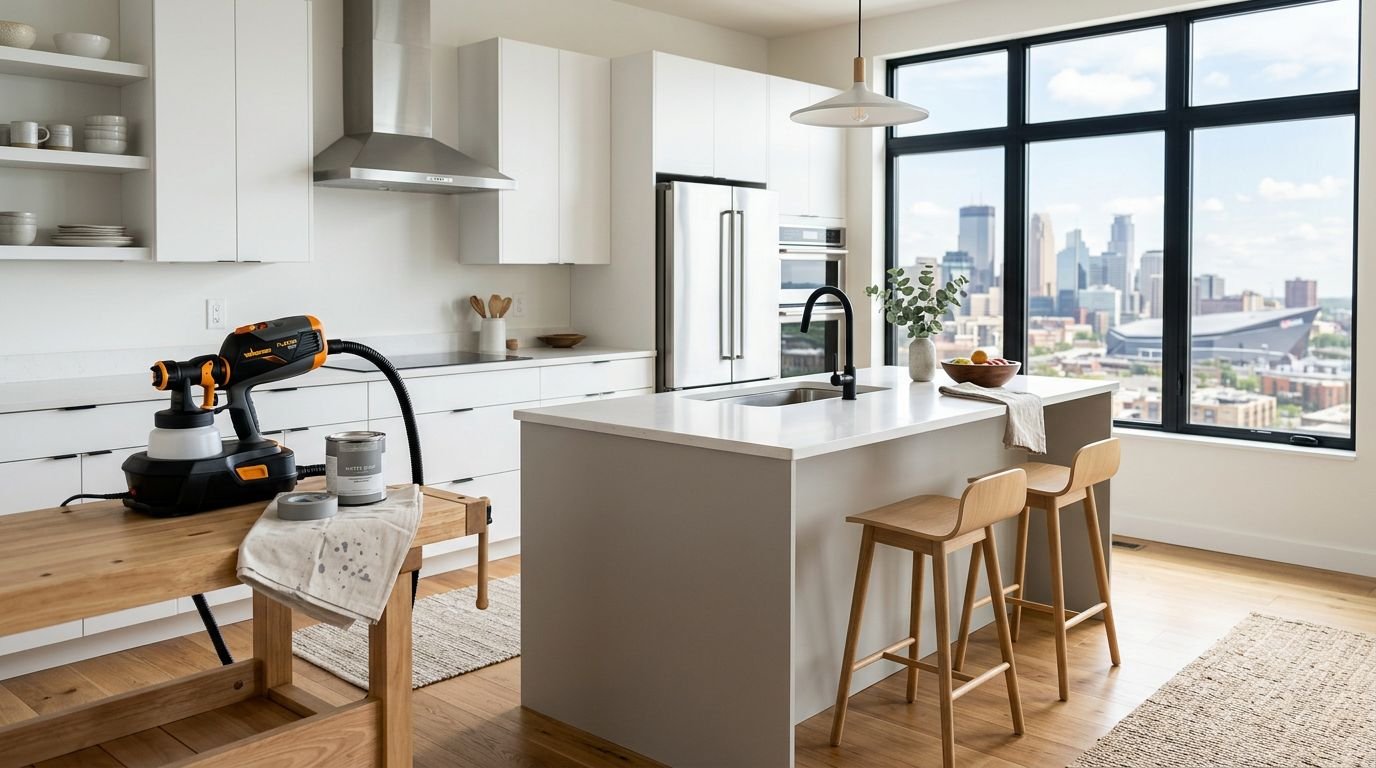
A freshly painted kitchen island can completely transform the aesthetic of your home in Minneapolis without the high price and disruption of a full kitchen remodel. For local homeowners in 2026, the kitchen island painting cost Minneapolis professionals typically charge ranges from $650 to $1,600 for a high-quality, sprayed, or hand-finished result.
The final price depends on far more than the island’s color. Cabinet condition, necessary surface repairs, the total number of doors and drawers, your paint preference, and intensive prep requirements all shape the final estimate. A clear scope of work helps you compare bids accurately, ensuring you select a service provider based on quality rather than choosing solely on the lowest number.
Key Takeaways
- For most homeowners in Minneapolis, the average cost to paint a kitchen island ranges from $650 to $1,600 in 2026.
- Larger islands, damaged finishes, detailed trim, and major color changes can increase project pricing to $1,600 to $3,000 or more.
- Thorough prep work, including cleaning, sanding, priming, and masking, is the most important factor in determining how long your kitchen cabinet painting finish will last.
- Professional cabinet-grade coatings cost more than standard wall paint, yet they offer superior durability against moisture, food splatter, and daily wear.
- A reliable written estimate should clearly outline the scope of prep work, materials, repair requirements, the type of finish, the expected timeline, and all warranty terms.
What a Painted Kitchen Island Costs in Minneapolis
A basic island with two to four cabinet doors, a solid existing finish, and no major repairs often lands near the lower end of the range. Painters can complete this type of project efficiently because the cabinet boxes need limited correction before paint.
However, many islands need more attention than homeowners expect. Grease buildup, chipped corners, worn edges near stools, and old brush marks can all affect the kitchen island cabinet painting cost. When you look into kitchen cabinet painting, a professional must correct those surface issues before applying a durable topcoat.
Here is a practical 2026 pricing guide for Minneapolis-area homes. When reviewing these figures, keep in mind that the average cost varies based on project complexity. While some contractors use a per door rate to calculate your quote, others might estimate a price per square foot for larger islands. These figures represent the typical cost to paint cabinets for a focal point like an island.
| Kitchen island condition and scope | Typical 2026 cost range |
|---|---|
| Small island, good condition, one color | $650 to $1,000 |
| Standard island with doors, drawers, and minor repairs | $900 to $1,600 |
| Large island with detailed panels or a contrasting base | $1,300 to $2,200 |
| Extensive repairs, glazing removal, or multiple colors | $1,600 to $3,000+ |
Most homeowners spend more on preparation than they initially expect. That is usually money well spent. A painted island gets touched, bumped, cleaned, and used every day, so weak prep shows up quickly.
A low quote may exclude repairs, primer, hardware removal, or cabinet-grade coatings. Compare the work included, not only the total price.
Minneapolis homes also vary widely in kitchen layout. A compact condo kitchen in the North Loop presents a different job than a large island in Edina, Wayzata, or Maple Grove. When professional painters assess your kitchen size and layout, they consider factors like access, ventilation, nearby finished surfaces, and the amount of masking needed, as these all affect final labor time.
The Details That Raise or Lower Cabinet Island Painting Costs
The size of your island is a primary factor in the estimate, but it is only one part of the equation. Doors, drawers, trim, and finished end panels add surface area and increase the time required for careful masking and sanding.
Existing Finish and Surface Damage
The existing finish significantly dictates your project scope. Factory-finished surfaces, wood-stained cabinets, laminate, and previously painted surfaces all require different preparation techniques. A painted wood island with minor wear may only need cleaning, scuff sanding, spot priming, and caulk. Conversely, a slick laminate surface often requires a specialty bonding primer before paint can adhere properly.
Deep scratches and chipped corners also necessitate filler and sanding. If the island has peeling paint, the painter must remove loose material and feather the edges. Skipping these steps can leave visible ridges beneath the new finish.
Homes built before 1978 deserve additional caution. Disturbing older painted surfaces may create lead hazards, so homeowners should review the EPA’s Renovation, Repair and Painting Program before sanding starts. Minneapolis painters must use appropriate containment and work practices whenever these risks are identified.
Doors, Drawers, and Decorative Features
A plain cabinet box costs less to paint than an island featuring shaker doors, beadboard, corbels, open shelves, or decorative legs. Each feature creates more edges and corners that demand extra sanding and coating.
Removing door and drawer fronts can improve access and final finish quality. This process adds labor for hardware handling, labeling, drying, and reinstallation. If you choose a different color for the island than for your perimeter cabinetry, painters will also need extra masking and cleanup time to ensure crisp lines.

Photo by Keegan Checks
Paint Type and Application Method
Kitchen cabinets need a harder coating than typical wall surfaces. Standard wall paint may look acceptable at first, but it can soften under repeated cleaning and daily wear around handles. High-quality cabinet coatings are formulated to cure into a significantly tougher finish.
Products such as Sherwin-Williams Emerald Urethane Enamel are excellent choices for these projects because of their impressive durability. When working with bare wood or specific wood-stained cabinets, an oil-based primer is often necessary to block tannins and prevent discoloration from seeping through the topcoat. The right product still requires proper surface prep and sufficient cure time.
Brush and roll methods work well on some islands, especially when a homeowner prefers a lightly textured, hand-painted aesthetic. Sprayer application usually produces a smoother appearance, but it requires meticulous masking, dust control, and a protected work area. The better option depends on the island design, the kitchen layout, and your desired final look.
What Professional Island Painting Should Include
A reliable estimate should describe the process in plain language. Vague descriptions such as “paint island” leave too much room for shortcuts. When you hire professional painting services in Minneapolis, you should expect a comprehensive approach that ensures quality results.
Most cabinet island painting projects should include the following work:
- Cleaning the surface to remove grease, residue, and kitchen grime.
- Removing or protecting hardware, countertops, floors, appliances, and nearby cabinetry.
- Performing thorough sanding and prep work to create proper adhesion.
- Repairing small dents, chips, nail holes, and open seams when included in the scope.
- Applying bonding primer when the surface requires it.
- Applying two finish coats of durable cabinet finishes that resist everyday wear.
- Reinstalling all hardware and inspecting the door and drawer fronts before reviewing the finished island with the homeowner.
Some painters paint doors and drawer fronts off-site or in a controlled work area, while others create a protected workspace in the home. Either method can work when the crew controls dust, protects the kitchen, and allows proper drying time.
A full kitchen island project often takes two to four working days, depending on your specific kitchen size and layout, which can also influence the total average cost of the project. Although the island may feel dry shortly after the final coat, homeowners should avoid heavy scrubbing or dragging stools against the base until the coating fully hardens. Before committing to a project, always request a free estimate to confirm exactly what is included in the scope of work.
Why Minneapolis Pricing Changes Between Estimates
Two estimates can differ by several hundred dollars without either being unreasonable. One contractor may include detailed prep, while another may price only basic painting. Labor costs can also fluctuate when a kitchen remains occupied throughout the project, forcing the crew to reset the workspace each day.
Professional painters in Minneapolis may also schedule indoor cabinet work around exterior painting demand. Spring and summer are peak seasons for exterior projects, so homeowners who want an island painted during those months should ask about scheduling early. Furthermore, the overall cost to paint cabinets can vary depending on whether the contractor uses high-end products like Sherwin-Williams or more budget-friendly alternatives.
Quality work requires more time. The painter must protect countertops, create clean lines at cabinet edges, and prevent dust from settling into fresh coatings. Those details separate a finish that looks good for a season from one that remains durable for years.
When comparing a quote from professional painting services in Minneapolis, ask these questions:
- Does the price include cleaning, sanding, primer, and minor repairs?
- Do you offer a free estimate that outlines all materials and labor?
- What coating will go on the island, and how many finish coats are included?
- Will the team remove hardware and protect surrounding cabinets?
- How long should the finish cure before normal kitchen use?
- Does the company provide written warranty terms for peeling, adhesion, or workmanship issues?
For more context on project preparation and interior finishes, review this interior painting guide. A detailed consultation can also identify whether the island alone needs paint or whether nearby cabinets need color matching to ensure a cohesive look throughout your Minneapolis home.
Color Choices That Affect the Finished Look
Island colors often create contrast, while perimeter cabinets stay light and neutral. Deep navy, charcoal, muted green, and warm gray remain popular choices because they anchor the room without making it feel dark. When selecting your palette, look to premium paint lines like Benjamin Moore for high-quality pigments that resist fading in high-traffic areas.
Still, color selection should account for existing countertops, flooring, backsplash, and lighting. A blue-black island can look refined beside white quartz but may feel heavy in a kitchen with limited natural light. Paint samples should be viewed at different times of day before the work begins. If your cabinets are showing significant wear, some homeowners opt for cabinet refinishing to restore a natural wood look or create a professional stained finish as a stylistic alternative to traditional painting.
Finish sheen matters, too. Satin is a common choice because it offers a soft sheen and wipes clean easily. Semi-gloss provides more shine and durability, though it also reveals dents, scratches, and uneven surfaces more readily.
Kitchen cabinet painters in Minneapolis can also help homeowners decide whether the island should match the wall cabinets. Matching colors create a calm, uniform kitchen. A contrasting island makes the room feel more custom, especially when it ties into stools, pendant lights, or a nearby dining area to match current Minneapolis interior design trends.
Workmanship and Warranty Matter More Than a Bargain Quote
A cabinet finish is only as strong as the surface beneath it. Paint cannot hide peeling coatings, greasy residue, deep scratches, or loose caulk for long. Dedicated sanding and prep work are vital for long term durability, ensuring the new finish adheres properly to the wood. When you consider that kitchen cabinet painting is significantly more affordable than the high cost of replacing kitchen cabinets, investing in the right preparation is a smart financial move.
Ask for warranty details in writing before work begins. Reputable professional painters should provide a workmanship warranty that details exactly what they cover and how the company handles adhesion problems. This guarantee should also clearly distinguish between coating failures and damage caused by normal impact, water, or general abuse.
Homeowners who plan a wider update can explore Minneapolis residential painting options. Coordinating your island project with other home improvements, such as trim updates or drywall repair, creates a more consistent result and reduces repeated setup work. When you are ready to refresh your space, reach out to experts who specialize in high quality interior painting.
Frequently Asked Questions
How long will a painted kitchen island finish last before it needs to be redone?
When a professional utilizes proper surface preparation and high-quality cabinet-grade coatings, a painted island can last for many years even with heavy daily use. The durability of the finish primarily depends on the quality of the cleaning, sanding, and priming steps performed before the paint is ever applied.
Can I paint my kitchen island myself to save money?
While DIY is possible, professional painters provide access to specialized spraying equipment, industrial-grade primers, and years of experience in creating smooth, factory-like surfaces. Painting cabinets is a detail-oriented process where minor errors in prep or application can lead to visible brush strokes, peeling, or premature wear.
Do I need to remove my countertop to get the island painted?
In almost all cases, you do not need to remove the countertop to achieve a professional finish. Experienced Minneapolis painters use precision masking techniques and specialized tools to carefully paint around the underside of the countertop while ensuring the surrounding areas remain fully protected from drips and debris.
Why is the cost for an island sometimes higher than expected?
Pricing often increases based on the amount of labor required for repairs and intricate details like decorative panels, trim, or corbels that need careful sanding. If your island has significant wear or grease buildup, the extra time required for cleaning and surface correction will be reflected in the final professional estimate.
Final Thoughts on Minneapolis Kitchen Island Painting Costs
A professionally painted island usually costs far less than a full replacement, yet it can deliver a dramatic transformation in a busy kitchen. For 2026, most homeowners should expect an average cost of $650 to $1,600 for this service, though larger or repair-heavy projects may fall on the higher end of the spectrum. When looking at kitchen cabinet painting as a whole, focusing on quality is the best way to protect your investment.
The most important factor for long-term success is the quality of the sanding and prep work, as this ensures the finish adheres properly and resists chipping. A well-painted island should look intentional, feel smooth to the touch, and stand up to the demands of everyday family life. By prioritizing durable materials and expert craftsmanship, you can ensure your project remains a beautiful focal point in your home for years to come in Minneapolis.