
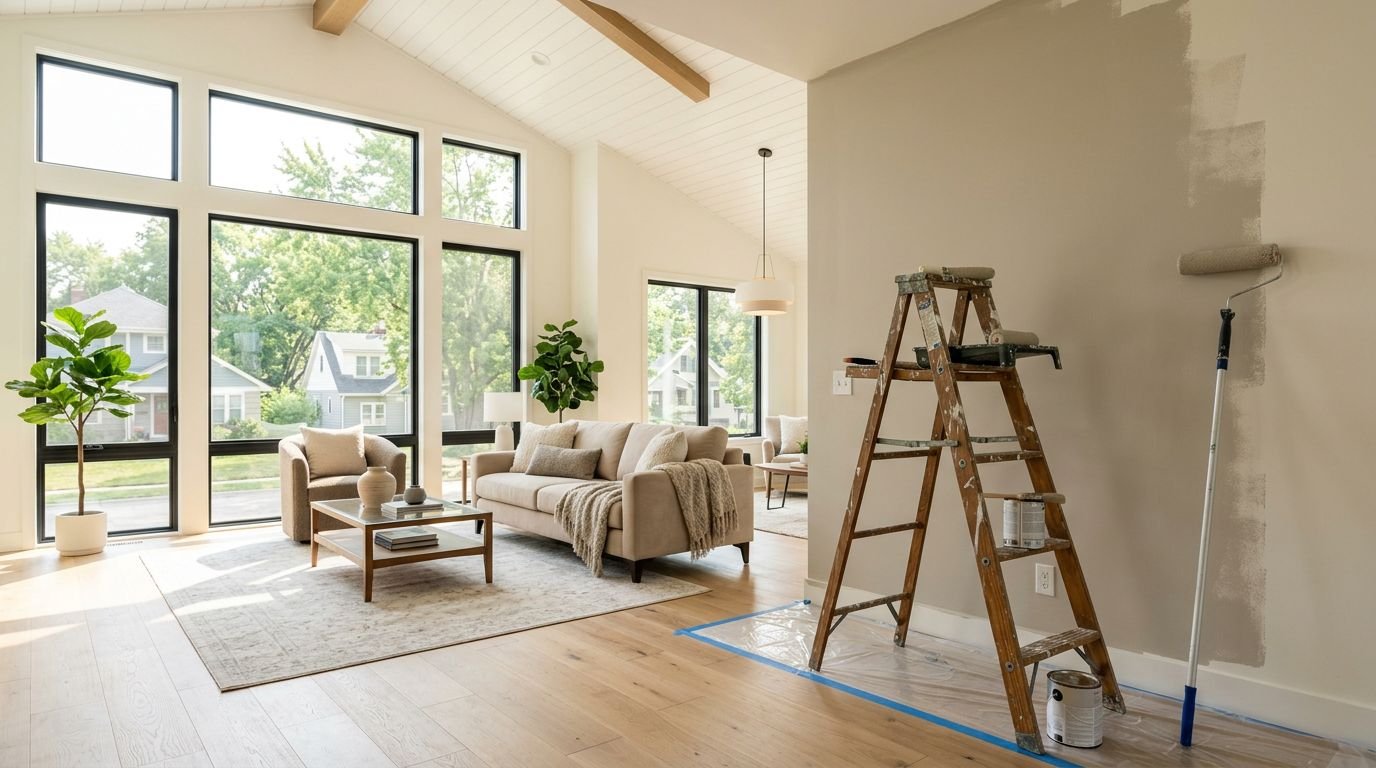
A room with a taller ceiling can look amazing, but it almost never costs the same to paint as a standard room. When you are planning professional interior house painting in Minneapolis, those extra feet of vertical space directly impact the labor, setup time, safety planning, and the total volume of materials required.
If you are currently evaluating the interior painting cost for your home in 2026, keep in mind that the cost per square foot based on floor size alone will not tell the full story. Increased ceiling height shifts your painting project from a quick wall refresh to a more technical endeavor, especially when dealing with foyers, stairwells, great rooms, and vaulted bedrooms.
Key Takeaways
- Ceiling height dictates cost: Taller ceilings add significant square footage to your walls and require more paint, primer, and time, moving the project beyond simple room-footprint pricing.
- Labor is the primary driver: Increased height requires more intensive setup, specialized equipment like scaffolding or tall ladders, and slower, more deliberate cut-in work, which heavily impacts labor costs.
- Safety and access add complexity: Projects in high-volume spaces like vaulted ceilings, stairwells, and two-story foyers are technically demanding, necessitating professional experience to ensure quality results and proper site safety.
- Local factors influence timing and prep: Minneapolis climate, specifically seasonal humidity and dry winter heat, can affect wood trim and drying times, making professional preparation essential for long-lasting, warranty-backed results.
Why taller ceilings push painting prices higher
Most homeowners expect to pay more for a larger room. What catches people off guard is that ceiling height changes the math even when the room footprint stays the same.
A 12-by-15 room has a 54-foot perimeter. If you raise the ceiling from 8 feet to 10 feet, you add 108 square feet of wall area before a painter even touches the trim and doors, or the ceiling itself. When calculating the total square footage, that extra surface area adds up fast, especially when you factor in primer and two finish coats. This significantly impacts the overall cost to paint a room.
Current national average cost data for interior painting projects often falls between $2 and $6 per square foot. Furthermore, a recent Minnesota 2026 pricing guide indicates that the average interior painting cost is heavily influenced by ceiling height.
This quick comparison shows why:
| Ceiling type | Access needs | Labor and materials impact | Cost trend |
|---|---|---|---|
| 8-foot ceiling | Step ladder or pole | Base pace | Lowest |
| 9-foot ceiling | More ladder moves | Slower cut-in | Slightly higher |
| 10-foot ceiling | Tall ladders, longer poles | Increased prep and material costs | Higher |
| Vaulted or two-story | Specialty ladders or scaffolding | Slowest pace | Highest |
The big takeaway is simple: height adds labor first, and material costs second.
In tall rooms, labor usually raises the price more than the paint itself. That matters when you compare bids from one painting service in Minneapolis to another. A quote that looks cheap at first may leave out the extra setup, ceiling cut-ins, or necessary wall repairs.
Labor, equipment, and safety are the real cost drivers
Tall walls do not slow painters down because they are harder to color. They slow the job because every step takes longer, which impacts overall labor rates.
Cutting a clean line where a 10-foot wall meets the ceiling is slower than working at 8 feet. Professional painters are required to ensure these lines remain sharp, as the added height makes every detail more visible. Similarly, meticulous surface preparation, such as patching nail pops near crown molding and sanding repaired drywall overhead, becomes significantly more time-consuming when working on ladders or scaffolding. Masking off lights or smoke detectors above standard reach also adds to the complexity of the task.
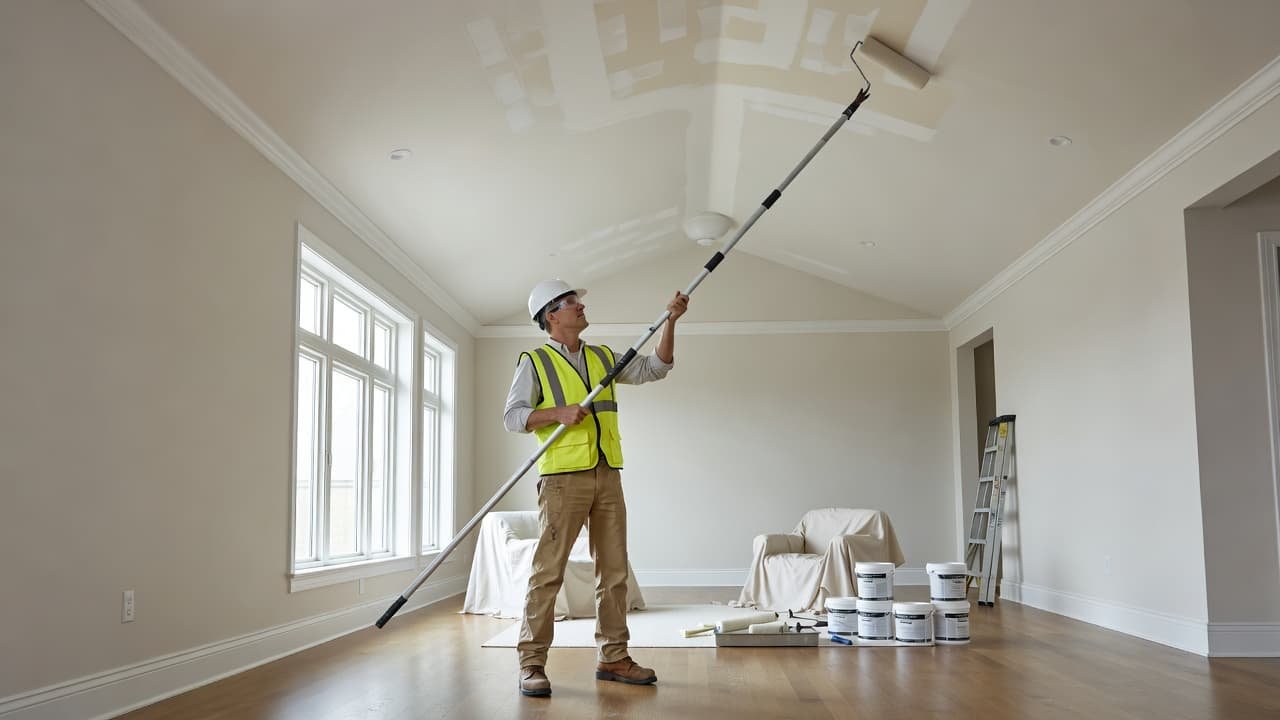
For vaulted ceilings, stairwells, and two-story entries in cities like Edina, Plymouth, Maple Grove, and Woodbury, crews often require tall A-frame ladders, adjustable platforms, or scaffolding. Setting up this equipment takes time. It also requires extra care when moving furniture, protecting floors, and keeping the space safe. Because you are essentially covering more surface area when dealing with high-volume rooms, the total square footage increases, which is why these projects are often calculated using a higher cost per square foot.
Safety is a major cost factor as well. The professional painters Minneapolis homeowners trust do not rush high work. They use the correct ladder angle, protect landings, control drips, and keep a wet edge so the finish stays even. On a tall wall with strong natural light, roller marks and sheen flashes stand out more than they do in a standard bedroom.
The project timeline changes as well. A typical interior room might be painted in part of a day, but a vaulted family room can add a full day or more once the setup, prep, and ceiling work are included. That is one reason high-ceiling jobs often land near the upper end of local interior painting cost ranges.
Minneapolis homes add a few local factors
Minnesota weather does not stop at the front door. It affects interior projects, too.
During cold winters, indoor air often gets dry from heating systems. Wood trim can shrink a bit, small gaps can show, and old caulk lines may need extra attention before paint goes on. In summer, higher humidity can slow dry times, especially in bathrooms, kitchens, and older homes without balanced air movement.
That local pattern affects the project timeline. Many exterior house painters move indoors from late fall through early spring, so winter is often a smart season for a whole house interior painting project in Minneapolis and nearby suburbs. Still, the best crews book up early, especially for professional interior house painting in Minneapolis projects.
If you are pricing a two-story foyer or a vaulted primary bedroom, ask for a detailed scope. A room-by-room estimate from trusted residential interior painters makes it easier to see what height is adding to the total project cost and what is already included.
Why hiring a professional painter pays off on high ceilings
DIY painting might make sense in a small, square room, but high ceilings present a completely different challenge.

Photo by Blue Bird
Most homeowners do not own the specialized ladders or scaffolding required for tall walls. Renting this equipment adds significant expense to your painting project. You also have to consider the cost of high-quality paint, rollers, specialized poles, and primer to ensure the finish lasts. Once you add up the cost of materials and the time spent on two weekends of labor, the potential savings of a DIY approach often disappear.
Professional painters work cleaner and faster. They possess the expertise to load a roller for long, consistent passes, preventing lap marks and keeping ceiling lines perfectly straight. These details are vital in open-concept Minneapolis homes where the kitchen, dining, and living areas flow together. Furthermore, pros ensure the correct application of two coats of paint to provide uniform coverage that stands the test of time.
Experienced crews also identify underlying issues that could inflate costs later. They spot loose tape joints, popped fasteners, hairline cracks, and old stains before the finish is applied. That is a major reason why many homeowners searching for interior painters Minneapolis prioritize experience over the lowest bid.
If you are comparing a painting service in Minneapolis, ask these four questions:
- Does the quote include thorough surface preparation and wall patching?
- Is ladder or scaffold setup included in the price?
- Will the crew handle the walls, ceilings, and trim and doors as one matched scope?
- Can they provide a detailed plan for applying high-quality paint to ensure a durable finish?
Clear answers to these questions usually lead to fewer surprises and a much better result for your home.
Why workmanship and warranty matter more in tall rooms
A bad paint job on an 8-foot wall is frustrating, but a bad paint job at 18 feet is expensive to fix. When dealing with soaring vertical spaces, the combined labor and materials required for a corrective visit can escalate quickly.
High areas are difficult to touch up later, especially if the original color was not mixed perfectly or the sheen was not applied with professional consistency. This is why hiring professional painters in Minneapolis provides more than just a fresh coat of color. These experts ensure the application process holds up through harsh dry winters and the significant seasonal humidity swings common in Minnesota.
Long-term value relies heavily on meticulous preparation. Using a high-quality primer and the correct nap size ensures a smooth finish, while choosing high-quality paint protects your walls against early wear. Although these choices influence the initial material costs, they are essential for rooms where repainting is never a quick or simple chore.
Warranty value also becomes a major factor in tall rooms. If a finish fails on a standard wall, a touch-up is a minor task. However, if an issue develops over a staircase or above a two-story window line, you want a reliable crew that will return with the necessary equipment to correct the work safely and professionally.
Conclusion
Ceiling height significantly influences the total interior painting cost because it transforms the requirements of the entire job. While increased wall area is a factor, the additional labor, specialized access equipment, meticulous surface preparation, and essential safety planning often carry more weight in the final budget.
For Minneapolis homeowners, the smartest approach to planning your painting project is to look beyond the initial price tag. Evaluate the full scope of work, the quality of workmanship, and how the contractor addresses the unique challenges of tall walls in local homes.
If you are currently budgeting for a standard room, a vaulted ceiling, or a full interior repaint, request a written, free estimate that clearly breaks down prep work, the impact of ceiling height, and the estimated project timeline. This is the most effective way to understand the true value behind the total project cost and ensure your home receives the professional finish it deserves.
FAQ
Does a 10-foot ceiling cost more to paint than an 8-foot ceiling?
Yes. A 10-foot ceiling increases the total square footage of your walls. Because the wall area is larger, it impacts the cost per square foot, slows down the precise cut-in work, and requires more frequent ladder movement, which increases the total cost to paint a room.
Are vaulted ceilings more expensive than flat ceilings?
Yes. Vaulted ceilings often require specialty ladders, extension poles, or scaffolding to reach high peaks. Since these features take longer to prep and paint compared to standard flat ceilings, they will typically fall on the higher end of the average interior painting cost range.
Do painters charge extra for stairwells and two-story foyers?
Often, yes. These architectural features are much harder to access and protect. Because of the complex safety setup required for professional interior house painting in these areas, the labor cost will naturally be higher than in standard rooms.
Is winter a good time for interior painting in Minneapolis?
Yes, winter is an excellent time to schedule your interior house painting project because crews are focused on indoor work. However, the dry air from winter heating can reveal gaps or cracks in woodwork, which may require extra prep work that influences the overall cost to paint a room.
Can I save money by painting tall walls myself?
Sometimes, but the savings are usually smaller than expected when you consider the cost per square foot of your time and effort. Once you factor in the rental of professional equipment, the time investment, and the risk of mistakes, the cost to paint a room yourself may not be as low as it seems compared to the national average cost of professional labor.
Does professional warranty coverage matter for high ceilings?
Yes. Warranty coverage is crucial for high-ceiling rooms because any necessary touch-ups or corrections require specialized equipment and significant labor. Investing in a professional service ensures your painting project is protected against workmanship issues without you needing to rent equipment later.
FAQ schema markup
{ “@context”: “https://schema.org“, “@type”: “FAQPage”, “mainEntity”: [ { “@type”: “Question”, “name”: “Does a 10-foot ceiling cost more to paint than an 8-foot ceiling?”, “acceptedAnswer”: { “@type”: “Answer”, “text”: “Yes. A 10-foot ceiling increases the total square footage of your walls. Because the wall area is larger, it impacts the cost per square foot, slows down the precise cut-in work, and requires more frequent ladder movement, which increases the total cost to paint a room.” } }, { “@type”: “Question”, “name”: “Are vaulted ceilings more expensive than flat ceilings?”, “acceptedAnswer”: { “@type”: “Answer”, “text”: “Yes. Vaulted ceilings often require specialty ladders, extension poles, or scaffolding to reach high peaks. Since these features take longer to prep and paint compared to standard flat ceilings, they will typically fall on the higher end of the average interior painting cost range.” } }, { “@type”: “Question”, “name”: “Do painters charge extra for stairwells and two-story foyers?”, “acceptedAnswer”: { “@type”: “Answer”, “text”: “Often, yes. These architectural features are much harder to access and protect. Because of the complex safety setup required for professional interior house painting in these areas, the labor cost will naturally be higher than in standard rooms.” } }, { “@type”: “Question”, “name”: “Is winter a good time for interior painting in Minneapolis?”, “acceptedAnswer”: { “@type”: “Answer”, “text”: “Yes, winter is an excellent time to schedule your interior house painting project because crews are focused on indoor work. However, the dry air from winter heating can reveal gaps or cracks in woodwork, which may require extra prep work that influences the overall cost to paint a room.” } }, { “@type”: “Question”, “name”: “Does professional warranty coverage matter for high ceilings?”, “acceptedAnswer”: { “@type”: “Answer”, “text”: “Yes. Warranty coverage is crucial for high-ceiling rooms because any necessary touch-ups or corrections require specialized equipment and significant labor. Investing in a professional service ensures your painting project is protected against workmanship issues without you needing to rent equipment later.” } } ] }
Pairing this with LocalBusiness schema can strengthen local relevance. Add your Minneapolis service area, phone number, business name, and residential interior painting services to the same page when possible.