
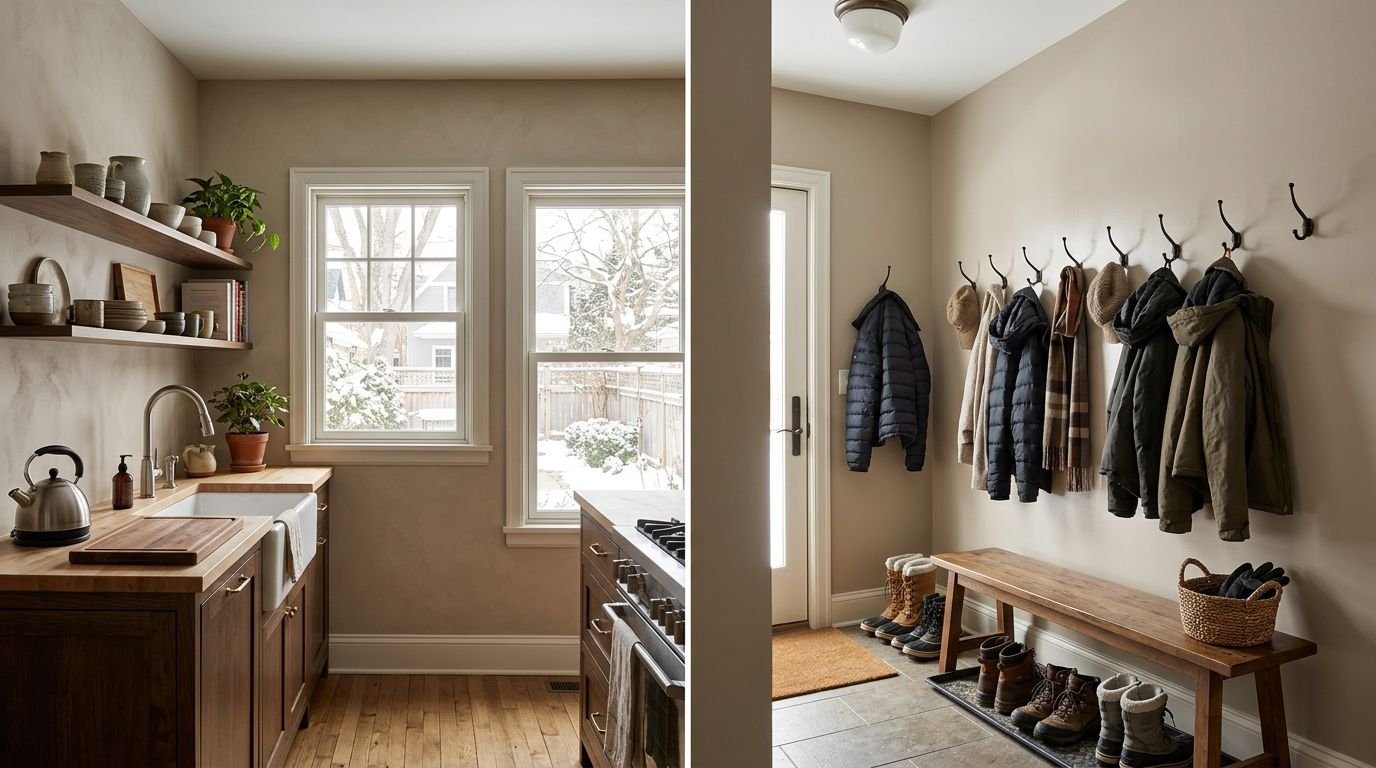
A kitchen wall can look freshly painted on Monday and show fingerprints by Friday. Choosing eggshell vs satin paint affects how easily your walls clean up, how much light they reflect, and how clearly they show surface flaws.
For Minneapolis homes, the decision matters most in busy rooms. Kids, pets, winter boots, cooking splatter, and daily traffic put kitchen and hallway paint to work. The right finish should look polished without turning every drywall imperfection into a spotlight.
Key Takeaways
- Satin paint handles frequent wiping better, so it often suits active kitchens, entry halls, and mudroom-adjacent corridors.
- Eggshell offers a softer, lower-sheen look that hides minor wall texture more effectively.
- Thorough patching, sanding, and priming matter as much as sheen, especially on older Twin Cities plaster and drywall.
- A consistent finish across connected rooms can make a narrow Minneapolis layout feel calmer and more intentional.
- Professional application reduces lap marks, flashing, and uneven sheen in high-traffic spaces.
Eggshell vs Satin Paint: The Practical Difference
Both eggshell and satin fall between flat paint and semi-gloss on the sheen scale. Eggshell has a soft, low-luster surface that resembles the faint glow of an actual eggshell. Satin has a smoother, more noticeable sheen, though it should not look glossy when applied correctly.
The higher sheen in satin comes with a practical tradeoff. It forms a more durable surface that resists stains and holds up better to routine cleaning. Benjamin Moore’s paint-finish guide also notes that higher-sheen paints offer stronger stain resistance and durability.
Eggshell is more forgiving visually. It softens the look of patched nail holes, light drywall ripples, and subtle roller texture. That quality makes it a smart choice when a hallway wall has old repairs or when you want a low-sheen finish in a less demanding kitchen.
The choice is not about one finish being universally better. Eggshell vs satin paint comes down to what the room asks of the wall. A formal dining room may favor eggshell, while a busy hallway beside the garage usually benefits from satin.
| Feature | Eggshell | Satin |
|---|---|---|
| Sheen level | Soft, low luster | Noticeable, smooth sheen |
| Surface flaws | Hides minor flaws better | Shows flaws more easily |
| Scrub resistance | Good for light cleaning | Better for frequent cleaning |
| Best fit | Low-traffic interiors | Kitchens, halls, entries |
| Light reflection | Gentle and muted | Brighter and more reflective |
For most hard-working spaces, satin wins on maintenance. However, a well-prepped eggshell finish can still perform nicely where you want a quieter look.
Why Satin Often Works Best in Minneapolis Kitchens
Kitchens ask more of paint than nearly any other room. Steam rises near the range, sauce splatters around the prep area, and cabinet pulls leave marks near walls. Satin stands up to those routine messes better than eggshell.
Its modest reflectivity also helps kitchens that receive limited daylight during Minnesota winters. In a north-facing kitchen, satin can bounce available light around the room without the sharp shine of semi-gloss. Use it on walls, not necessarily ceilings, for a clean contrast.
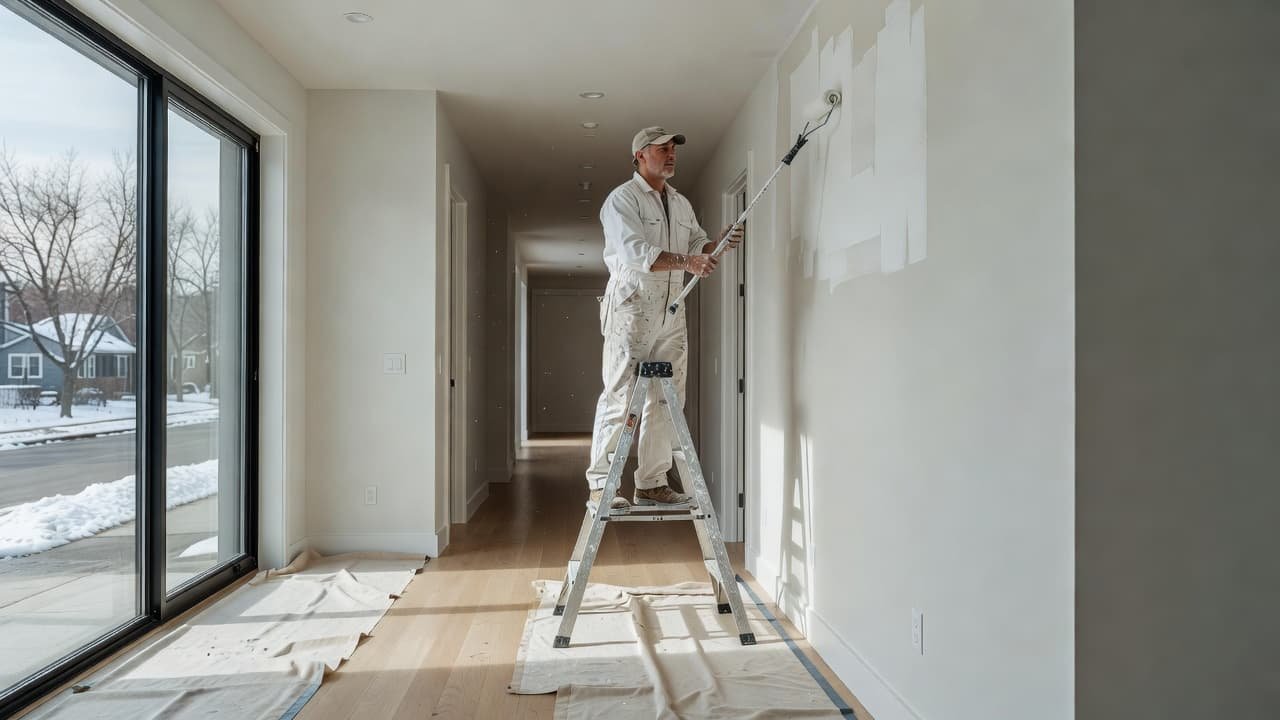
Satin does demand better wall preparation. A rough drywall patch, old paint ridge, or poorly sanded repair can become more visible once light hits the wall at an angle. Kitchens with pendant lights, under-cabinet lighting, or a sliding glass door often expose those flaws.
Satin’s washability only pays off when the wall underneath is smooth. Paint cannot disguise a raised patch or a poorly feathered repair.
For that reason, professional painters clean kitchen walls before painting, repair dents, sand transitions smooth, and prime bare patches. Grease residue deserves special attention. Fresh paint can struggle to bond when cooking oils remain on the surface.
A reliable interior house painting service in Minneapolis should also protect counters, appliances, floors, and cabinet faces before work begins. Careful masking and cut-in work separate a crisp finished kitchen from one with stray paint along the backsplash.
When Eggshell Is the Better Kitchen Choice
Eggshell can be a good fit in a lightly used kitchen with smooth, muted walls. It has a softer appearance that works especially well with warm whites, clay tones, pale greens, and other colors that can look overly reflective in satin.
Older Minneapolis homes often have walls with character, along with a few visible repairs. In those rooms, eggshell may look more even across broad wall sections. It also works well on a kitchen wall that sits away from the range, sink, and eating area.
Still, location matters more than room labels. You can use satin behind a breakfast nook or near a back door and eggshell on the remaining walls if the change occurs at a natural break. A doorway, cased opening, or wall return can keep the shift from looking accidental.
For homeowners comparing eggshell vs satin paint, test actual samples at different times of day. Brush a sample on a primed poster board, then hold it near the wall. Morning light, evening lamps, and under-cabinet fixtures can make the same color look surprisingly different.
Satin Paint for Hallways, Stairs, and Entry Areas
Hallways collect contact marks at shoulder height, scuffs near baseboards, and fingerprints around door frames. In Minneapolis and nearby suburbs such as Edina, St. Louis Park, Maple Grove, and Bloomington, a hall near the garage often sees wet coats, backpacks, and grit during the winter.
Satin is usually the safer choice for these high-contact walls. You can wipe marks with a damp, non-abrasive cloth and mild soap without dulling the finish as quickly. This eggshell and satin comparison also identifies satin as the more durable option for frequently cleaned rooms.
A satin hallway can also make a long, dim corridor feel brighter. That said, sheen reveals every uneven patch when light grazes the wall from a nearby window. Stairwells are especially demanding because the walls receive both side light and plenty of contact.
Choose eggshell for a quieter upstairs hall if traffic is light and the walls have noticeable texture. Many homeowners prefer this balance in bedroom corridors, where the softer finish complements lower evening lighting. Reserve satin for main-floor pathways, stair landings, foyers, and family entry zones.
Local interior painters in Minneapolis can help match sheen across connected walls, trim, doors, and ceilings. The goal is a coordinated finish, not a different shine on every surface.
Prep, Timing, and Workmanship Affect the Final Finish
Minneapolis winters do not stop interior painting, but they change the conditions inside a home. Closed windows, furnace heat, and occasional condensation can shift indoor humidity. Paint needs stable room temperatures, good airflow, and adequate dry time between coats.
Professional crews check the room conditions before painting and avoid rushing recoats. They also use proper primers on repairs, water-stained areas, and walls with uneven porosity. Without primer, patched spots may absorb paint differently and create flashing, which looks like dull or shiny blotches under changing light.
Exterior work follows a different seasonal rhythm. Freeze-thaw cycles can open small cracks in exterior caulk and trim, while snow and rain limit suitable painting days. Planning indoor kitchen or hallway work during colder months can leave summer scheduling open for exterior house painting and repairs.
DIY painting can work on a small, smooth accent wall. High-traffic kitchens and hallways are less forgiving. Roller overlap, inconsistent pressure, skipped sanding, and thin coverage can leave sheen variations that become obvious once furniture and lighting return.
A reputable residential painting service in Minneapolis should provide clear prep details, material choices, a written scope, and a final walkthrough. Ask about workmanship coverage, how the crew handles drywall repairs, and whether they apply full coats rather than stretching paint too far.
Choosing the Finish That Fits Your Home
Start with how the room lives each day. Pick satin when walls need frequent cleaning, receive lots of contact, or need a little more reflected light. Choose eggshell when you value a softer look and need more help concealing minor wall imperfections.
Color plays a part as well. Darker colors and deep saturated shades can show lap marks more readily in satin. A skilled painting service in Minneapolis can recommend the right product line, sheen, and prep plan before the first drop cloth goes down.
A Finish That Holds Up After the First Week
For hardworking Minneapolis kitchens and hallways, satin paint usually offers the stronger long-term choice. Its cleanable surface handles the ordinary marks that come with a busy home.
Eggshell remains a handsome option for lower-traffic areas and imperfect walls. With careful preparation and professional application, either finish can look even, durable, and right at home for years.