
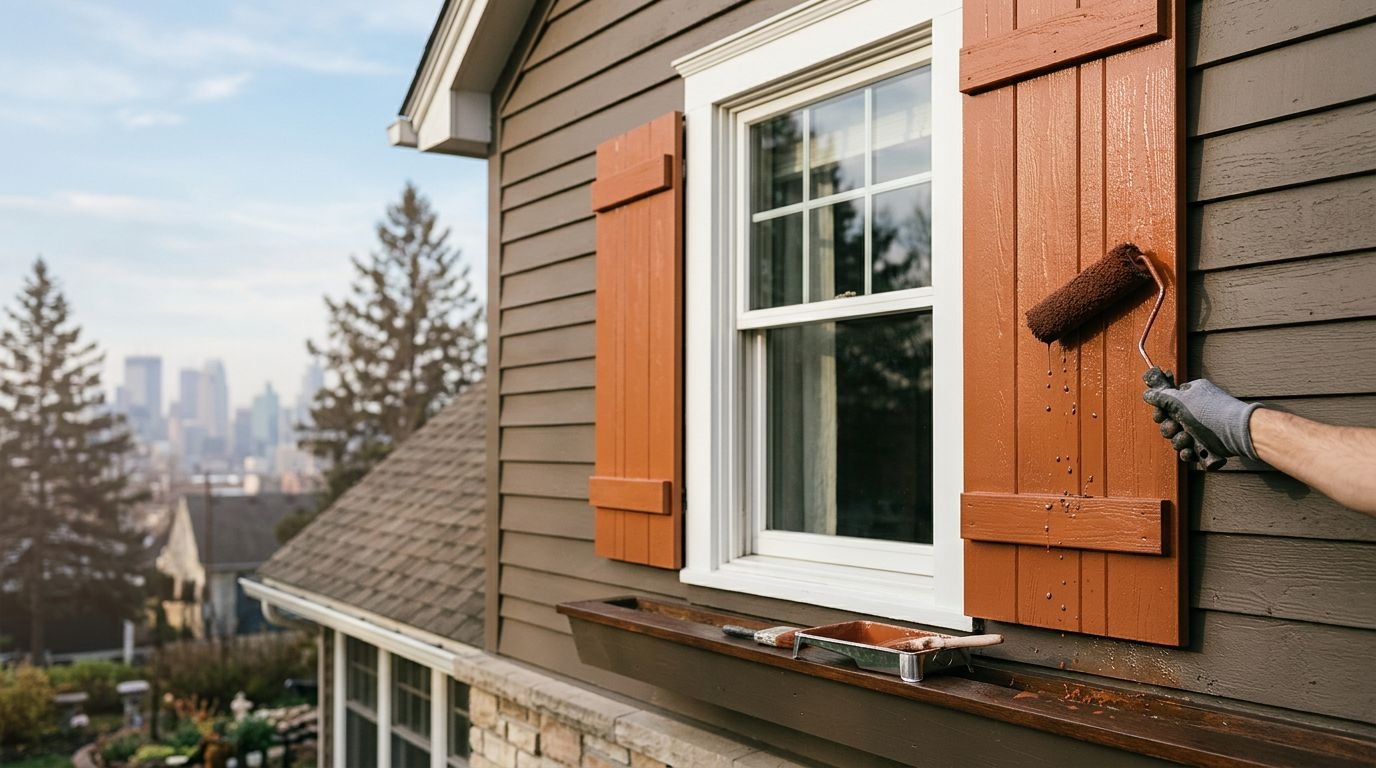
Exterior shutters do more than “sit there.” They frame your windows like eyebrows on a face, and when they fade or peel, the whole front of the house looks tired.
In 2026, Minneapolis homeowners are also dealing with the usual Minnesota troublemakers, humidity swings, strong sun, and freeze-thaw cycles that punish exterior coatings. So the price isn’t just about color. It’s about prep, access, and how long you want the finish to last.
If you’re trying to pin down your paint exterior shutters cost before you call anyone, this guide breaks down typical 2026 pricing, what’s included, and when it makes sense to hire a pro.
2026 Minneapolis pricing: what it costs to paint exterior shutters
Most shutter painting jobs fall into one of two buckets: painting them in place (faster), or removing them to paint on sawhorses (cleaner finish, more labor). In Minneapolis and nearby suburbs like Edina, Bloomington, Plymouth, and Maple Grove, pros often price shutters by the pair or by the shutter, with a minimum service charge.
Here are realistic 2026 ranges for paint exterior shutters cost in the Twin Cities, assuming standard wood or composite shutters in average condition.
| Scenario (2026) | Typical price per shutter | Typical total for 4 shutters | Notes |
|---|---|---|---|
| Paint in place, light prep | $60 to $110 | $240 to $440 | Best for decorative shutters in decent shape |
| Remove and paint off the house | $90 to $160 | $360 to $640 | Cleaner edges, better coverage, more time |
| Heavy scraping, peeling paint, spot repairs | $120 to $220 | $480 to $880 | Common on older wood shutters |
| Second-story access, tricky ladder setup | Add $15 to $60 | Add $60 to $240 | Steep grades and landscaping can raise labor |
| Specialty coatings, strong color change | Add $10 to $35 | Add $40 to $140 | Reds and deep blues often need extra coverage |
A common “surprise” is the minimum charge. Even small shutter jobs often land around $350 to $700 total once mobilization, masking, and cleanup are included.
If you’re already painting trim or siding, shutters are usually cheaper as an add-on. When a crew is set up, the per-shutter cost often drops.
What’s usually included in professional shutter painting (and what isn’t)
Two shutter jobs can look identical from the curb, yet fail very differently two winters later. The difference is almost always prep.
A typical residential shutter repaint in Minneapolis often includes:
- Surface cleaning to remove chalking, dirt, and mildew film (especially after humid stretches).
- Scraping and sanding where paint is loose, plus feathering rough edges.
- Spot priming bare wood or repaired areas so the topcoat bonds well.
- Caulking as needed around small gaps where shutters meet adjacent trim (when appropriate for the assembly).
- Two coats of exterior-grade paint when coverage needs it (common for color changes and sun-faded shutters).
- Masking and protection for siding, brick, window frames, and landscaping.
- Cleanup and disposal, including paint chips from sanding and scraping.
What’s not always included, and may change the price:
- Major carpentry repairs (rot, split boards, missing hardware).
- Lead-safe work requirements on pre-1978 homes (extra containment and cleanup steps).
- Replacing shutters or re-hanging functional shutters that need hardware work.
Paint also matters in Minnesota. Freeze-thaw cycles can exploit weak adhesion, and summer humidity can slow cure times. So a pro will usually match the coating to the substrate and season, not just the color.
Why hire a professional painter for shutters?
Shutters look simple until you try to get crisp edges next to glass and siding. Most failures come from skipping steps that aren’t fun, like sanding, priming, and careful masking.
A good Painting Service in Minneapolis earns its keep in three ways:
First, prep quality. Pros know when to scrape versus sand, and when to prime versus repaint. That’s what keeps paint from lifting after a wet spring and a deep January freeze.
Second, product selection. The right exterior paint for wood is not always the right choice for vinyl or composite. A pro will also plan around cure time, because paint that gets hit with dew too soon can lose durability.
Third, workmanship expectations. Many homeowners want clean lines, consistent sheen, and a finish that holds up, not “good from ten feet away.”
If you want a firm number for your home in Minneapolis, St. Paul, Minnetonka, or Eagan, request an estimate that lists prep steps and coat count. It’s the fastest way to compare apples to apples.
Why hire a professional painter instead of DIY?
DIY shutter painting can work, but the risk is rarely the brushwork. It’s everything around it.
Ladder safety is the big one. Second-story shutters over steps, shrubs, or sloped ground are where weekend projects go sideways. Pros bring stabilizers, proper ladder angles, and routines that reduce fall risk.
Time is the other hidden cost. Between washing, drying, sanding, priming, and two coats, shutters eat up evenings quickly. Meanwhile, weather windows are tight here. A surprise storm or a humid stretch can stall progress and leave you with half-finished trim.
A Residential painting service in minneapolis also tends to produce a more even finish because they control the small details: dust removal before paint, proper dry times, and consistent film thickness. You also get clearer warranty or touch-up expectations, depending on the contractor.
Even if you’re mainly researching exterior work, it’s worth knowing that many interior painters minneapolis schedule exterior touch-ups in the same season, so you can plan projects together.
Seasonal timing in Minneapolis: when shutter paint holds up best
Late spring through early fall is the usual window, but “summer” isn’t one single condition in Minnesota. Humidity, cool nights, and direct sun all change how paint cures.
In general, shutters do best when:
Paint can dry before evening dew, because trapped moisture can dull sheen and weaken adhesion. Midday starts often help.
Temps stay in the manufacturer’s range for at least 24 hours. Cold nights can slow curing, even if afternoons feel warm.
You avoid painting hot surfaces in direct sun. Dark shutters can heat up fast, which can cause lap marks or early skinning.
If your shutters are peeling now, don’t wait for a perfect week. A professional can often stabilize failing areas, then schedule topcoats when the forecast cooperates.
FAQ: exterior shutter painting cost and prep (2026)
How much does it cost to paint 4 exterior shutters in Minneapolis in 2026?
Most homeowners pay $240 to $640 for four shutters, depending on prep and whether the painter removes them.
Is it cheaper to paint shutters in place?
Usually, yes. Painting in place reduces labor, but removal can produce cleaner edges and better coverage.
Do shutters usually need primer?
If there’s bare wood, patched areas, or heavy sanding, primer is common. Sound, previously painted surfaces may not need full priming.
How long does exterior shutter paint last in Minnesota?
With solid prep and quality paint, many shutters look good for 5 to 10 years. Strong sun exposure and moisture can shorten that.
Can you paint vinyl shutters?
Sometimes, but it depends on the product and condition. Some vinyl shutters resist adhesion, so a pro may recommend replacement instead.
Will painters fix peeling paint on shutters?
Yes, but peeling changes the scope. Heavy scraping, sanding, and spot priming typically raise the price.
FAQPage schema (JSON-LD)
{“@context”:”https://schema.org”,”@type”:”FAQPage”,”mainEntity”:[{“@type”:”Question”,”name”:”How much does it cost to paint 4 exterior shutters in Minneapolis in 2026?”,”acceptedAnswer”:{“@type”:”Answer”,”text”:”Most homeowners pay $240 to $640 for four shutters in 2026, depending on prep needs, access, and whether the shutters are removed for painting.”}},{“@type”:”Question”,”name”:”Is it cheaper to paint shutters in place?”,”acceptedAnswer”:{“@type”:”Answer”,”text”:”Painting shutters in place is usually cheaper because it reduces labor, but removing shutters can improve coverage and edge quality.”}},{“@type”:”Question”,”name”:”Do exterior shutters need primer?”,”acceptedAnswer”:{“@type”:”Answer”,”text”:”Primer is commonly used on bare wood, repaired areas, or heavily sanded spots to improve adhesion and block stains.”}},{“@type”:”Question”,”name”:”How long does shutter paint last in Minnesota?”,”acceptedAnswer”:{“@type”:”Answer”,”text”:”With good prep and exterior-grade paint, shutter finishes often last 5 to 10 years, although sun exposure and moisture can shorten lifespan.”}},{“@type”:”Question”,”name”:”Can you paint vinyl shutters?”,”acceptedAnswer”:{“@type”:”Answer”,”text”:”Some vinyl shutters can be painted with the right prep and coating, but certain plastics resist adhesion, so replacement may be a better option.”}},{“@type”:”Question”,”name”:”Does peeling paint increase the cost to paint shutters?”,”acceptedAnswer”:{“@type”:”Answer”,”text”:”Yes. Peeling paint usually requires extra scraping, sanding, and spot priming, which increases labor time and total cost.”}}]}
For even stronger local visibility, consider adding LocalBusiness schema with consistent name, address, phone, service areas (Minneapolis and nearby suburbs), and licensing and insurance details.
Final take: get a clear shutter painting estimate, not a guess
In 2026, shutter painting prices in Minneapolis mostly come down to prep, access, and whether you remove the shutters. If a bid sounds low, check what’s missing, especially priming and coat count.
Want the most accurate price for your home? Request a written estimate that spells out prep steps, materials, and whether two coats are included, then schedule the work in a weather window that protects your finish.