
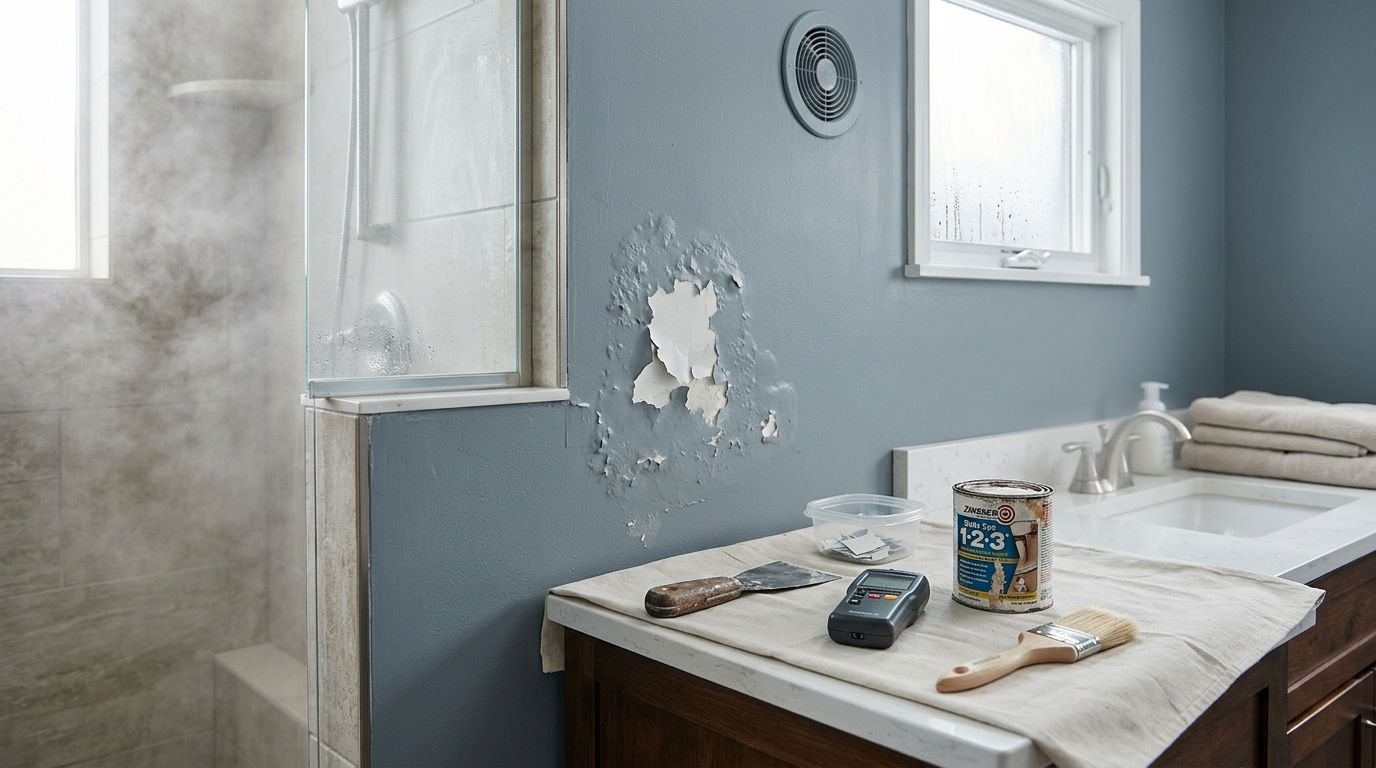
Peeling paint in a bathroom rarely starts as a paint problem. It usually starts with moisture that gets trapped behind the finish, then pushes outward until the wall blisters, flakes, or sheds paint in strips.
If you are searching for answers about bathroom paint peeling Minneapolis homeowners deal with, climate swings, weak ventilation, and rushed prep often share the blame. A lasting repair begins with finding the moisture source before another coat goes on the wall.
Key Takeaways
- Bathroom paint usually peels because humid air, leaks, or wet drywall break the paint’s bond with the surface.
- Minneapolis winters can make bathroom humidity worse when warm shower air meets cold exterior walls and windows.
- A fresh coat over soft drywall, soap residue, or loose paint will fail again, even with premium paint.
- Proper repairs include moisture diagnosis, drying time, surface preparation, primer, and bathroom-rated paint.
- Professional interior painters in Minneapolis can spot issues that a quick repaint may hide.
Why Bathroom Paint Peeling Minneapolis Homes Need Attention
Bathrooms produce more moisture than most rooms in the house. Hot showers fill the air with vapor, and that vapor settles on cooler ceilings, walls, trim, and window areas. When the room cannot exhaust that moisture, paint absorbs the stress first.
Minneapolis homes face an added seasonal challenge. In winter, exterior walls can stay cold while bathroom air is warm and damp. Condensation may form inside the room or within areas around windows and poorly insulated exterior walls. Over time, repeated wetting and drying weakens the paint film.
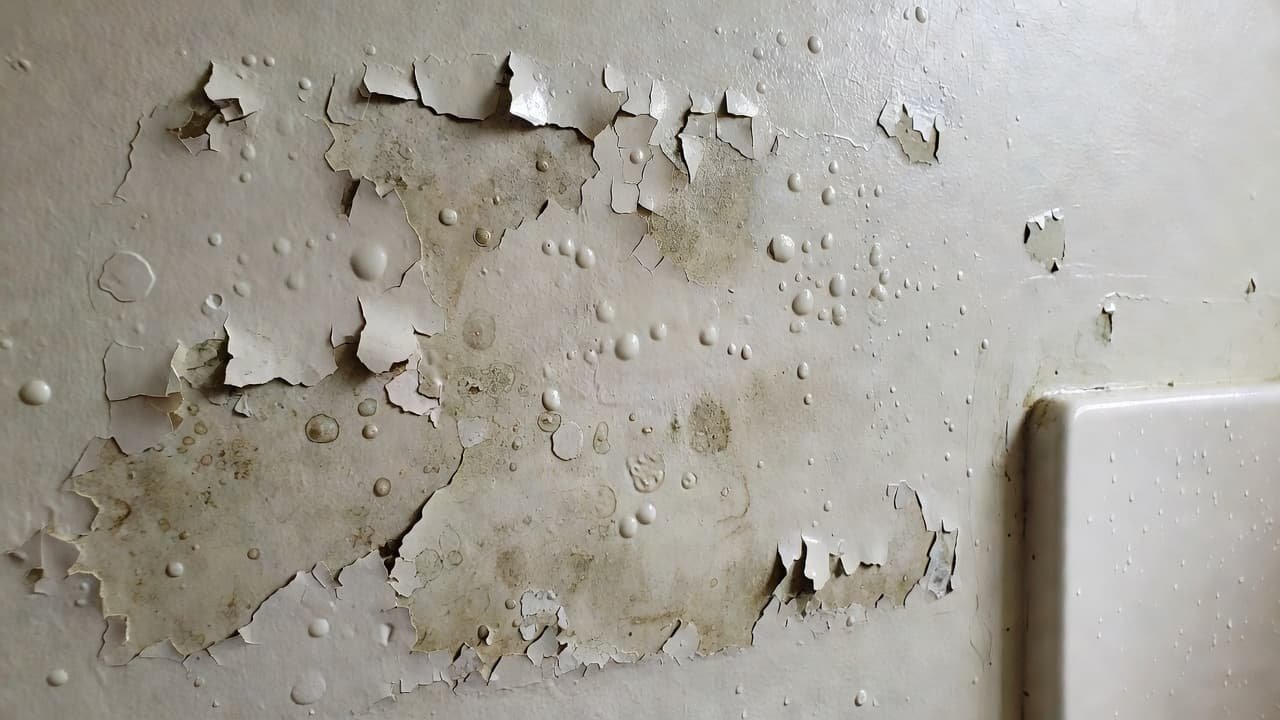
Peeling often appears in predictable places:
- The ceiling above the shower or tub
- Upper wall corners where humid air collects
- Window trim and walls near exterior-facing windows
- Drywall seams, nail pops, and patched areas
- Baseboards near a leaking toilet, vanity, or bathtub
A bathroom fan that runs only during a shower may not clear the room. Moist air remains after the water stops, so the fan should continue running long enough to remove lingering humidity. A fan that vents into an attic instead of outdoors can also move the problem elsewhere in the home.
Peeling that starts in one small area can point to a hidden leak, while widespread ceiling failure usually points to persistent humidity or inadequate exhaust.
The pattern matters. Paint lifting in a narrow band below a window may suggest condensation or water intrusion. Paint coming loose around a shower wall may indicate failed caulk, a plumbing issue, or years of steam exposure. Surface symptoms offer clues, but the wall must be dry before anyone can judge the repair.
Moisture Is Only Part of the Problem
Humidity can trigger failure, yet poor adhesion often decides how quickly paint peels. Paint needs a clean, sound, dry surface. Bathrooms make each of those requirements harder to meet.
Soap film, aerosol products, and cleaning residue leave a nearly invisible layer on painted walls. New paint may look smooth at first, then lose grip when steam repeatedly expands and contracts the surface. Glossy older paint creates another adhesion issue when no one sands it or uses the right bonding primer.
Latex paint can also fail when applied before drywall compound, primer, or a repaired wall has dried fully. The outer surface may feel dry, but moisture can remain below it. Once the bathroom warms up, that moisture tries to escape through the new coating.
Older Minneapolis homes sometimes have several paint layers from past updates. If one old layer has lost adhesion, a new finish bonds to a weak foundation. The newer paint comes off with it, much like tape pulled from a dusty surface.
Warning Signs That Call for More Than Touch-Up Paint
A small scuff or chip usually needs minor repair. However, homeowners should pause before repainting when they see:
- Soft or swollen drywall, especially around plumbing fixtures
- Brown or yellow staining beneath the paint
- A musty odor that returns after cleaning
- Repeated peeling in the same spot
- Cracked caulk at the tub, shower, or vanity backsplash
- Paint that pulls away in broad sheets
Staining and softness can mean water has reached the drywall itself. In that case, paint cannot solve the underlying damage. The repair may require replacing compromised drywall, correcting a leak, and allowing the area to dry before the finish work begins.
Surface Preparation Determines Whether the Repair Holds
The difference between a short-lived touch-up and durable bathroom repainting is often invisible once the job is finished. Good preparation takes time because each layer needs a stable surface below it.
First, loose or blistered paint should be scraped back to firmly attached edges. Simply rolling paint over peeling areas traps the problem. The remaining edges then need sanding so they blend into the surrounding wall rather than leaving a visible ridge.
Next, the painter checks the drywall and trim. Minor damage can be patched with setting-type compound, then sanded smooth after it dries. Soft, stained, or mold-damaged material needs more attention before any patch or primer goes on. Caulk joints around trim and fixtures should also be inspected, since gaps let moisture reach vulnerable edges.
Cleaning is not optional. A painter should remove soap residue, hair spray, dust, and greasy buildup with an appropriate cleaner, then rinse where needed and let surfaces dry. Glossy paint benefits from scuff-sanding, which gives primer something to grip.
A high-quality bonding or stain-blocking primer may be necessary after repairs, stains, or exposed drywall. The correct primer depends on the surface and the source of staining. Skipping it can leave uneven sheen, flashing over patches, or renewed adhesion problems.
For homeowners who want help beyond one bathroom, a trusted interior house painting service can coordinate wall repairs, preparation, priming, and a consistent finish across nearby rooms.
Choosing Paint That Can Handle a Working Bathroom
Bathroom walls need more than a label that says “interior paint.” The finish must tolerate moisture, routine cleaning, and frequent temperature changes. Quality acrylic latex paints made for kitchens and baths are usually a strong choice because they form a washable, flexible coating.
Sheen matters, although higher sheen is not always better. Satin is a common choice for bathroom walls because it cleans easily without showing every wall imperfection. Semi-gloss works well on trim and doors, which receive more contact and benefit from extra washability. Flat ceiling paint can work if it is formulated for bath areas, though a more moisture-resistant ceiling product may be wiser above a busy shower.
Color selection affects maintenance too. Dark colors can make touch-ups more visible, while very low-sheen finishes may show water spotting. Still, product selection cannot overcome a fan that fails to move moisture out of the room.
A reliable Painting Service in Minneapolis should discuss the room’s use before recommending a coating. A guest bath with occasional showers has different demands than a family bathroom used every morning. That conversation helps match the primer, paint sheen, and repair plan to the real conditions.
The workmanship also matters. Thin coverage, missed edges, and paint applied in a humid room can reduce the finish’s service life. Professional painters protect fixtures, maintain a wet edge, allow proper dry time between coats, and inspect the work under normal bathroom lighting.
Stop New Paint From Peeling After the Job
Once the walls are repaired, daily habits help protect the new coating. Run the exhaust fan during every shower and keep it running after the room clears. If the mirror stays fogged long after bathing, the bathroom likely needs better moisture control.
Keep shower curtains or doors positioned so water stays inside the tub or shower. Wipe standing water from window sills, vanity backsplashes, and painted trim. Also, replace cracked or missing caulk promptly, especially where tile meets a tub or shower surround.
Ventilation equipment needs basic care. Dust buildup on a fan grille reduces airflow, and a noisy fan may not move enough air. A licensed electrician can assess an undersized or failing fan, while a plumber can address slow leaks under sinks, around toilets, or behind shower walls.
Exterior maintenance can matter as well. If a bathroom wall sits below failing siding, worn flashing, or a roof leak, water may enter from outside. A residential painting service in Minneapolis should flag exterior paint failure or trim gaps when they appear connected to interior moisture.
When Professional Help Makes Sense
A homeowner can handle a small, dry paint chip. Repeated bubbling, staining, or widespread peeling deserves a closer inspection. Painting over those signs can hide the issue for a few weeks, then create a larger repair later.
Experienced interior painters in Minneapolis look at the wall, ceiling, trim, ventilation, and nearby plumbing before quoting a repaint. They can separate cosmetic failure from an active moisture issue and recommend the right order of repairs.
A professional paint job lasts longer because the team spends time on the unglamorous work: protecting the room, removing loose material, repairing damaged surfaces, priming correctly, and applying compatible finish coats. Those steps are what keep a bathroom looking clean through many Minnesota winters.
A Bathroom Finish That Stays Put
Bathroom paint peeling in Minneapolis is usually a message from the room, not a simple cosmetic flaw. Humidity, condensation, leaks, weak preparation, and the wrong coating can all break the bond between paint and wall.
The durable fix starts with a dry, sound surface and ends with paint suited to bathroom conditions. Careful preparation gives the new finish the foundation it needs to stay in place.