
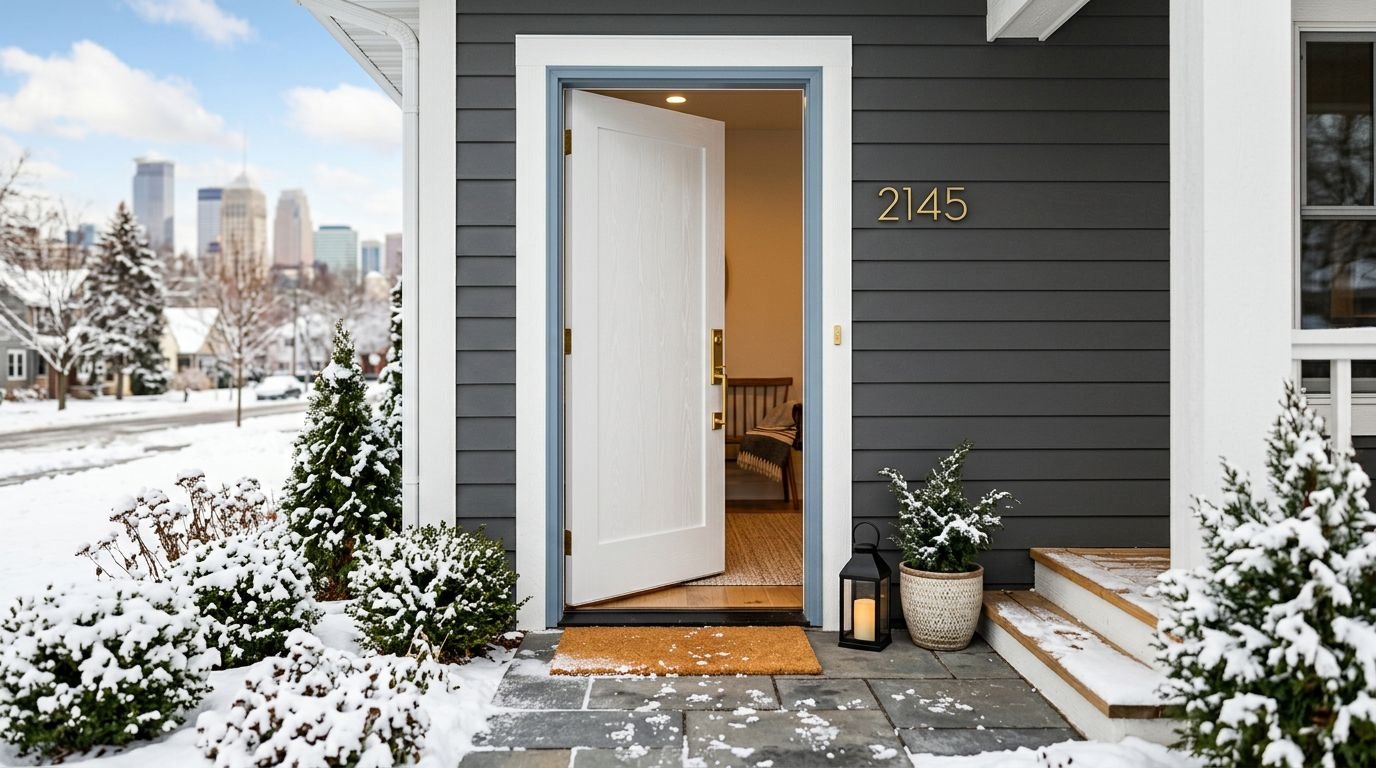
Your front door is the handshake of your house. It’s the first thing guests see, and it takes the worst beating from sun, snow, slush, and salty boots.
So what’s the front door painting cost in Minneapolis in 2026? Most homeowners aren’t looking for a “perfect” number, they want a fair range and a clear way to avoid paying twice.
Below is a practical pricing guide for Minneapolis and nearby suburbs like St. Paul, Edina, Bloomington, Plymouth, Maple Grove, Minnetonka, and Eagan, plus the details that actually move the price.
Typical front door painting cost in Minneapolis (2026 price ranges)
In 2026, many Twin Cities painters price a front door as a small, high-prep project. That matters because doors have edges, profiles, and hardware, and they get handled every day. Even when the square footage is tiny, the labor isn’t.
Here’s what Minneapolis-area homeowners commonly see when hiring a pro.
| Project scope (labor + materials) | Typical 2026 price range in Minneapolis | Best fit for |
|---|---|---|
| Exterior side only (prep + paint) | $250 to $500 | Most standard repaints in good condition |
| Exterior side with heavy prep (peeling, bare spots) | $400 to $750 | Older doors, failing paint, rough texture |
| Both sides of the door (interior + exterior faces) | $450 to $900 | Doors with wear inside and out |
| Door + frame (jambs/brickmold) | $500 to $1,000 | Trim is worn, stained, or color is changing |
| Door + frame + sidelights (if present) | $700 to $1,400 | Larger entry systems with extra masking/detail |
These ranges assume a typical residential job in Minneapolis or close-in suburbs, with normal access and standard materials.
A front door isn’t expensive because it’s big. It costs more because prep and drying time decide whether the finish lasts one season or many.
One more pricing wrinkle: some companies charge a minimum service call amount. If you bundle the door with other exterior touch-ups, the per-item cost can drop.
What changes the price (and why Minneapolis homes are different)
Two doors can look the same from the curb and still price out very differently. In Minnesota, durability is the whole point, so pros spend time where you can’t always “see” it.
Condition and prep work (the real cost driver)
Prep is where the job either succeeds or fails. If the existing finish is sound, painters can clean, scuff-sand, prime where needed, and paint. If it’s peeling or cracked, the prep expands fast.
Common prep tasks that raise cost include:
- Peeling paint removal and feather-sanding edges so they don’t telegraph through.
- Filling dings and smoothing profiles on raised panels.
- Caulk repairs around trim that lets water in.
- Stain-blocking primer if tannins bleed through (common with wood).
- Rust treatment on metal doors or worn kick plates.
If your home is older (especially pre-1978), ask how the painter handles lead-safe practices. Extra containment and cleanup can add time, and time is money.
Door material and paint system
Material affects primer choice and how forgiving the surface is:
- Steel doors usually paint well but show dents, and they need solid adhesion prep.
- Wood doors can look amazing, yet they move with humidity and may bleed tannins.
- Fiberglass doors often have faux grain that needs careful brushing or spraying to avoid runs.
Paint choice matters too. Many pros use high-quality exterior enamel or a door and trim enamel for a harder finish. Expect cost to rise if you choose premium products, deep colors, or a system that needs extra coats for coverage.
Hardware, glass, and nearby surfaces
A lot of door painting is careful masking. Prices often climb when there’s:
- Decorative glass inserts that need tight masking
- Smart locks, cameras, or complex handle sets
- A storm door that limits access or forces awkward angles
- Brick, stone, or stained trim close to the door that can’t be hit with overspray
If you want the cleanest result, the painter may remove hardware. That takes longer, but it avoids paint ridges around plates and locks.
Timing, temperature, and cure time
Minneapolis weather plays a big role. Cold snaps, high humidity, and big day-night swings can stretch dry times. Painters may schedule doors when temps are stable so the coating levels out and cures hard.
Fast work isn’t always good work here. A door that gets closed too soon can stick, scuff, or peel at the weatherstripping.
Getting a finish that survives Minnesota winters (and busy families)
A front door gets touched constantly. Keys bump it, dogs scratch it, kids push it open with backpacks. The best-looking doors are the ones that were painted with a plan, not just a color.
What a professional process should include
A reputable Painting Service in Minneapolis will usually follow a simple sequence, even for a “small” job:
- Wash and degloss (hand oils and grime can wreck adhesion).
- Sand for tooth, then remove dust carefully.
- Spot-prime or full-prime depending on material and wear.
- Apply 2 finish coats, allowing real dry time between coats.
- Reinstall hardware and check for sticking at weatherstrips.
Spraying can create a smoother finish, but brushing and rolling can work well too when done right. The best method depends on wind, space, and how the entry is built.
If you want the door to stay sharp, ask what the painter does to prevent sticking at the weatherstrip and latch edge. That’s where fresh paint fails first.
Should you paint it yourself or hire a pro?
DIY can save money, but doors punish shortcuts. If you’re comfortable removing hardware, sanding thoroughly, and letting the door stay open long enough, you can get a decent result. Still, many homeowners hire out because the job is fiddly and the cure time affects daily life.
Hiring a Residential painting service in minneapolis often makes sense when you’re changing to a bold color, repairing failing paint, or trying to match adjacent trim. Pros also tend to spot small water-entry issues around the casing before they turn into rot.
Also, don’t overlook the inside face. If the interior side is scuffed or yellowing, pairing the job with interior work can be efficient. Many interior painters minneapolis can coordinate sheen and color so the inside looks clean without looking “plastic.”
Smart questions to ask before you accept a quote
Keep it simple. You’re trying to confirm prep, materials, and timing.
- What prep steps are included for my door’s current condition?
- Will you remove hardware or mask it in place?
- What paint and primer system will you use on my door material?
- How long until the door can be closed and locked normally?
- If the paint fails early (peeling, sticking), what’s the plan?
Clear answers usually signal a careful crew.
Conclusion
In 2026, the typical Minneapolis front door painting cost sits in a wide range because prep and durability decide everything. A solid quote should explain condition, materials, and cure time, not just color and coats. If you treat the door like the “handshake” of your home and invest in the right prep, the finish can hold up through Minnesota seasons and everyday wear.