
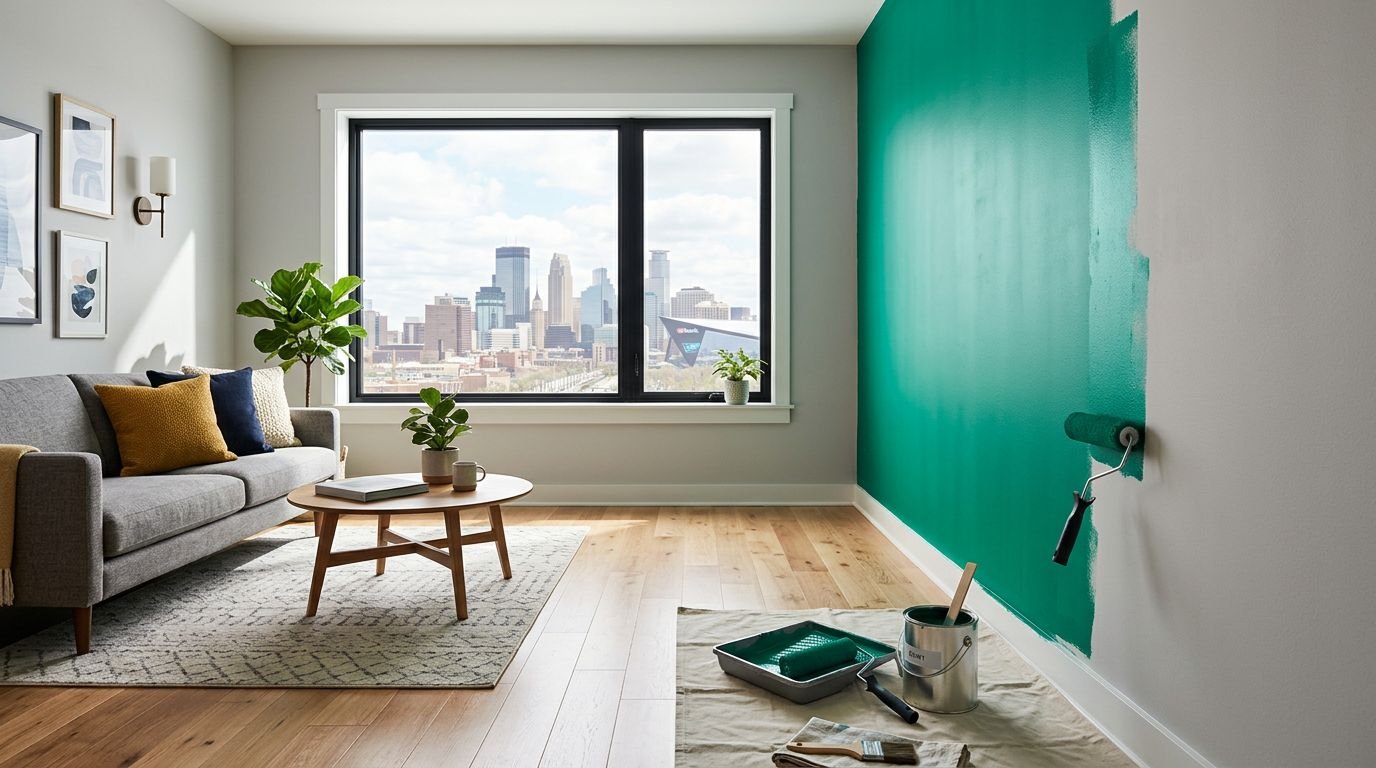
A new wall color can make a room feel fresh, but the bill can move faster than expected. In Minneapolis, the cost to change interior paint colors in 2026 depends less on the paint chip and more on prep, wall condition, ceiling height, and how dramatic the color shift is.
If you’re repainting a condo in Uptown, a bungalow in St. Louis Park, or a two-story home in Edina, local labor rates and Minnesota homes’ wear patterns matter. The numbers below will help you spot a fair quote and avoid paying for surprises later.
What Minneapolis homeowners are paying in 2026
For most homes, painters price interior work by scope, surface condition, and labor time. Local pricing guides show broad averages, but a color-change project often lands above the low end because it needs more prep and more coats.
This quick table gives a realistic starting point for Minneapolis and nearby Twin Cities suburbs.
| Project scope | Typical 2026 cost | Common reason it rises |
|---|---|---|
| Small room or accent wall | $350 to $900 | Dark-to-light coverage, patching |
| Bedroom, walls and basic trim | $700 to $1,500 | Ceiling, closet, extra doors |
| Living room or open main area | $1,200 to $2,800 | Tall walls, cut-ins, furniture moving |
| Whole 1,500 sq ft interior | $2,800 to $5,200 | Repairs, multiple colors, ceilings |
| Whole 2,000 to 2,500 sq ft home | $5,000 to $9,000+ | Trim-heavy layouts, vaulted spaces |
Those ranges line up with local market snapshots from Angi’s Minneapolis interior painting cost guide, Thumbtack’s Minneapolis pricing page, and a Minnesota 2026 painting pricing guide.
Per square foot, many interior jobs fall around $2 to $6 for walls and ceilings. Labor makes up most of the total, often 75% to 95%, because clean prep and sharp finish work take time. That matters in older Minneapolis homes, where plaster patches, nail pops, and hairline cracks are common after years of freeze-thaw movement.
Room count also changes the math. A single open room is usually cheaper than the same square footage split into several bedrooms, hallways, and closets. More doors, more corners, and more trim mean more cutting in, more masking, and more setup.
Why changing paint colors often costs more
A repaint in the same or similar shade is usually the cheaper job. The interior paint color change cost climbs when you switch from deep colors to light ones, cover glossy surfaces, or paint over years of wall wear.
Dark red, navy, hunter green, and bold accent walls are the classic budget jumpers. They often need a stain-blocking primer plus two finish coats. If the old wall has smoke marks, grease near the kitchen, or crayon and scuff damage from busy family areas, prep grows fast.
The biggest surprise in many Minneapolis repaint projects is not the paint, it’s the prep behind the new color.
Ceiling height matters too. Standard 8-foot walls keep labor simple. Once you move into 9-foot or 10-foot ceilings, prices often rise 15% to 25%. Vaulted ceilings can push the increase much higher because crews need extra ladder work and slower brush control at the cut lines.
Humidity also plays a role. Summer painting is common, but higher indoor moisture can slow dry times, especially in older homes without strong air movement. In winter, interior jobs are popular because crews can work around the cold, but dried-out trim and seasonal settling sometimes reveal caulk gaps and hairline cracks that need repair before paint goes on.

Then there is trim. Baseboards, window casings, and doors can add $3 to $6 per linear foot in many jobs. Wallpaper removal, plaster repair, and damaged drywall raise the total even more. In homes built before 1978, lead-safe work practices can change the bid sharply.
If you want a clear number before picking colors, ask for an in-home estimate first. A good painter can tell you when one dramatic color choice adds a small cost, and when it adds a full day of labor.
Why many homeowners still hire professional painters
DIY painting looks cheaper until the details show up. Minneapolis homeowners often start with a search for “Painting Service in Minneapolis,” “Residential painting service in minneapolis,” or “interior painters minneapolis.” The smarter move is to compare how each crew handles prep, protection, and finish quality.
Professional painters price higher because they don’t skip the slow parts. They protect floors, remove plates, fill dents, sand rough spots, caulk trim, and spot-prime repairs. Those steps are what make the new color look even months later, not only on day one.
A skilled crew also works faster with fewer mistakes. Most standard interior projects take about 2 to 5 days when the home is ready and the scope is clear. That matters when you’re living in the space, working from home, or trying to finish before guests arrive.
For a closer look at what full-service prep and painting usually includes, review professional interior house painting.
DIY risk is real in older Twin Cities homes. Over-sanding plaster, flashing repaired patches, lap marks on long walls, and drips on stained wood trim can turn a weekend project into a redo. Meanwhile, exterior house painters often stay busiest from late spring through early fall, so many homeowners book interior work in colder months when crews can focus indoors.
The other reason homeowners hire pros is durability. Better surface prep and better paint coverage mean fewer touch-ups, cleaner washability, and longer-lasting color in hallways, kitchens, mudrooms, and stairwells.
How to compare estimates in Minneapolis and nearby suburbs
A fair estimate should tell you more than the total. Whether the home is in Minneapolis, Bloomington, Plymouth, Maple Grove, or Eagan, the best bids spell out what the crew will repair, what they will paint, and how many coats they expect to apply.
Look for these details before you choose a contractor:
- Written scope for walls, ceilings, trim, doors, and closets.
- Prep notes for cracks, dents, nail pops, water stains, or wallpaper.
- Paint brand, finish, and whether primer is included.
- Start date, daily timeline, and cleanup plan.
- Clear terms for change orders if colors or repairs expand.
Suburb-to-suburb price swings are usually smaller than people think. The bigger differences come from ceiling height, furniture moving, trim volume, and wall condition. That is why two similar homes in Richfield and Minnetonka can receive very different bids.
If you’re comparing a Painting Service in Minneapolis against another local crew, ask one direct question: “What is not included?” That one line often reveals whether the low bid excludes trim, patching, or a second coat.
Useful service page labels on a local painting site often include “professional interior house painting,” “Minneapolis interior painting services,” and “residential interior painting experts.” Clear page names make it easier to compare services without guessing.
Conclusion
The price to change interior paint colors in Minneapolis in 2026 is driven by labor, prep, and how hard the old color is to cover. For many homes, the cheapest estimate isn’t the lowest-risk choice, because repairs, extra coats, and cleanup are where the real value shows.
If you’re planning a repaint this year, get a detailed written estimate before you buy paint or move furniture. A professional residential painting team can tell you what the color change will cost, how long it will take, and what kind of finish will hold up in a Minnesota home.
Suggested internal link anchor texts
- professional interior house painting
- Minneapolis interior painting services
- residential interior painting experts
LocalBusiness schema enhancement
Add LocalBusiness schema with service areas for Minneapolis, St. Paul, Edina, Bloomington, St. Louis Park, Maple Grove, Plymouth, and nearby Twin Cities suburbs, plus phone, hours, review data, and the same business name used across the site.
FAQ schema markup
{ “@context”: “https://schema.org“, “@type”: “FAQPage”, “mainEntity”: [ { “@type”: “Question”, “name”: “How much does it cost to change interior paint colors in Minneapolis in 2026?”, “acceptedAnswer”: { “@type”: “Answer”, “text”: “Many Minneapolis interior painting projects fall between $2 and $6 per square foot for walls and ceilings. A typical 1,500-square-foot home’s interior often lands around $2,800 to $5,200, while small rooms can cost much less and large trim-heavy homes can cost more.” } }, { “@type”: “Question”, “name”: “Why does a color change cost more than repainting the same shade?”, “acceptedAnswer”: { “@type”: “Answer”, “text”: “Changing from dark paint to a lighter color often takes more primer, more finish coats, and more labor. Repairs, glossy surfaces, high ceilings, and trim work can also raise the price.” } }, { “@type”: “Question”, “name”: “When is the best time to schedule interior painting in Minneapolis?”, “acceptedAnswer”: { “@type”: “Answer”, “text”: “Interior painting can be scheduled year-round in Minneapolis. Winter is often a practical time because crews work indoors, while summer humidity and fall demand can affect drying and scheduling.” } } ] }