
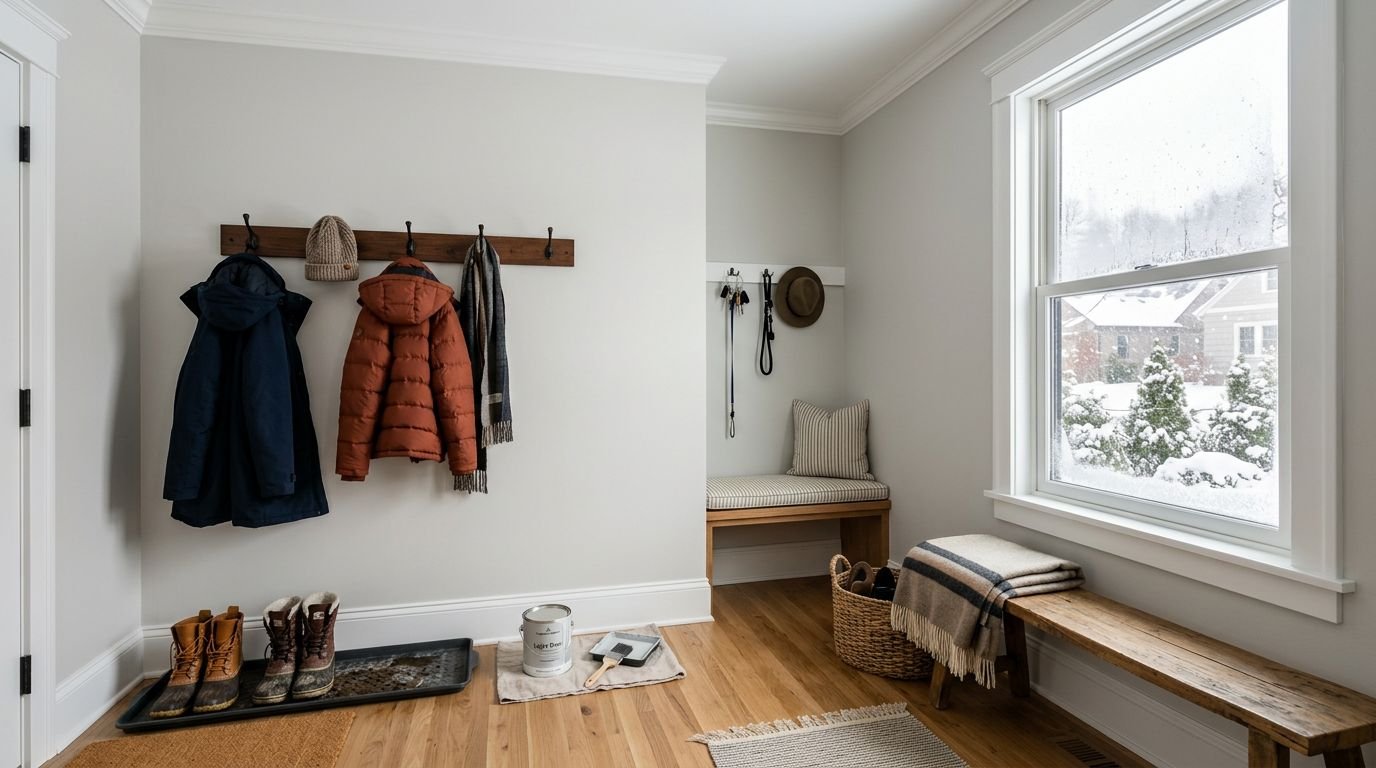
A mudroom takes a beating in Minneapolis. It’s where wet boots drip, slush melts, and road salt leaves chalky streaks along baseboards. That abuse shows up fast, especially on lower walls and trim.
For most homes, the mudroom painting cost Minneapolis homeowners see in 2026 lands in a realistic range of about $450 to $1,500 for professional interior work. The wide spread comes down to prep, how much trim and doors you have, and whether the walls need patching or stain-blocking primer.
The goal of this guide is simple: help you estimate your cost, spot common pricing traps, and get a finish that holds up through the next winter.
Typical Minneapolis mudroom painting prices in 2026
Mudrooms are usually small, but they’re detail-heavy. A “tiny room” can still have lots of trim, hooks, cubbies, and tight corners that take time to cut in cleanly. In addition, winter grime often forces extra cleaning and priming, even when the walls look fine at first glance.
Here’s a practical way to think about common pricing scenarios Minneapolis homeowners run into:
| Mudroom scope (professional labor + materials) | What’s included | Typical 2026 cost range (Minneapolis area) |
|---|---|---|
| Freshen walls only | Light prep, 2 coats on walls | $450 to $800 |
| Walls + ceiling | Walls plus flat ceiling paint | $600 to $1,050 |
| Walls + trim + 1 door | Baseboards/casing, one interior door and frame | $850 to $1,400 |
| Heavy prep refresh | Patching, sanding, stain-blocking primer, detailed trim | $1,100 to $1,500 |
Most mudrooms in Minneapolis fall into the middle two rows. If yours has tall wainscoting, lots of door casing, or built-in benches, it can push toward the high end even without a large footprint.
A few local factors also nudge pricing in 2026. Older Minneapolis homes often have more trim profiles and more wall repairs from years of coat hooks and pet gates. Meanwhile, homes in Edina, Minnetonka, and Plymouth often have larger entry zones with more doors and longer baseboard runs. The room might still be called a mudroom, but the scope looks closer to a small hallway plus closet.
What actually drives the cost in a high-wear mudroom
If you’ve ever tried to wipe off a February salt splash and ended up taking paint with it, you already know why mudrooms cost more per square foot than a guest bedroom. Durability starts with prep, and prep is where estimates can swing.
Prep work: the “invisible” part you pay for
Before paint goes on, pros usually need to wash or degrease lower walls, especially near the door and boot area. Next comes scraping loose paint, sanding rough spots, and patching dents from shoes, baskets, and backpack hooks.
Small repairs add up quickly in a mudroom because they sit at eye level. If the walls have water stains or tannin bleed from wood trim, a stain-blocking primer can be the difference between a clean finish and yellowing that creeps back in.
If a quote skips cleaning and primer in a mudroom, ask why. Road salt and moisture don’t care how nice the color is.
Paint choice and sheen matter more here
Mudrooms live hard, so paint selection affects both cost and lifespan. Higher-scrub finishes (often satin or semi-gloss on trim) tend to cost more than flat wall paint, and they also show surface flaws if prep is rushed.
In addition, color changes can affect labor. Going from a dark accent to a light neutral often needs extra coats or a tinted primer. That isn’t upselling, it’s how you avoid a patchy look.
Details: trim, doors, and built-ins
A mudroom with one door and simple baseboards is straightforward. Add a closet door, a garage entry door, window trim, beadboard, or cubbies, and the time jumps. Cutting sharp lines around complex trim is slow work, and the room’s tight layout can make it harder to move ladders and protect floors.
That’s why two mudrooms with the same square footage can price out very differently. The details decide the hours.
Hiring a pro vs DIY (and how to get a quote that’s worth trusting)
DIY mudroom painting sounds easy until the first spring thaw. That’s when scuffs, peeling near the threshold, and grime build-up show whether the surface prep was strong enough. Paint in this space acts like a raincoat, but only if it bonds well.
A professional crew brings systems that reduce surprises: proper cleaning, dust control, and consistent cut lines. Just as important, reputable interior painters stand behind the result. When you hire interior painters minneapolis homeowners rely on, you’re often paying for fewer callbacks and a finish that stays washable.
DIY can still make sense for a quick color change in a low-use entry. However, once you add repairs, stain issues, or lots of trim, the savings shrink. You may also end up buying extra tools and primer after the first coat fails the “wipe test.”
When you start comparing bids from a Painting Service in Minneapolis, ask for specifics instead of a single line price. A solid quote usually spells out prep, primer needs, number of coats, and which surfaces are included (walls, ceiling, trim, doors). It should also mention how they’ll protect floors and manage dust in an active entryway.
For homeowners who want a clearer picture of what a professional process looks like, this page lays out the approach and expectations for an interior house painting service in Minneapolis.
To keep your mudroom project on budget, it helps to do two things before the walkthrough: clear coats and boots from hooks and benches, and point out any peeling, stains, or past water leaks. Those details change prep needs, so they should change the price up front, not as a surprise later.
A good Residential painting service in minneapolis should also be ready to explain workmanship warranty terms in plain language, including what’s covered and what conditions can break adhesion (like ongoing moisture at a door threshold).
Conclusion
Mudrooms punish paint in ways most rooms never will, so cost comes down to prep and details, not just size. In 2026, most Minneapolis homeowners should expect about $450 to $1,500 depending on surfaces, repairs, and paint type. If you want the finish to stay cleanable through snow, slush, and salt season, prioritize prep quality and a clear written scope. The right plan now usually means you won’t repaint again after just a couple winters.