
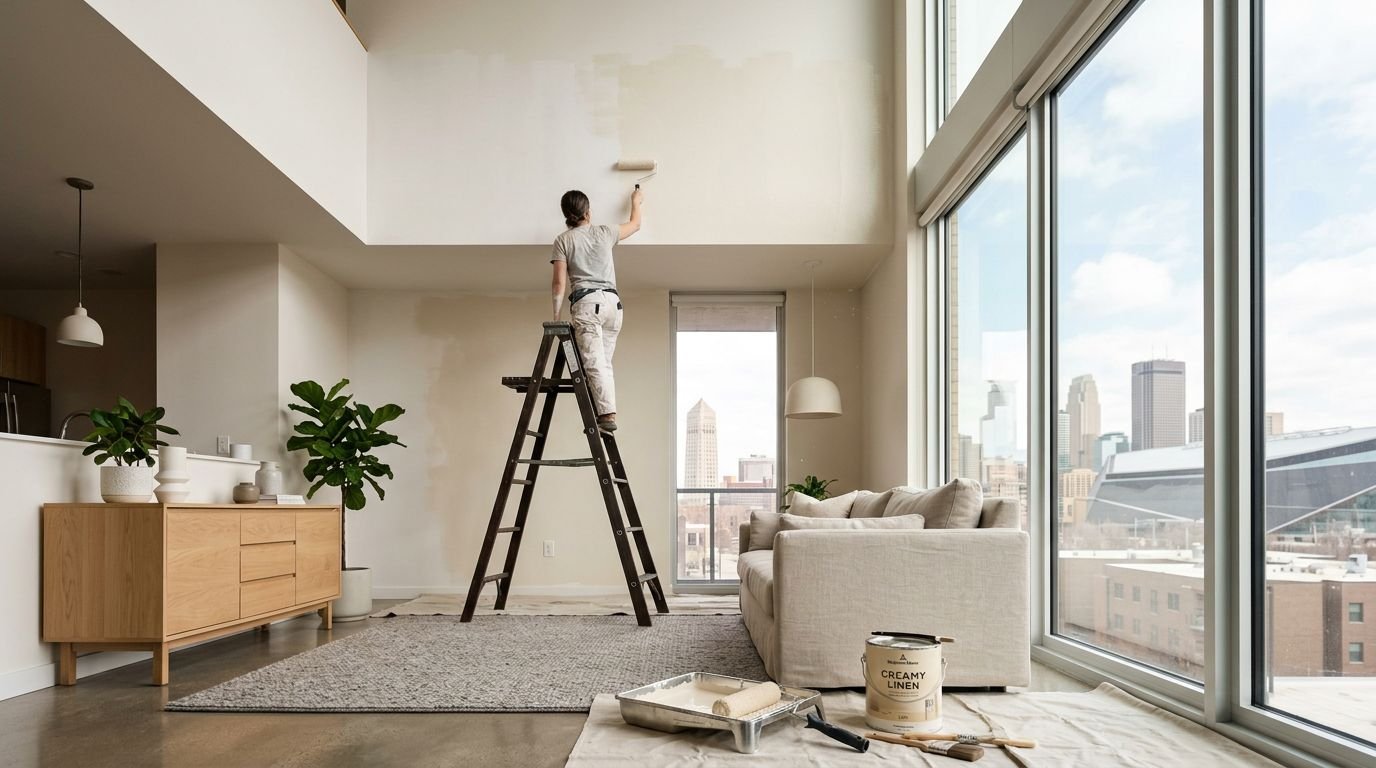
Paint-only pricing sounds simple. In an older Minneapolis home, it rarely is.
The plaster ceiling painting cost in 2026 often starts around $1 to $2 per square foot for a sound surface, but many ceilings need crack repair, stain blocking, or skim work first. That’s why one quote looks modest and another lands in the low thousands for the same room.
If you own a house in Minneapolis, St. Louis Park, Edina, Richfield, Golden Valley, or St. Paul, price matters, but prep matters more. Start with the local range, then look at what pushes it up.
What Minneapolis homeowners are paying in 2026
Most people want one clean number for ceiling work. Older plaster doesn’t work that way.
For straightforward repainting on stable plaster, Minneapolis homeowners are usually in the $1 to $2 per square foot range in 2026. Once you add normal prep, two coats, setup, and cleanup, a typical single-room ceiling often lands around $1,200 to $3,000. If the plaster is cracked, stained, or loose, repair work can change the project fast.
This quick table shows the gap between a simple repaint and a repair-first job.
| Project condition | Common 2026 Minneapolis pricing |
|---|---|
| Sound plaster, paint only | About $1 to $2 per sq. ft. |
| Typical room ceiling with prep and two coats | About $1,200 to $3,000 |
| Ceiling repair before paint | Often $60 to $70 per sq. ft. for repair work |
| Repair-heavy project | Can reach $6,000 or more |
The takeaway is simple. The low end is for a ceiling that is already stable. The high end is driven by labor, patching, sanding, priming, and drying time.
A broad search for a Painting Service in Minneapolis can make ceiling work look interchangeable. It isn’t. A clean drywall ceiling in a newer condo is one type of job. A cracked plaster ceiling in a 1920s South Minneapolis bungalow is another.
Local whole-interior numbers can help you set expectations. For example, Angi’s Minneapolis interior painting cost guide shows how labor-heavy interior projects stack up in this market. Still, ceilings in older homes often cost more per surface area because they’re slower to prep and harder to finish cleanly overhead.
Why older plaster ceilings cost more than drywall
Drywall is flat, consistent, and predictable. Old plaster usually isn’t.
Many Minneapolis homes in Longfellow, Nokomis, Tangletown, and parts of St. Paul still have original or early-era plaster ceilings. Some are in great shape. Others have hairline cracks, old water marks, patched seams, or spots where the plaster has loosened from the wood lath behind it. Even when a ceiling looks fine from the floor, trouble can show up as soon as a painter starts scraping or priming.
Minnesota’s climate adds to the story. Cold winters dry out indoor air. Summer humidity brings movement back. Freeze-thaw cycles also shift older framing over time, and those small shifts often show up as ceiling cracks indoors. As a result, older plaster ceiling painting costs more than a fresh drywall repaint in a newer house.
That is why the ceiling painting cost Minneapolis homeowners see in 2026 varies so much from house to house. Age matters, but condition matters more. One 1930s ceiling may need only a stain-blocking primer and two finish coats. Another may need crack opening, patching, sanding, spot repair, full priming, and extra drying time before paint.
Historic homes across the metro show the same pattern. If you’ve looked at older Twin Cities Victorian homes, you’ve seen how much surface condition affects the final scope. The same idea applies in smaller Minneapolis bungalows and post-war homes in Roseville, Robbinsdale, and Columbia Heights.
Most importantly, professional painters don’t promise that every old plaster ceiling will look like new drywall. Good workmanship means the surface looks clean, uniform, and durable. If you want a perfectly flat, fully renewed look, that usually means more repair work, more sanding, or a skim coat, and the price rises with it.
Prep and repair usually decide the final price
On older plaster, painting is often the last step, not the main step.
A careful crew spends real time protecting floors, covering furniture, scraping loose areas, opening weak cracks, patching them, sanding smooth, sealing stains, and applying the right primer before the finish coats go on. That process is why professional results last longer and look better under daylight, lamps, and winter shadows.
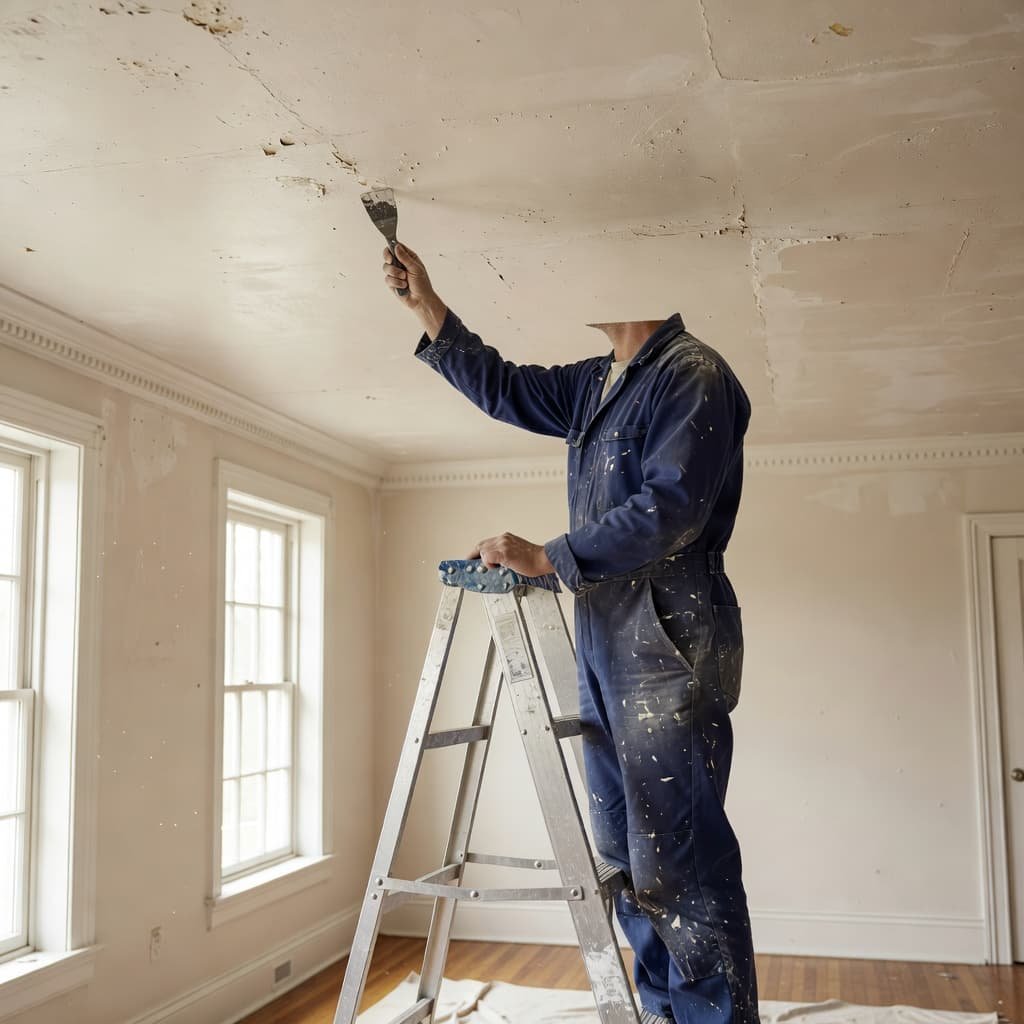
Older plaster ceiling painting also comes with risks that homeowners often underestimate. Overhead sanding creates a lot of dust. Ladder work is tiring. Hairline cracks can reopen if the repair is rushed. Water stains can bleed through a finish coat if the right primer isn’t used. Roller marks show up easily on ceilings, especially near windows.
If a bid looks cheap, check what prep it skips. A ceiling can look smooth on day one and show every old crack line by February.
This is where experienced interior house painters Minneapolis homeowners trust earn their keep. They know how much patching an older ceiling can take before the finish coat goes on. They also know when a ceiling needs more than paint. A reputable crew will tell you if the job calls for repair-first work, not a quick cosmetic coat.
DIY work can make sense on a newer, sound ceiling. On old plaster, it often becomes a cycle of patch, sand, repaint, and disappointment. Most of the money in a professional job goes toward labor and workmanship, but that’s also what gives you a better-looking finish and a longer service life.
How to compare estimates from interior painters in Minneapolis
The lowest quote often leaves out the work that matters most. That’s why estimate details matter more than the headline number.
If you’ve typed “Residential painting service in minneapolis” or “interior painters minneapolis” into Google, use that search as a starting point only. Then ask each company how it handles plaster cracks, stains, skim repairs, and sanding dust. Among residential painting services Twin Cities homeowners compare, the best estimates separate repair labor from paint labor and explain the finish you should expect.
A solid quote for a plaster ceiling should include:
- Surface prep, including scraping, patching, sanding, and stain sealing.
- The number of primer and finish coats.
- Whether the price includes crack repair or only paint over existing flaws.
- Protection for floors, walls, lights, and furniture.
- Cleanup, dry times, and how long the job should take.
That last point matters in older homes. A sound ceiling may be finished quickly. A repair-heavy ceiling needs time between steps. When work gets rushed, patch lines, flashing, and missed stain bleed often show up later.
Many homeowners also assume all ceilings should end up perfectly smooth. That isn’t always realistic on old plaster unless you pay for more restoration work. Good painters set that expectation early. Most importantly, they explain what can be improved, what will still have some age-related character, and what level of finish the price covers.
If you want help from a crew that handles ceilings as part of full-room projects, take a look at these Minneapolis interior painting services. A company focused on residential interior work is more likely to protect the room properly, manage dust, and deliver a finish that holds up through Minnesota’s seasonal changes.
Final thoughts
For older homes, plaster ceiling painting cost comes down to condition more than size. A stable ceiling may price like a normal repaint, while a cracked or stained ceiling can become a repair-first project.
If your home is in Minneapolis or nearby suburbs, get an estimate that looks closely at prep, repair, and finish quality, not only square footage. A short walk-through now can save you from paying twice for the same ceiling later.