
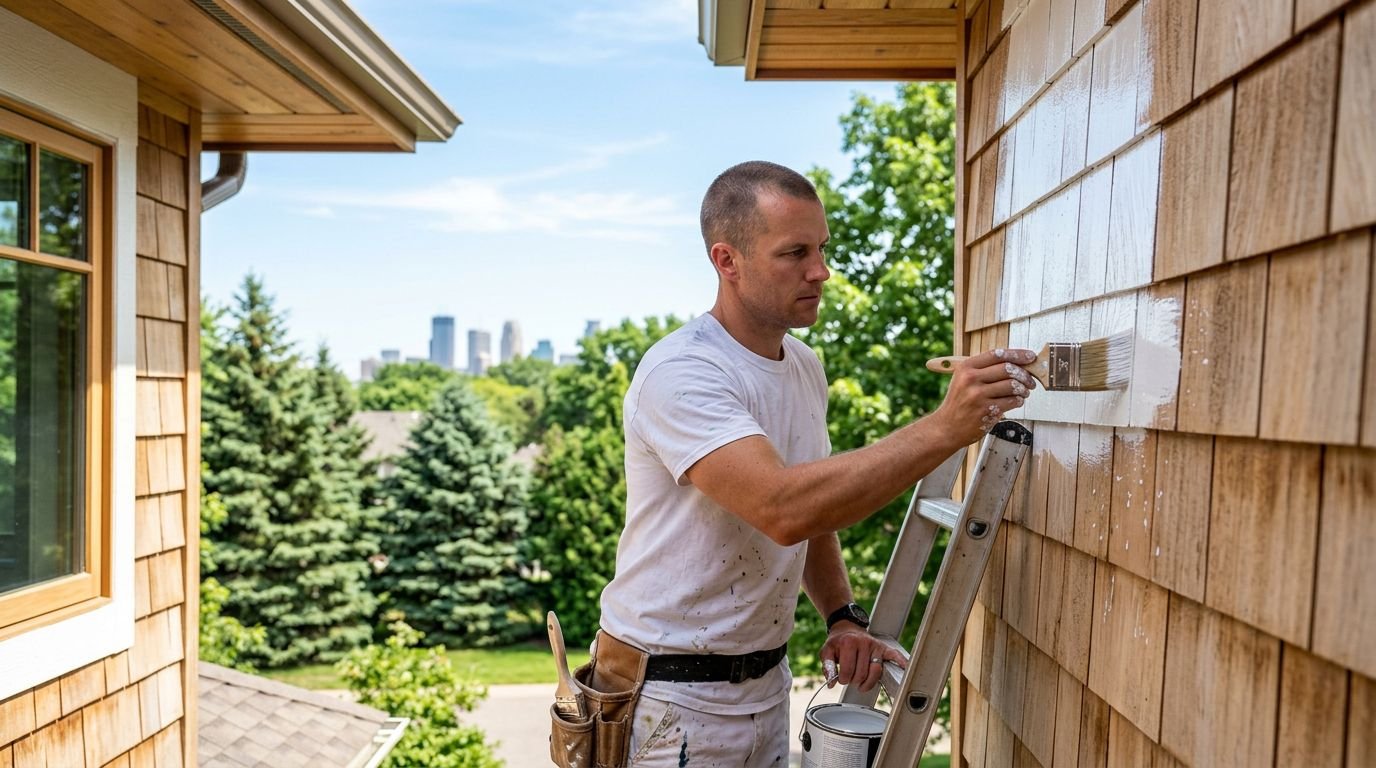
Sticker shock is common when you first research the cedar shake painting cost in Minneapolis. While natural cedar siding looks beautiful, it requires significantly more labor than smooth lap siding, and that intensive labor drives the final bill.
If you are a homeowner in Minneapolis, Edina, St. Louis Park, Plymouth, or Maple Grove, the price you receive in 2026 will depend less on the specific color you select and more on the current condition of your wood. The details matter, so it is worth understanding where these numbers come from before you compare project bids.
Key Takeaways
- Pricing Structure: In 2026, Minneapolis homeowners can expect to pay between $1 and $4 per square foot for cedar shake painting, with costs driven primarily by labor, surface condition, and prep work.
- The Importance of Prep: Because cedar shakes are textured and prone to moisture retention, professional prep—including washing, scraping, and spot priming—is more critical to the longevity of the finish than the paint itself.
- Complexity Factors: High gables, two-story access, damaged wood repair, and the need for premium, breathable exterior coatings significantly increase the overall project budget compared to flat siding alternatives.
- Bid Comparison: Homeowners should prioritize detailed, line-item estimates that specify surface preparation steps and paint quality rather than selecting a bid based solely on the lowest bottom-line price.
What Minneapolis homeowners are paying in 2026
When calculating your total siding painting cost, most Minneapolis homeowners can expect a price ranging from $1 to $4 per square foot. On a typical home, this often means a project budget ranging from the low thousands into the upper mid-range, depending on the specific prep, height, and accessibility of your property.
For rough planning, these are common starting ranges for paintable area based on the average cost per square foot:
| Paintable siding area | Typical 2026 price range | What usually pushes it higher |
|---|---|---|
| 1,000 sq. ft. | $1,500 to $4,000 | Heavy scraping, trim painting, two-story access |
| 1,500 sq. ft. | $2,250 to $6,000 | Worn finish, extensive trim painting, premium paint |
| 2,000 sq. ft. | $3,000 to $8,000 | Steep grade, damaged shakes, detailed prep |
That range is broad for a reason. Because cedar shakes are not flat, every course of siding features grooves, edges, and end grain that take significant time to clean, prime, and coat properly. Consequently, many homeowners find that labor costs drive their estimates into the middle to upper half of the range, especially when dealing with old, peeling finishes.
Among exterior house painting categories, cedar usually commands a higher price than vinyl and often exceeds the cost of standard wood lap siding. This is not price padding, but rather the reality of working with a textured surface that exposes shortcuts quickly.
On cedar shake, the final coat is the part you see. The prep is the part you pay for, and it is usually the part that decides how long the finish lasts.
If a bid looks unusually cheap, read the scope line by line. A lower number may leave out vital tasks like heavy scraping, spot priming, minor wood repair, or a full cleaning.
Why cedar shake siding costs more to paint
Cedar moves with heat, sun, rain, and freeze-thaw cycles. In Minneapolis, that movement matters because winters are hard on exterior wood, and summer humidity can expose old failures fast.
A professional contractor cannot treat cedar the same way they treat a smooth fiber cement wall. Because the surface is uneven and the grain absorbs coating differently, professional exterior painting requires more handwork, slower production, and greater attention to detail compared to standard siding projects.
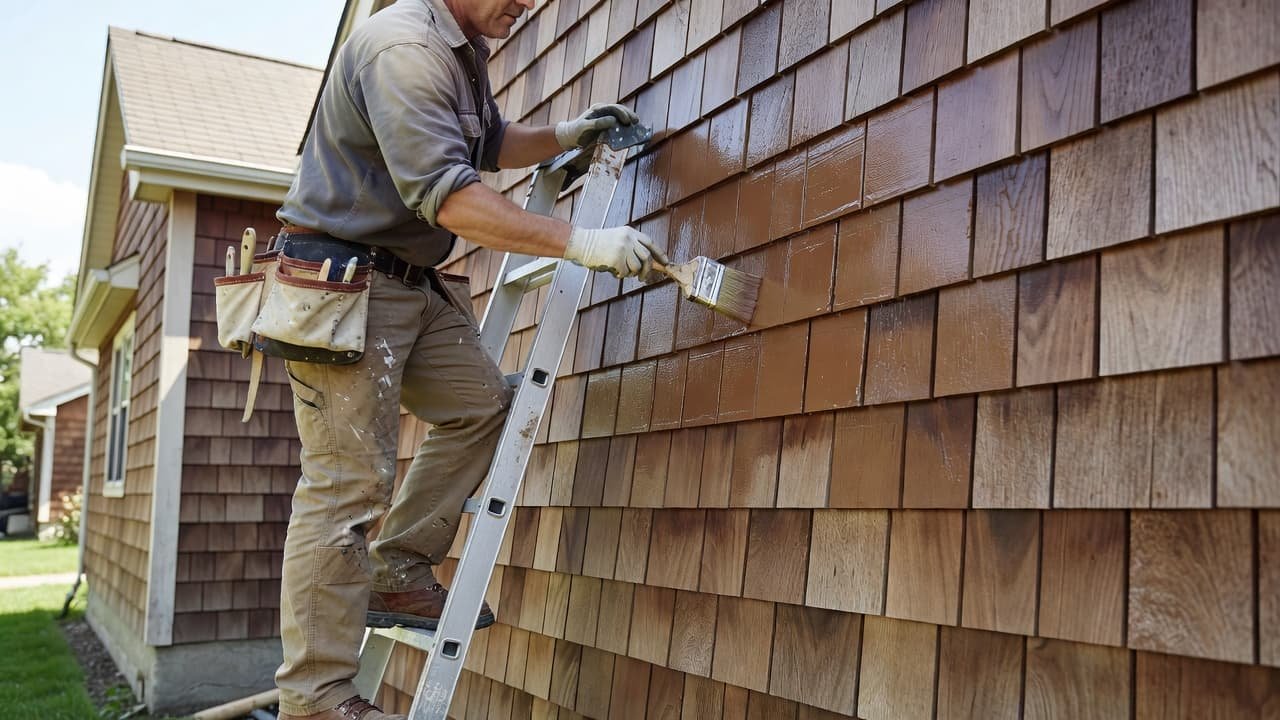
A quality cedar shake siding project includes thorough surface preparation: washing, allowing for proper drying time, scraping loose paint, sanding rough spots, meticulous caulking, and spot priming bare wood. When applying finish, some crews use a paint sprayer and follow up with back-brushing, while others prefer to brush and roll. Either way, the goal is to work high-quality exterior coatings into the texture instead of simply floating them over the top.
Paint choice also changes cost. Premium exterior coatings cost more up front, but they provide better coverage and a more resilient film on wood. On cedar, that matters because bargain paint can fail early as the surface expands and contracts.
This is where workmanship shows. Quality painters avoid rushing from wash day to paint day, especially if the siding still holds moisture, because trapped moisture issues can lead to premature peeling. Pros protect plants, mask carefully, and keep cleanup tight. That kind of process is not glamorous, yet it is the difference between a finish that looks sharp for years and one that starts cracking too soon.
The factors that move your quote up or down
House size is only the first number in the estimate. The real drivers for your house exterior are the condition of the wood siding, the accessibility of the surfaces, and how much detail the crew must manage.
Homes with peeling paint, gray weathered wood, or split shakes almost always cost more. So do homes with high gables, steep lots, porches, and tight clearance near shrubs or neighboring fences. If the crew needs more ladder moves and slower brushwork, labor costs climb.
Color can affect price, too. Large color changes may need extra primer to prevent tannin bleed or an added coat for full hide. Dark, bold colors on sun-heavy walls can also call for better, more expensive products and careful application.
Here are some common cost drivers Minneapolis homeowners run into:
- Two-story walls and dormers add labor because setup and brushing take longer.
- Wood repair for damaged cedar shakes raises the total, but it often saves the rest of the project.
- Premium primers and topcoats cost more, yet they can protect your siding better against the elements.
- Short exterior painting seasons in Minnesota can tighten schedules during peak months.
Neighborhood and suburb matter less than the house itself, but older homes in Minneapolis, Golden Valley, and Saint Louis Park often need more prep because the wood siding has seen more repaint cycles. Meanwhile, newer suburban homes in places like Maple Grove or Plymouth may be larger, which raises square footage even if the surface condition is better.
If you want a firmer number, ask for an on-site estimate before you pick a contractor. A short walkaround can reveal loose shakes, chalky peeling paint, and access issues that online calculators often miss.
Why professional cedar shake painting beats DIY
DIY projects often seem cheaper until the siding begins teaching expensive lessons. Cedar has a way of punishing rushed prep, weak primers, and missed spots around edges and overlaps.
You also have safety to consider. Working on ladders around second-story gables or attached garages is a significantly more complex task than brushing a backyard fence. Once you factor in washing, scraping away loose paint, and performing necessary spot repairs, a weekend project can easily stretch into weeks.
A professional painting service in Minneapolis should provide much more than basic labor. You deserve a clear scope of work, a detailed prep plan, specific product details, cleanup standards, and a written understanding of how they will handle hidden wood issues. That structure is essential because cedar problems rarely stay small once the painting process begins.
If you have already worked with professional painters Minneapolis homeowners trust, ask whether that same company maintains a dedicated exterior crew. While interior work and cedar exteriors both reward precision, the job setup, weather timing, and specific demands of cedar siding maintenance are quite different.
Likewise, a qualified residential painting service in Minneapolis should be able to explain why one home needs a full prime on exposed wood while another only requires spot priming. If they cannot explain the technical differences in plain language, the estimate may be too thin to provide lasting results.
This is also the perfect time to take a proactive step. If your cedar siding is fading or peeling, get one detailed estimate before the damage spreads. Even if you decide to wait on the full project, a professional inspection can help you determine whether you are dealing with a simple cosmetic issue or a deeper repair concern.
How to compare estimates from Minneapolis house painters
The best estimate isn’t always the cheapest one, and it isn’t always the highest. You are looking for a bid that clearly outlines the scope of work, the specific materials being used, and the expected condition of your home. Requesting a free estimate from several local contractors is the best first step to understanding the market rate for your project.
A strong exterior estimate should detail the process of washing, prepping, priming, and applying the final finish. It should specify the brand or grade of the paint and primer, the number of coats being applied, and cleanup procedures. Furthermore, clarify whether the bid includes professional staining services or if that is a separate line item. Without that level of detail, comparing prices becomes little more than guesswork.
When you review bids from Minneapolis house painters, look for these signs of a solid proposal:
- The prep steps, including deep cleaning and priming, are explicitly written out rather than implied.
- The estimate lists the specific coating system or brand of paint and primer used, rather than a vague note like “paint house.”
- The crew notes access challenges, current wood condition, and likely repair areas.
- The company is licensed, insured, and willing to discuss workmanship coverage.
Warranty value matters on cedar because poor prep often leads to premature failure. A written workmanship warranty will not stop the effects of harsh weather, but it does show that the company stands behind their labor. That is worth real money when you are investing in an exterior that faces constant sun, moisture, and long Minnesota winters.
If a proposal feels vague, ask for specifics before you sign. Clear communication at the start of the project usually points to a cleaner, more reliable job later.
Frequently Asked Questions
Why does cedar shake siding cost more to paint than other materials?
Cedar shakes feature an uneven surface with grooves and grain that require meticulous hand-brushing rather than just spraying. This textured surface, combined with the need for specialized prep to prevent moisture issues, results in significantly higher labor hours compared to painting smooth vinyl or fiber cement.
Can I save money by using a cheaper brand of paint on my cedar siding?
While budget paint may look fine initially, it often lacks the flexibility needed for wood that expands and contracts with Minneapolis weather. Using premium, breathable coatings is a better long-term investment because they are designed to move with the cedar, preventing premature cracking and peeling.
How long should a professional cedar shake paint job last?
When prep is performed correctly using high-quality materials and professional application techniques, a cedar shake finish can remain beautiful for several years. However, the exact lifespan depends on the exposure to sun, moisture, and the harshness of the Minnesota freeze-thaw cycles.
Should I attempt to paint my cedar shakes as a DIY project?
Painting cedar shakes is physically demanding and involves significant safety risks due to ladder work on multi-story homes. Without professional equipment and experience in detecting wood rot or moisture issues, DIY efforts often lead to poor adhesion and expensive corrections later.
The right price starts with the right prep
For most Minneapolis-area homeowners, the cedar shake painting cost in 2026 lands somewhere between $1 and $4 per square foot, with the final number shaped by the extent of surface preparation, necessary repairs, home height, and product quality. While a low bid can appear tempting, cedar rarely rewards shortcuts.
A successful project relies on professional surface preparation to ensure the wood is clean and sound before application begins. By choosing high-quality, breathable coatings, you allow the wood to release moisture, which is essential for protecting your home against Minnesota weather. When you combine these premium exterior coatings with expert application, you protect the character of your home while ensuring the finish lasts for years to come. That is why the smartest move is to request a detailed estimate from experienced exterior house painters who understand cedar, spell out the project scope, and price the work honestly.
If you are ready to move forward, request an estimate now and get a clear number for your home before another season wears the siding down.