
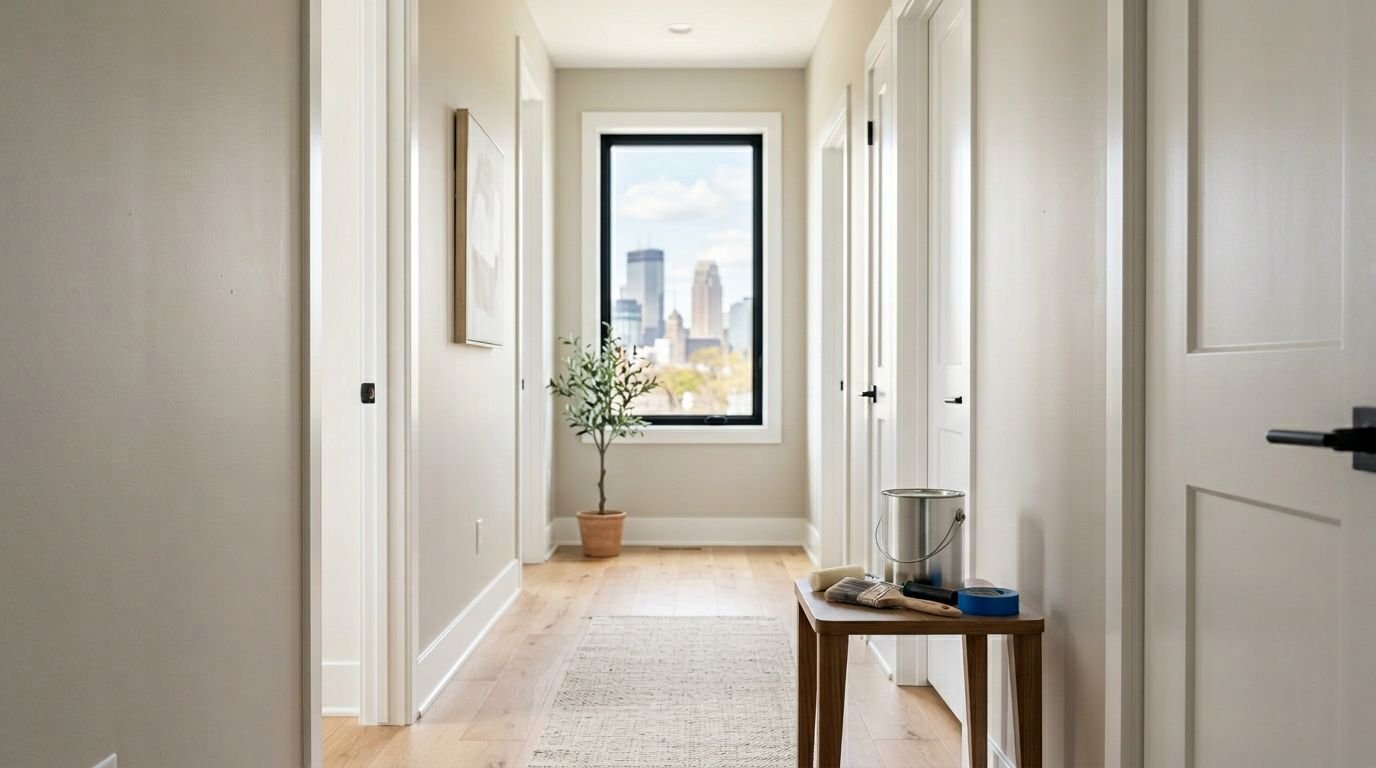
An entrance hall is like your home’s handshake. It’s the path everyone sees, but it also takes the most hits from boots, backpacks, and winter gear. So when the scuffs start to stack up, a fresh coat of paint can make the whole place feel cleaner.
In 2026, hallway painting cost Minneapolis homeowners see usually falls into a predictable range, but the final number depends on layout, prep, and how “finished” you want it to look. Below is a clear pricing snapshot, plus what drives costs up or down in Minneapolis, Minnesota and Twin Cities suburbs.
2026 Interior Painting Cost for Hallways in Minneapolis: Typical Ranges and Benchmarks
Most hallway projects aren’t priced like a big open living room. Pros often account for labor costs during setup time, masking, doors, trim, and tight cutting lines, much like a detailed foyer makeover. That’s why hallways can feel “small but not cheap.”
Here are 2026 ranges many homeowners around Minneapolis, St. Paul, Edina, Bloomington, Maple Grove, and St. Cloud commonly run into for a standard residential hallway (often 3 to 4 feet wide, 8-foot ceiling, 10 to 30 feet long, similar in scope to a basic bedroom painting cost).
| Hallway scope (interior) | What’s included (typical) | 2026 price range (Minneapolis area) | Useful benchmark |
|---|---|---|---|
| Walls only, light prep | Minor patching, 2 coats on interior walls | $400 to $900 | $25 to $65 per linear foot of hallway (both walls) |
| Walls + trim | Interior walls plus baseboards and door casing | $650 to $1,250 | $35 to $90 per linear foot (walls + trim) |
| Walls + ceiling + trim | Full repaint with ceiling painting, more masking and cutting | $900 to $1,800 | $2.00 to $4.50 per square foot of paintable surface (interior walls/ceiling combined) |
| Heavy prep (any option) | Repairs, stains, texture issues | Add $150 to $600+ | Prep time often matters more than paint cost |
A lot of crews also have a minimum service charge for small projects. If your hallway is short and simple, the quote may still land in that minimum range because travel, setup, and cleanup don’t shrink much.

Photo by Max Vakhtbovych
Quick rule of thumb: hallways cost more per square foot than big rooms because prep and detail work take a larger share of the job.
What drives hallway painting prices up (or keeps them reasonable)
In the Twin Cities, hallway paint work often comes down to obstacles, surface preparation, and prep work. Smooth, open drywall is the dream. Real hallways usually bring doors, corners, and old patch marks.
Here are the biggest factors that affect pricing:
- Wall condition and wall repairs: Nail pops, cracks, corner bead damage, and uneven texture add labor fast.
- Number of doors and openings: Every door means more cutting and more trim detail.
- Trim and molding style: Simple square baseboards paint faster than ornate profiles with lots of edges.
- Ceiling height and stairwells: Split-levels, stair halls, and stairwell landings can require ladders, scaffolding, and extra time.
- High-quality paint type and sheen: Washable finishes (often satin or eggshell) cost more but hold up better in traffic.
- Color change: Dark-to-light (or bold accent changes) may need extra coats or primer.
- Stain blocking needs: Water stains, smoke residue, and tannin bleed need the right primer.
- Protecting floors and runners: Minneapolis winters mean grit and salt; careful floor protection takes time.
- Scheduling and urgency: Short-notice work can cost more during peak season.
If you want your hallway to stay clean-looking longer, ask about a more durable wall finish. In busy homes, flat paint can look tired quickly.
Why hire a professional painter for a hallway finish?
A hallway is not the place to learn brush control. Long, continuous walls and tight sight lines make flaws easy to spot, especially with daylight from nearby rooms. Work by professional painters looks calm and even, like a freshly resurfaced rink, not streaky or patched together.
A solid residential house painting service in Minneapolis from professional painters and painting contractors should handle the parts homeowners usually don’t want to wrestle with: protecting floors, patching dents, performing wall repairs, sanding interior walls for a smooth feel, and cutting crisp lines around casing and ceilings. Pros also know how to avoid lap marks on long runs and how to keep sheen consistent from one end to the other.
When you’re comparing bids, it’s fair to ask about local workmanship expectations in Minnesota. Many homeowners want to know, “If something peels or flashes, what happens next?” A good crew will spell out the plan clearly, including cleanup and touch-ups.
If you’re already browsing for interior painters Minneapolis, look for a process that matches hallway reality: careful prep, tight masking, and a tidy workspace. For a detailed look at what a full interior house painting process can include, see this interior house painting service in Minneapolis.
Why Professional Painters Beat DIY in Tight Spaces (and What DIY Often Gets Wrong)
DIY hallway painting seems simple until you’re two hours in and boxed in by wet walls. Tight spaces make it harder to maintain a “wet edge,” so roller marks and dull patches show up after it dries.
DIY also tends to skip the boring prep work that makes paint last:
- Deglossing shiny trim before repainting
- Spot-priming patches so they don’t “flash”
- Sanding between steps for a smoother finish
- Using the right caulk at baseboards and casing
Professional painters handle all this prep work meticulously, and they excel at complex services like cabinet painting and popcorn ceiling removal too.
Minnesota homes also see big seasonal swings. Winter heat dries air out, which can affect caulk and patch drying. Summer humidity can slow cure time and make walls feel tacky longer. A pro plans for those conditions so doors and trim don’t stick, and the finish hardens the way it should.
The risk with DIY isn’t just looks. It’s time. A hallway sits in the middle of your routine, so delays feel bigger than they would in a spare bedroom.
What to ask (and confirm) in a hallway painting estimate
Homeowners should request a free estimate for hallway painting to get started. A quote should read like a simple plan, not a mystery number. Before you sign off, confirm the basics below so you can compare bids fairly.
- What surfaces are included: Walls only, or also ceiling, trim and molding, doors, and frames?
- Prep work details: How many patches are included, and what counts as “heavy repair”?
- Primer plan: Will they spot-prime repairs, prime stains, or prime full walls for color changes?
- Paint brand and sheen: Ask for the exact product line, such as Sherwin-Williams, and finish for walls, trim and molding to ensure quality paint.
- Number of coats: Two coats is common, but color changes sometimes need more.
- Protection and cleanup: Floors, vents, switch plates, and dust control should be addressed.
- Timeline and access: When do they start, how many days, and what do you move?
- Workmanship and warranty: Get it in writing, including what’s covered and for how long.
Gotcha to watch: “Paint and labor included” is not the same as “prep work included.” Prep work is where long-lasting jobs are won.
Timing your hallway project around Twin Cities seasons
Hallway painting is interior work, so you can schedule it year-round. Still, timing changes how smooth the experience feels when aligning with Minnesota’s Twin Cities seasons.
Late spring through early fall often books up in the Twin Cities because crews juggle exterior work too. If you want a hallway done before guests arrive or before school starts, schedule earlier than you think.
Winter can be a sweet spot and an ideal time for smaller projects like accent walls for indoor work in Minneapolis. Roads are rough and daylight is short, but interior schedules can open up. Just keep indoor temps steady so paint cures well, and run ventilation as recommended.
Internal link anchor text ideas (for your site navigation)
- Interior house painting service in Minneapolis
- Exterior house painting service in Minneapolis
- House painting contractors in Minneapolis
- Drywall repair and wall prep for painting
Conclusion
Repainting your entrance hall or hallway delivers a small project with a big impact through a fresh coat of paint that holds up to Minnesota life. In 2026, the hallway painting cost in Minneapolis for most homeowners ranges from a few hundred dollars to around two thousand, depending on prep work and whether trim and ceiling are included. This interior painting cost justifies itself with clean lines from a clear scope and the right Painting Service in Minneapolis. Contact us today for your free estimate.
LocalBusiness schema note (recommended next)
To strengthen local visibility, add LocalBusiness schema with consistent NAP, service area (Twin Cities suburbs), geo coordinates, opening hours, and a price range. Also include the same phone and email used on your contact page.
{“@context”:”https://schema.org”,”@type”:”FAQPage”,”mainEntity”:[{“@type”:”Question”,”name”:”What is the hallway painting cost in Minneapolis in 2026?”,”acceptedAnswer”:{“@type”:”Answer”,”text”:”Most Minneapolis-area homeowners see hallway painting prices in 2026 range from about $400 to $1,800, depending on whether you paint walls only or include trim and ceilings, plus how much prep is needed. Many painters also have a minimum service charge for small jobs.”}},{“@type”:”Question”,”name”:”How do painters measure a hallway for pricing?”,”acceptedAnswer”:{“@type”:”Answer”,”text”:”Many painters estimate by paintable surface area (walls, ceilings, trim) and complexity (doors, corners, stairwells). A helpful benchmark is cost per linear foot of hallway length for both walls, then adding trim and ceiling as separate labor items.”}},{“@type”:”Question”,”name”:”Does painting hallway trim increase the cost a lot?”,”acceptedAnswer”:{“@type”:”Answer”,”text”:”Yes. Baseboards and door casing add detail work, masking, and careful brushing. Trim can push a walls-only hallway into a higher range because it takes time, even when the hallway is short.”}},{“@type”:”Question”,”name”:”When is the best time of year to paint an interior hallway in Minneapolis?”,”acceptedAnswer”:{“@type”:”Answer”,”text”:”You can paint a hallway year-round. Winter can be a good time for indoor scheduling, while late spring through early fall can book up due to exterior season. Keep indoor temperatures stable and ventilate for proper curing.”}},{“@type”:”Question”,”name”:”What should I confirm in a hallway painting estimate?”,”acceptedAnswer”:{“@type”:”Answer”,”text”:”Confirm what surfaces are included (walls, ceiling, trim, doors), the prep and primer plan, paint brand and sheen, number of coats, protection and cleanup steps, timeline, and workmanship or warranty terms.”}}]}