
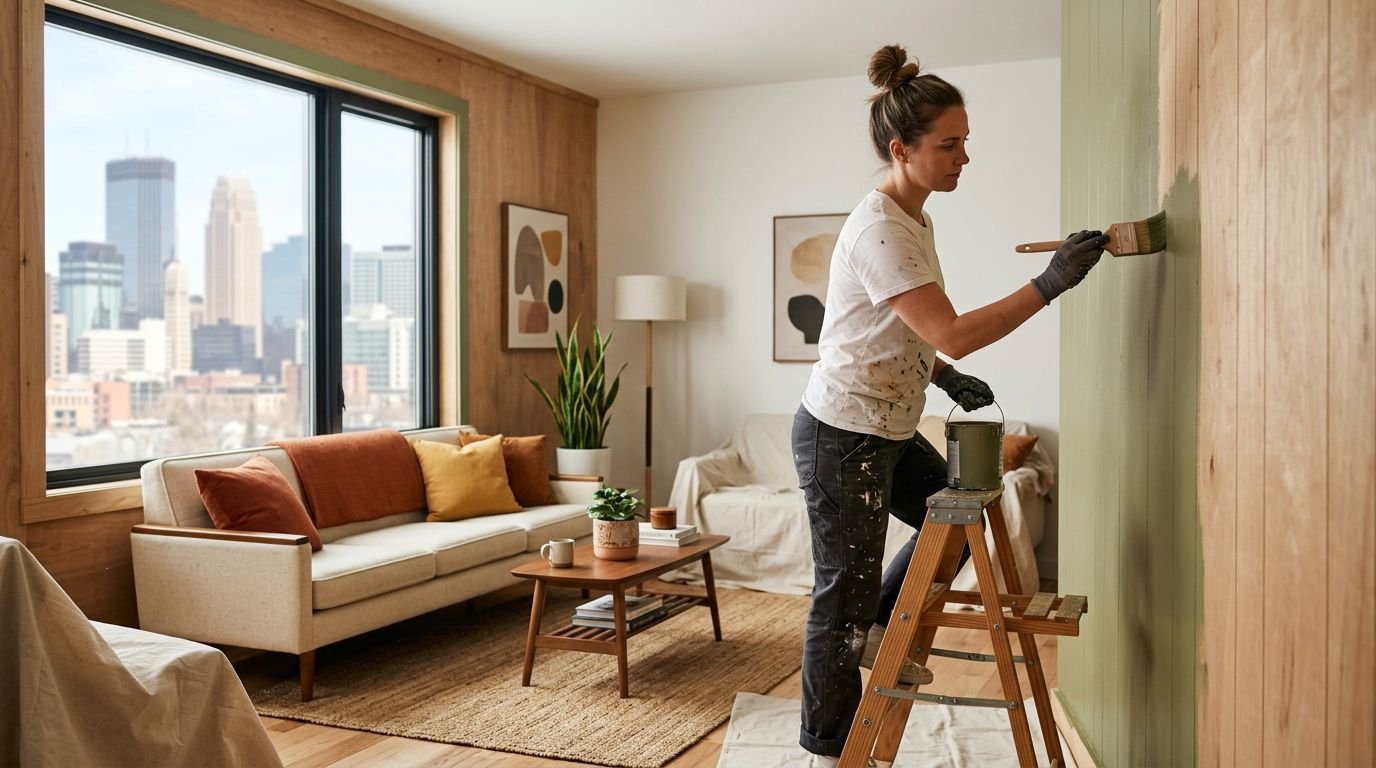
If you’re trying to pin down paint wood paneling cost in Minneapolis, the biggest surprise is usually the prep work, not the paint itself. Many homeowners start with a rough number in mind, then learn that paneling needs much more labor than standard drywall.
That matters whether you’re updating a basement in St. Paul, a den in Bloomington, or a family room in Edina. If you’re comparing a Painting Service in Minneapolis, knowing where the money goes helps you judge estimates with confidence.
What paint wood paneling cost looks like in Minneapolis
In 2026, most Minneapolis homeowners can expect to pay about $1.95 to $4.02 per square foot to paint wood paneling. For a typical 12×14 room, that often lands around $780 to $1,608, depending on condition, sheen, trim, and how much prep the walls need.
Local pricing tracks closely with broader Minneapolis interior painting cost data from Angi, but paneling usually sits above basic wall painting because it’s slower work.
Here is a simple way to think about it:
| Project size | Typical 2026 cost |
|---|---|
| Small paneled area, 150 to 200 sq ft | $300 to $800 |
| Average bedroom with paneling | $780 to $1,608 |
| Large family room or basement | $1,200 to $2,500+ |
| Whole-home paneling updates | Priced by walkthrough |
Most of the price comes from labor. Paint itself is only part of the bill. A glossy or stained surface can add sanding, cleaning, caulking, filler, and a stain-blocking primer before the finish coats even start.
Why wood paneling costs more than flat drywall
Paneling has grooves, joints, texture, and old finishes that fight new paint. It behaves less like a smooth sheet of drywall and more like a piece of furniture attached to your wall.
That changes the work. Pros usually clean off wax and smoke film, dull the old sheen, patch nail holes, fill deep seams where needed, prime thoroughly, and then apply two finish coats. If the paneling sits on an exterior wall or in a basement, Minnesota’s cold winters and freeze-thaw cycles can also cause slight movement over time. Because of that, adhesion matters.
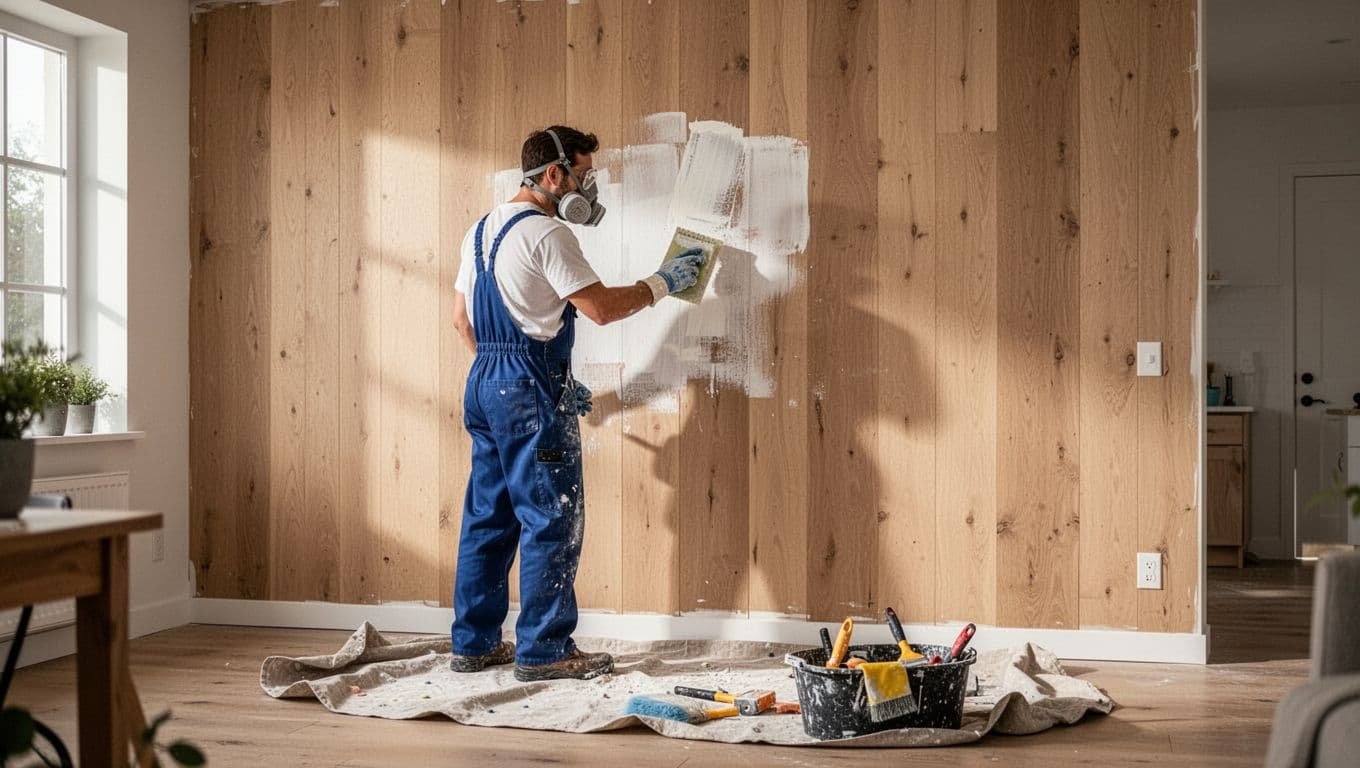
Most failed paneling paint jobs don’t fail on color, they fail on prep.
A rushed job can leave shiny bleed-through, visible grooves, rough roller texture, or peeling around seams. That’s why a local interior house painting service Minneapolis homeowners can call often gives better long-term value than a low bid that skips prep.
If you’re pricing a project now, a quick in-home estimate can tell you whether your paneling needs light prep or a full bonding-primer system.
Minneapolis timing matters more than most homeowners think
Interior work isn’t as weather-dependent as exterior painting, but season still affects scheduling and cure time. In winter, forced-air heat can dry surfaces fast, yet homes also trap dust and static. In summer, humidity can slow dry time, especially in lower levels and older homes.
Spring and fall are often the sweet spot for interior paneling projects. You get steadier indoor conditions, and painters can ventilate without fighting extreme heat or subzero air. Seasonal patterns in the Twin Cities also line up with broader Minneapolis interior painting cost trends, with peak demand often pushing schedules tighter in late spring and summer.
If you want the best choice of dates, book ahead. That’s especially smart if you’re painting a basement before holiday hosting or updating a paneled main floor before listing your home.
Hiring pros often beats DIY on cost over time
Painting paneling looks simple from across the room. Up close, it can be unforgiving. Grooves collect drips, stain bleed can show through fresh paint, and the wrong primer can leave you repainting far sooner than expected.
That’s where workmanship pays off. A solid Residential painting service in minneapolis should quote based on wall condition, not guess from square footage alone. Meanwhile, many homeowners search for interior painters minneapolis after a DIY attempt leaves lap marks, flashing, or peeling near trim.
Professional crews also move faster and cleaner. They mask floors, protect furniture, keep dust down, and apply a consistent finish across doors, trim, and wall grooves. The result feels less like a cover-up and more like a real update.
FAQs about painting wood paneling in Minneapolis
How much does it cost to paint wood paneling in Minneapolis in 2026?
Most projects fall between $1.95 and $4.02 per square foot. Heavily varnished, damaged, or stained paneling usually costs more because prep takes longer.
Is it cheaper to paint or replace wood paneling?
Painting is usually far cheaper. Replacement adds demolition, disposal, drywall work, texture repair, and more finish work.
Do painters have to sand wood paneling first?
Usually, yes. Even light sanding or deglossing helps primer grip the surface and lowers the risk of peeling.
What primer works best on old paneling?
A high-adhesion or stain-blocking primer works best in most homes. The right choice depends on whether the paneling has varnish, knots, smoke residue, or water stains.
When should I schedule interior paneling painting in Minnesota?
Spring and fall are often the easiest times to schedule. Winter can work well too, but dry indoor air and tight holiday calendars can affect timing.
Fresh paint can make old paneling look like it finally belongs in the house, instead of fighting every other finish in the room. The price depends less on the color you choose and more on the surface you’re starting with.
If your paneling is dated, glossy, or worn, request a detailed estimate before busy-season slots fill up. A room-by-room quote will give you a clearer number, and a much clearer next step.
Suggested internal anchor text ideas for related service pages include trusted Minneapolis interior painting, Minneapolis interior painting experts, and professional interior painters in MN.
If this page also targets local service searches, adding LocalBusiness schema with service area, phone, and business type can help support local visibility.
{
  "@context": "https://schema.org",
  "@type": "FAQPage",
  "mainEntity": [
    {
      "@type": "Question",
      "name": "How much does it cost to paint wood paneling in Minneapolis in 2026?",
      "acceptedAnswer": {
        "@type": "Answer",
        "text": "Most projects in Minneapolis range from $1.95 to $4.02 per square foot. Extra prep, stains, heavy varnish, and trim work can raise the total."
      }
    },
    {
      "@type": "Question",
      "name": "Is it cheaper to paint or replace wood paneling?",
      "acceptedAnswer": {
        "@type": "Answer",
        "text": "Painting is usually much cheaper than replacing paneling. Replacement often adds demolition, disposal, drywall installation, and extra finishing work."
      }
    },
    {
      "@type": "Question",
      "name": "Do you need to sand wood paneling before painting?",
      "acceptedAnswer": {
        "@type": "Answer",
        "text": "In most cases, yes. Sanding or deglossing helps the primer bond and reduces the chance of peeling or uneven coverage."
      }
    },
    {
      "@type": "Question",
      "name": "What primer should be used on wood paneling?",
      "acceptedAnswer": {
        "@type": "Answer",
        "text": "A high-adhesion or stain-blocking primer is usually the best choice. The right product depends on varnish, wood knots, smoke residue, or water stains."
      }
    },
    {
      "@type": "Question",
      "name": "When is the best time to schedule interior paneling painting in Minnesota?",
      "acceptedAnswer": {
        "@type": "Answer",
        "text": "Spring and fall are often the best times because indoor conditions are steadier and scheduling is more flexible than peak summer periods."
      }
    }
  ]
}